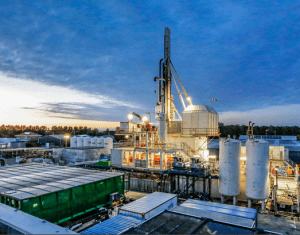
Detailed Fatigue Analysis of an 8-Pass U-Tube Heat Exchanger in Refinery Operations
This case study examines the detailed fatigue stress analysis conducted on a heat exchanger used to heat Polyol before it entered a refinery reactor. The

This case study examines the detailed fatigue stress analysis conducted on a heat exchanger used to heat Polyol before it entered a refinery reactor. The

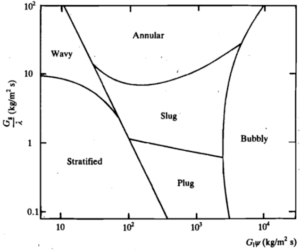
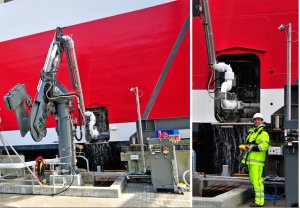
A fuel jetty terminal operator expressed concerns about potential two-phase flow issues during off-loading operations. The client indicated that trapped nitrogen used for purging lines

This case study introduces the stress assessment of two caissons: a sea water dump caisson with a 1000mm diameter header to which seven smaller diameter

In this case study, a number of critical sections in an already installed fire water system were selected for review. At the time of the

An unloading line was being commissioned for use with cyclohexane. This line featured two ship loading arms located at the end of a jetty, and

This case study describes the stress analysis performed on a firewater piping system located in the Middle East. The system was constructed using Glassfier Reinforced

During a certain period, scaffolding was required around three 30m tall depropanizer columns. Since the scaffolding was laterally supported from the columns, all wind loads

Introduction At a Flow Station in Nigeria, vibration issues were observed in the suction and discharge headers, as well as the pump recirculation line. To

Introduction This study presents the findings from a comprehensive stability and stress analysis conducted on a planned high scaffolding construction surrounding a 30-meter-high column. The

Introduction A detailed pulsation analysis was conducted to evaluate the sensitivity of a new Measurement Proving Facility to disturbances. This facility, a piping installation designed

Computational Fluid Dynamics Analysis In this case study, we conducted a comprehensive analysis of the water flow in a pipeline featuring a 20-inch butterfly valve.

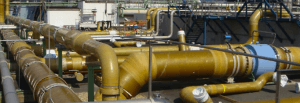
Surge And Dynamic Stress Analysis During the construction of a 1.6 km long steel pipeline intended for the offloading of naphtha from ships at a

Introduction In this case study, we explored the pulsation and vibration phenomena at a gas compression station equipped with four centrifugal compressors. These compressors generate

Introduction In this case study, we examine the static stress analysis performed on eight metering skids designed for a flow station. These skids, intended for

This case study discusses the results of a stress analysis conducted on the external section of the pressure equalizing piping at a reactor. The analysis

In this study, the dividing wall of a vessel was subjected to a design pressure differential of 0.03 bar, while the shell had a design

This study presents the results of a static stress analysis conducted on a compressor and the exit area of a compression station. Analysis A static

Introduction This case study recounts the stress analysis conducted for the design of two structural platforms attached to reinforcement rings on a vacuum tower. These

Introduction This study detailed the mechanical calculations for four internal components designed as gas inlet distributors within a pressure vessel. These internals were welded to

Introduction In the past, visible vibrations were observed in the piping connected to hydrogen compressors. These vibrations were particularly noticeable in the small-bore pipes branching

Introduction In this case study, a burst test was conducted to demonstrate the strength of a DN1200 Glass Fiber Reinforced Plastic (GRP) pipe. The objective

Floating Production Storage and Offloading (FPSO) units play a crucial role in offshore oil and gas production. A critical component of these systems is the compressor skid, which compresses natural gas for processing or export. This case study focuses on the pulsation and vibration analysis of a three-stage reciprocating compressor

This case study examines a reciprocating compressor system operated by a leading energy company, used for compressing natural gas. The system consists of three identical compressor units, each with two stages (suction and discharge pulsation suppression devices and connected piping), supplying gas to a common header. This system had been

This case study examines the cooling water and foam systems located in two jetties (Jetty A and Jetty B) of a major industrial facility. These systems, critical for fire protection, have experienced significant issues related to water hammer effects and structural integrity. The primary objectives of this study are to

The client is operating multiple ammonia plants with similar cooling water systems made of GRE. Last year, failures were discovered in buried GRE components—specifically, an elbow and a tee—at one of the older plants. A surge analysis conducted by Dynaflow Research Group revealed that these failures were due to an

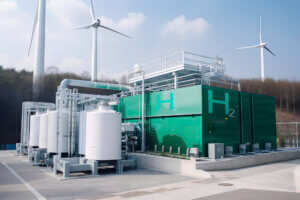
A new firewater (FW) system is being designed for a Green Hydrogen Elements facility. The plant spans a large area of approx. 2 x 1.5 km and contains multiple critical areas. The piping material is Fiber Reinforced Plastic (FRP). The main firewater ring is of DN250 and DN300 piping. The

A client designed a foam piping system that covers the three tanks in a tank pit in the harbor. The firewater system is directly connected to the general water supply. The main pipeline passes through the foam house where the water is mixed with foam. A manifold divides the mixture

A manufacturer of pulsation dampers requested Dynaflow Research Group to verify the performance of one of its discharge silencer designs in combination with a double rotary lobe gas blower by means of a pulsation study. The scope of the study consisted of a connecting straight pipe spool and the silencer

A fatigue analysis has been done for a reactor feed pressurization drum. The vessel operates under cyclic pressure ranging from 25 psig to 200 psig (1.7 – 13.8 bar), with a design life of more than 5 million cycles. Additionally, it is subjected to 200 full-range cycles from atmospheric pressure

Pressure surges ocurr in piping systems whenever there are sudden changes in flow resistance from steady operation. Surges can cause significant damage, also at locations far removed from where they are initiated. For large or complex piping systems, this can make their impact challenging to predict without specialist analysis. Dynaflow

Hydrogen generation equipment has an inherent risk for internal explosions, posing an issue to safety. The hydrogen piping and equipment are required to withstand internal explosions by limiting the damage to deformation. Although this disqualifies the component for future use, safety is not compromised. The objective was to find a
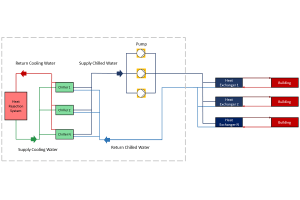
A District Cooling System (DCS) fits the sustainability challenges that our society is challenged with. It provides cooling capacity from a central facility; chilled water is distributed from this central facility to multiple buildings through a network of underground pipelines. The central cooling facility works more power efficient and it

Shell is building a biofuels facility at the Shell Energy and Chemicals Park Rotterdam, the Netherlands (Pernis Refinery) that will have an annual production capacity of 820,000 tonnes of biofuel. The biofuels facility is expected to start production in 2024. The project is ranked at position 7 in the top

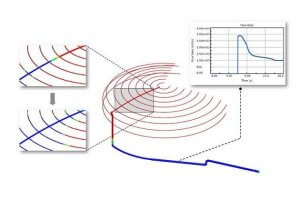
Why Pay Attention to a Line Filling Process? During a start-up/line filling process a wave front of fluid progresses it’s way through the empty* parts of the line. However, when this front is required to change direction through bends the change in momentum generates an unbalanced force, this unbalanced force

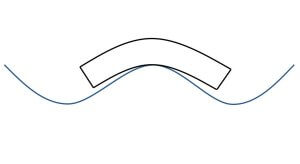
What is Hogging and Sagging and what are the effects on piping? When waves pass over the length of a ship, the ships profile rises and bows following the peaks and troughs of said wave due to the changes in bouyancy along the length. This effect is known as hogging

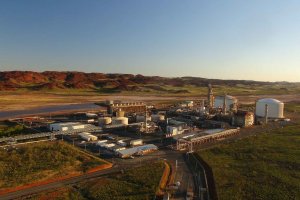
For an ammonia plant in Western Australia, cooling water is supplied by a Sea Cooling water (SCW) as well as a Fresh Cooling Water (FCW) system. Both piping systems were constructed out of fiberglass material with pipe diameters of up to 72”. Heat exchangers acts as the interface between the

Dynaflow Research Group has performed a root-cause analysis for a cooling water system that had 3 recent leakages. The failures were in 10” pipe and 18” pipe made of fiberglass material. Dynaflow Research Group reviewed the material data, engineering analyses and failure info and determined the root-causes of the failures.

Dynaflow Research Group provided consultancy services to finalize the construction of cooling water (CW) system of a chemical plant in the Texas, USA. The construction was interrupted for a period of 2 years. The CW system was constructed out of fiberglass material. A full design review was performed for the

Air Liquide and BASF want to capture and store the CO2 of five factories at the BASF site in Antwerp. Dynaflow was requested to perform a feasibility of the CO2 transport line that takes the CO2 from the five factories at the BASF site and transports it outside the BASF

The geothermal installation Trias Westaland, with presently 2 geothermal doublets, produces 40MW of sustainable thermal energy that is supplying heat to 54 greenhouses and several hundreds of households. Geothermal wells typically produce gas along with the hot saline water that is pumped up from large depths. Therefore, most geothermal production

DRG provides a complete set of engineering and consultancy services for Fiberglass piping (FRP) networks. This includes detailed engineering studies, product development, factory audits, site supervision, FEED support, third-party review for EPC projects, and root-cause investigation of failures. DRG recently completed a third-party review project for the construction of a

Introduction The two-phase flow in the finger pipe of a finger-type slug catcher is analyzed using CFD techniques. When the fluid flow in the inlet header manifold is evenly distributed among the different fingers, it is necessary to obtain stratified flow to promote liquid separation. Analysis The two-phase flow in

DYNAFLOW RESEARCH GROUP (“DRG”) Enters into Reseller Agreement with Quality Professional Software (“QPS”) RIJSWIJK, The Netherlands – January 24, 2024 (Dynaflow Research Group BV) –

Dynaflow Research Group and Seawind Ocean Technology announce collaboration focusing on technical readiness of floating offshore wind applications in the Mediterranean Sea. This landmark partnership