
Consulting
Stress Analysis For Platforms On A Vacuum Tower
Introduction This case study recounts the stress analysis conducted for the design of two structural platforms attached to reinforcement rings on a vacuum tower. These

Introduction This case study recounts the stress analysis conducted for the design of two structural platforms attached to reinforcement rings on a vacuum tower. These

Introduction This study detailed the mechanical calculations for four internal components designed as gas inlet distributors within a pressure vessel. These internals were welded to
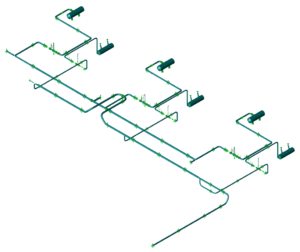
Introduction In the past, visible vibrations were observed in the piping connected to hydrogen compressors. These vibrations were particularly noticeable in the small-bore pipes branching
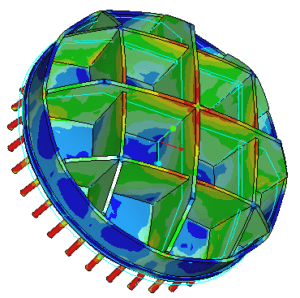
Introduction In this case study, a burst test was conducted to demonstrate the strength of a DN1200 Glass Fiber Reinforced Plastic (GRP) pipe. The objective
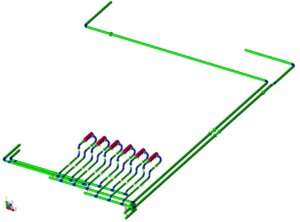
Introduction In the context of a compression station project, DRG conducted a comprehensive static stress analysis encompassing the plant inlet, slug catcher, and filter areas.

Introduction In this case study, we delve into a static stress analysis concerning a distillate water header within a remineralization unit of a desalination plant.

Introduction In the analysis conducted for the gas-inlet top box of a heat exchanger, which forms a part of the Torrefaction Tower, emphasis was placed
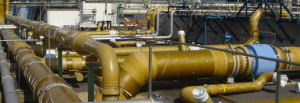
Introduction In the context of a greenfield project centered on the construction of a power plant, fiberglass-reinforced plastic (GRP) pipes with diameters of approximately 2.5

Since its beginnings, in 1989, Dynaflow Research Group (DRG) has been involved in shaping the landscape of fiberglass engineering through research, design engineering, and consultancy.
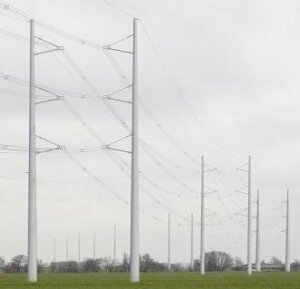
Introduction In this case, slender steel conical towers are designated to support high-tension wires, subjecting them to various horizontal and vertical load components. The load
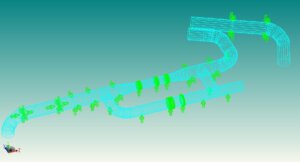
Introduction In the examination of our client’s initiative to assess and enhance the primary cooling water system within an established power plant, various configurations, and

Date: April 2nd, 2024 We are delighted to announce the celebration of Dynaflow Research Group’s 35th anniversary, marking a significant milestone in our journey of

Introduction The seawater system was classified as a class A system per the Service Limit State (SLS) standards. Constructed from reinforced fiberglass piping, it comprised

Introduction In this case study, the focal point was addressing the high vibration levels observed in the process piping extending from a heat exchanger to
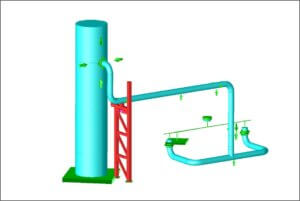
Introduction In this case study, we addressed a notable vibration issue observed in the main 16” line at a chemical plant, which was suspected to
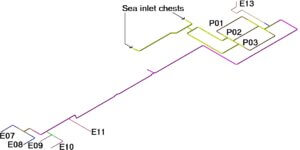
Introduction This case involved fulfilling a client’s request to perform a surge analysis and static and dynamic stress analysis about the cooling water lines and

Introduction In this case study, the focus was on conducting a stress analysis of the GRE piping system utilized to link the pumps to the

Introduction As a result of a failure in a fiberglass header in the undercroft of a chilled water system, the decision was made to replace
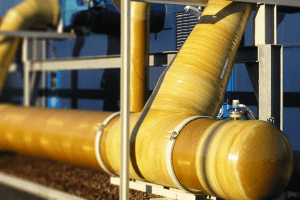
Introduction In the process of extending an existing power plant, the addition of a new power plant was deemed necessary. This new facility was designed
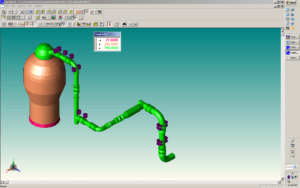
Introduction In this case study, we delved into the stress analysis findings regarding the revised flue gas overhead line in Singapore connecting a third-stage separator
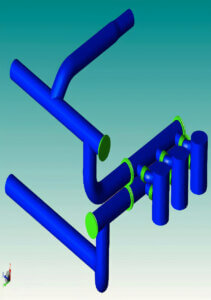
Introduction In the current project, a static stress analysis was conducted to assess the performance of GRE headers connected to filter vessels. The purpose was

Hydrogen is considered to be a key element in the energy transition. This molecule is the most notable option for the decarbonisation of hard-to-abate sectors
As part of our responsibilities at DRG, we conduct both standard pressure drop calculations and surge/slug analyses for firewater systems. Our involvement spans various stages,
Geothermal energy is a promising renewable energy source, but it comes with its own set of challenges. Two significant issues in geothermal well operations are
Flow-induced vibrations in piping systems are a critical aspect of mechanical engineering, impacting the reliability and integrity of various industrial setups. The Japan Society of

Introduction In the field of engineering design, the precision of pipe flexibility analysis models is critically important for accurately assessing nozzle loads in steel piping

In 2013, a major incident occurred in a Louisiana chemical plant. In a nonroutine operation, plant operators attempted to start a heat exchanger which had

To understand pressure surges in large piping systems, a good place to start is at home. When you finish washing your hands, turning off the

Brief introduction to piping vibrations Vibrations are an oscillatory motion about an equilibrium. The oscillatory movement causes alternating stresses in the system, which, if excessive

The pulsation challenge of a variable speed reciprocating compressorA pulsation analysis according to the API 618 is a good method of preventing excessive vibrations in

ON-DEMAND 🕖 30 MIN 🌏︎ ENGLISH Understanding and Mitigating AIV and FIV in Modern Plant Design David Tickner Senior Engineer Get instant access
ON-DEMAND 🕖 30 MIN 🌏︎ ENGLISH How To Predict Stresses From Slug Flows Daniëlle de Jong Senior Engineer Get instant access Free recording
ON-DEMAND 🕖 60 MIN 🌏︎ ENGLISH Building models using the import PCF file feature & model verification In BOSfluids Thijs Krijger Project Engineer

ON-DEMAND 🕖 60 MIN 🌏︎ ENGLISH Solving Vibrations In A Two-Phase Process Line Frank Bos Partner Get instant access Free. Recording + slide

ON-DEMAND 🕖 50 MIN 🌏︎ ENGLISH Surge and dynamic stress analysis for an offshore wind farm using BOSfluids Mark Groen Software Lead Engineer

ON-DEMAND 🕖 25 MIN 🌏︎ ESPAÑOL Integración de BOSfluids con Caesar II y otros programas de tensión de tuberías Uri Peker Engineer Get instant
ON-DEMAND 🕖 35 MIN 🌏︎ ENGLISH BOSfluids integration with CAESAR II and other pipe stress programs Ryan Metcalf Manager USA Get instant access

The ONE GUYANA Floating Production Storage and Offloading (FPSO) unit has been designed to operate in deepwater conditions with a production capacity of 250,000 barrels of oil per day. The FPSO is designed for a 20-year operational life, handling complex processes including water and gas injection. Previous projects highlighted the

During this project the optimal wearplate thickness for pipe supports on the FPSO Maria Quiteria was investigated, aligning with the Yinson project specifications. The primary objective was to validate whether the prescribed wearplate thicknesses—6mm for pipes of 10” and smaller, 10mm for larger pipes, and 12.7mm for pipes with higher

On the Goliat Floating Production Storage and Offloading (FPSO) unit, significant vibration and cavitation phenomena were observed downstream of control valve 71PV1103 on the minimum flow line of pump B during maximum flow conditions. Additionally, pressure surges were reported during system start-up through this minimum flow line. Such issues posed

The Petrojarl I Floating Production, Storage, and Offloading (FPSO) facility, in operation since 1986 in the North Sea, underwent critical modifications to prepare for deployment at the Atlanta oil field offshore Brazil. The relocation entailed adapting the crude oil offloading system to manage Brazilian crude with higher viscosity and to

The client commissioned a surge analysis for the Waste Water (WW) system at the Rotterdam terminal. The analysis aimed to quantify transient pressures and unbalanced forces generated by various hydraulic events: pump trips, pump startups, pump switchovers, and the closure of two key butterfly valves. The analysis was performed using
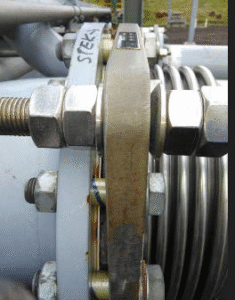
This case study presents the findings of a comprehensive pipe stress analysis of several tank lines following a leakage incident at an expansion joint. The analysis was initiated after segments of the tank lines were replaced with new routing. Upon operation of the system, a leak was detected at the
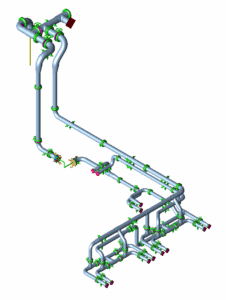
The project focused on evaluating the mechanical integrity and support strategy of a glass-reinforced plastic (FRP) piping system lined with unplasticized polyvinyl chloride (PVC-U), designed to protect the glass-reinforced plastic structural layer against the corrosive gas mixture. The temporary installation provides an additional gas cleaning stage for the sulphuric acid
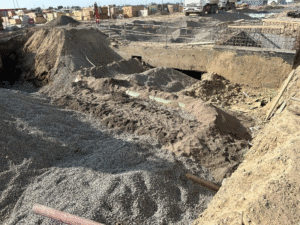
This case study presents a technical assessment of the Glass Reinforced Plastic (GRP) piping system installation at a power plant, based on a visit conducted at its site. The evaluation focused on the material quality, engineering, and site installation activities for the project’s cooling water and firewater systems. Particular attention

The client experienced multiple unexpected failures in the underground firewater (FW) network at one of their facilities. The network utilizes fiberglass-reinforced plastic (FRP) piping. To determine the root causes of these failures, a material investigation was conducted by Dynaflow Research Group on pipe samples. This case study presents the methodology,
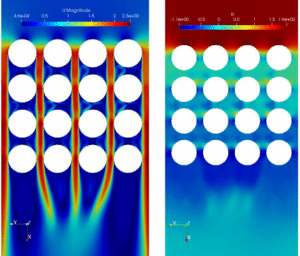
A heat exchanger was found to have fluid leakage from the tube side into the shell side after approximately 3 years of operation. Initial inspections suggested that flow-induced vibrations (FIV) were causing support rods to puncture through tube walls. To diagnose and address the source and effects of the FIV
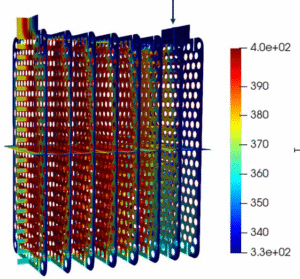
This project presents a detailed technical assessment of two vertical tube cooker (shell-and-tube heat exchanger) designs using Computational Fluid Dynamics (CFD). The analysis was conducted for Tanis, a manufacturer of candy production lines, with the objective of verifying and improving the thermal performance of the tube cooker, a critical process
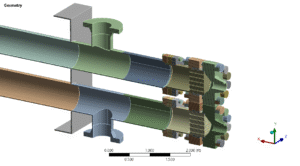
Dynaflow Research Group was asked to conduct a comprehensive finite element (FE) analysis on a custom hairpin heat exchanger. The primary objective was to assess the exchanger’s structural integrity under demanding cyclic loading conditions, focusing on fatigue life and ratcheting behavior in compliance with the ASME Boiler and Pressure Vessel

Effective mixing in bioreactors is essential for maximizing mass transfer, homogenizing chemical species, and ensuring uniform biological activity. The client undertook a computational fluid dynamics study in collaboration with Dynaflow Research Group to evaluate the performance of a 60 m³ hydrogen sulfide (H₂S) bioreactor, with a specific focus on mixing
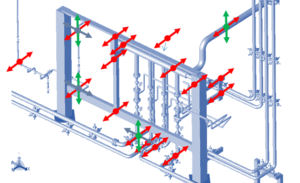
Excessive vibrations were detected in the discharge piping of compressor C801 at BP Rotterdam. The observed vibration frequencies corresponded to the compressor’s running speed and its harmonics, indicating the compressor as the primary excitation source. This prompted an in-depth technical investigation due to concerns over the integrity and reliability of
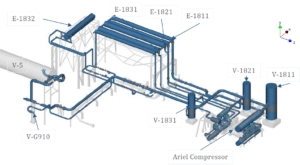
The API 618 DA3 study at the Q8 Terminal, commissioned by Wintershall Noordzee and executed by Dynaflow Research Group, was initiated to ensure the mechanical reliability and performance of the reciprocating compressor piping system. This study focuses on the evaluation of pulsation and vibration per API 618 (5th Edition, 2007)

Building directly on the preceding site verification and model augmentation phase, the objective of the stress assessment was to ensure the mechanical integrity and regulatory compliance of the entire piping network under all anticipated operational, test, and environmental scenarios. The assessment was carried out in accordance with ASME B31.3 and

Following the initial review of the pulsation and vibration analysis for the Q8 Terminal compressor station, a detailed site visit was conducted to resolve ambiguities in the as-built system configuration. The purpose of this site visit was to verify support functionality, assess current installations, confirm actual piping layouts, and gather
This case study presents a critical review of the pulsation and vibration analysis carried out by a third-party supplier, focusing on the Q8 Terminal compressor station. The analysis, conducted in accordance with API 618 Design Approach 3, aimed to assess the dynamic response of the compressor and associated piping systems.

The Ærfugl MEG (Monoethylene Glycol) injection skid, engineered by Hitec Products AS for deployment on the Skarv FPSO, is a critical system designed to inject MEG into subsea flowlines, thereby preventing hydrate formation. Following the comprehensive pulsation analysis, which established compliance with API 674 DA2 pulsation criteria through targeted mitigation

Following the successful verification of the static mechanical integrity of the Ærfugl MEG injection skid in Phase 1, Hitec Products AS commissioned Dynaflow Research Group to undertake a detailed pulsation analysis in accordance with API 674 DA2. The aim was to address the risks posed by pressure pulsations generated by

The Ærfugl MEG (Monoethylene Glycol) injection skid, designed and produced by Hitec Products AS for installation on the FPSO (Floating Production Storage and Offloading) vessel in the Skarv field, is a mission-critical component in the field’s flow assurance strategy. To ensure mechanical integrity and operational reliability, a comprehensive static pipe

DYNAFLOW RESEARCH GROUP (“DRG”) Enters into Reseller Agreement with Quality Professional Software (“QPS”) RIJSWIJK, The Netherlands – January 24, 2024 (Dynaflow Research Group BV) –

Dynaflow Research Group and Seawind Ocean Technology announce collaboration focusing on technical readiness of floating offshore wind applications in the Mediterranean Sea. This landmark partnership