
Fluid Flow
Heat Exchangers in Concentrating Solar Power
DRG performs structural assessments on Heat Exchangers for Concentrating Solar Power plants The US Office of Energy Efficiency & Renewable Energy proclaimed 2014 ‘The year

DRG performs structural assessments on Heat Exchangers for Concentrating Solar Power plants The US Office of Energy Efficiency & Renewable Energy proclaimed 2014 ‘The year

Flow Assurance training course offers a valuable opportunity to learn from and seek advice from one of the foremost experts in Oil and Gas Flow

Presentations by keynote speaker Prof. Dr. ir. Ruud Henkes (Shell / TU Delft) and Dr. Andrew Jackson (Engys UK) The abstracts for the presentations by
Title: Vacuumatics: 3D Formwork Systems By Franciscus Antonius Augustinus Huijben One of the most important architectural trends of the last two decades is commonly referred

Titel: Computational Modelling of Particle Packing in Concrete By Huan He Physical particle packing is becoming a hot topic in concrete technology as more and

Titel: Porosity of Concrete – Morphological Study of Model Concrete By Jing Hu Porosity of Concrete has developed a comprehensive methodological framework for characterizing geometrical

Titel: Mesostructure of concrete Stereological analysis and some mechanical implications By Jianjun Zheng On the mesoscale, concrete can be considered as a composite material consisting

Table of Contents A Good GRP Code Covers a Large Variety of Products and Loading Conditions A robust Glass Reinforced Plastic (GRP) piping code must
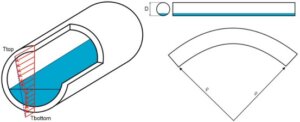
Thermal bowing is a structural phenomenon that arises when a temperature gradient exists across the cross-section of a pipe or vessel. In typical pipe design,

Table of Contents As the demand for flexible, energy-efficient, and reliable compressor operation grows—particularly in hydrogen and process gas applications—our clients increasingly turn to stepless

Table of Contents Multiphase flow is a recurring challenge in process engineering, where multiple fluid phases—such as gases, liquids, or solids—interact within a single flow

In the chemical and energy industries, liquid products such as LNG, ammonia, or naphtha are commonly transferred between ships and onshore storage tanks. These transfers
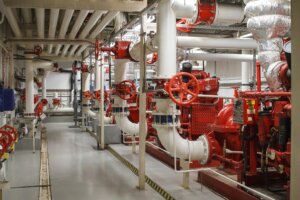
In the engineering domain, accurately simulating transient events in pipeline systems is critical, particularly for essential safety mechanisms such as firewater systems. These systems, typically

Introduction Pressure vessels are critical components in a wide range of industries, including power generation, petrochemical processing, and industrial manufacturing. These vessels are designed to

When Theodor von Kármán first discovered vortex shedding in 1911, he likely had no idea how pivotal his work would become for modern engineering, particularly
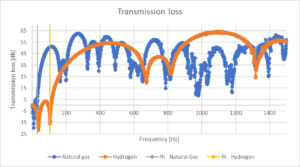
In a previous article, we introduced the risks and design considerations of repurposing an existing natural gas compressor system for hydrogen. That discussion focused on

The EVO-42 compressor package, featuring a screw compressor, oil separator, motor, dampener, and associated piping, was subject to a comprehensive evaluation by Dynaflow Research Group. This study aimed to assess its mechanical and acoustic performance under operating conditions, following the guidelines set out in API 619 and ASME VIII Div.

A client operates a reciprocating compressor at their terminal facilities, which is integral to their gas processing operations. During routine operations, excessive vibrations were observed within the system, raising concerns regarding equipment reliability, safety, and compliance with relevant industry standards. The compressor system in question features a 6-cylinder design with

The Tesoro Salt Lake City Refinery initiated a project to reduce the sulfur content in its products, necessitating modifications to the piping system on the discharge side of compressors K-701A/B. These changes prompted concerns about excessive pulsations and vibration-induced stresses, particularly as no previous pulsation study had been conducted. The
Heat exchangers are essential in industrial applications for transferring heat between fluids. However, they are susceptible to multiple mechanical failures, being one of them flow-induced vibrations (FIV). This case study examines a specific incident where a heat exchanger experienced multiple failures at the welded connections of tube bundles to the

In the chemical processing industry, equipment integrity under extreme conditions is paramount for safety and efficiency. This case study examines the thermal and mechanical analysis of a 2” equal tee subjected to high-temperature fluidized catalyst streams. The project’s objective was to assess the tee’s integrity where a 690°C catalyst stream

The offshore oil and gas industry encounters distinctive challenges in managing high-pressure piping systems, where the repercussions of failure can be dire. Therefore, ensuring the structural integrity of these piping systems is paramount. This case study examines a critical investigation conducted during the Detailed Design Phase of an Offshore Topside

A petrochemical facility has been experiencing recurring failures in its fiberglass piping Cooling Water (CW) network. With seven failures reported up to 2014 and a recent failure in November 2023, the integrity of the system has come under scrutiny. As the fiberglass piping approaches its 20-year design lifetime, a comprehensive

A fiberglass gas pipeline is being implemented to supply gas from a compressor station to a delivery point. As the pipeline approaches completion, ensuring its operational safety and integrity is paramount. This case study examines the surge analysis conducted on the buried portion of the pipeline to identify potential vulnerabilities

An ammonia plant in Australia has experienced recurring failures in its cooling water systems since its commissioning in the mid-2000s. The plant utilizes two primary cooling systems: a Sea Cooling Water (SCW) system and a Fresh Cooling Water (FCW) system. The SCW system, with a high capacity, consists of multiple

This case study examines the structural integrity of an industrial pressure vessel subjected to cyclic thermal and pressure loading. In processes where such vessels experience significant temperature and pressure fluctuations, ensuring the longevity and safety of these critical components is paramount. The primary objective of this study is to assess

This case study examines the structural integrity of header boxes in an industrial air cooler heat exchanger subjected to cyclic thermal loading and static pressure. In processes where heat exchangers experience significant temperature fluctuations, ensuring the longevity and safety of critical components is paramount. The primary objective of this study

Floating Production Storage and Offloading (FPSO) units play a crucial role in offshore oil and gas production. A critical component of these systems is the compressor skid, which compresses natural gas for processing or export. This case study focuses on the pulsation and vibration analysis of a three-stage reciprocating compressor

This case study examines a reciprocating compressor system operated by a leading energy company, used for compressing natural gas. The system consists of three identical compressor units, each with two stages (suction and discharge pulsation suppression devices and connected piping), supplying gas to a common header. This system had been

This case study examines the cooling water and foam systems located in two jetties (Jetty A and Jetty B) of a major industrial facility. These systems, critical for fire protection, have experienced significant issues related to water hammer effects and structural integrity. The primary objectives of this study are to

The client is operating multiple ammonia plants with similar cooling water systems made of GRE. Last year, failures were discovered in buried GRE components—specifically, an elbow and a tee—at one of the older plants. A surge analysis conducted by Dynaflow Research Group revealed that these failures were due to an

A new firewater (FW) system is being designed for a Green Hydrogen Elements facility. The plant spans a large area of approx. 2 x 1.5 km and contains multiple critical areas. The piping material is Fiber Reinforced Plastic (FRP). The main firewater ring is of DN250 and DN300 piping. The

A client designed a foam piping system that covers the three tanks in a tank pit in the harbor. The firewater system is directly connected to the general water supply. The main pipeline passes through the foam house where the water is mixed with foam. A manifold divides the mixture

A manufacturer of pulsation dampers requested Dynaflow Research Group to verify the performance of one of its discharge silencer designs in combination with a double rotary lobe gas blower by means of a pulsation study. The scope of the study consisted of a connecting straight pipe spool and the silencer

A fatigue analysis has been done for a reactor feed pressurization drum. The vessel operates under cyclic pressure ranging from 25 psig to 200 psig (1.7 – 13.8 bar), with a design life of more than 5 million cycles. Additionally, it is subjected to 200 full-range cycles from atmospheric pressure

A Glass Reinforced Epoxy (GRE) fire water header, installed on a Liquefied Natural Gas (LNG) jetty, comprises DN700 pipes and is subjected to seismic accelerations. Due to the jetty’s structure, the seismic accelerations provided by the client vary significantly along its length. The fire water header must be evaluated for

The above-ground seawater supply header is designed to transport seawater from two tie-ins in a discharge manifold of the seawater pumps to AGA. A comprehensive static stress analysis was necessary to determine the stress levels within the Glass Reinforced Epoxy (GRE) line. Additionally, it was crucial to define a support

DYNAFLOW RESEARCH GROUP (“DRG”) Enters into Reseller Agreement with Quality Professional Software (“QPS”) RIJSWIJK, The Netherlands – January 24, 2024 (Dynaflow Research Group BV) –

Dynaflow Research Group and Seawind Ocean Technology announce collaboration focusing on technical readiness of floating offshore wind applications in the Mediterranean Sea. This landmark partnership