
Software
Annual User day
On July 5th Dynaflow will organize a Software User Day. During this event participants will learn about new and upcoming features, discuss existing features and meet other

On July 5th Dynaflow will organize a Software User Day. During this event participants will learn about new and upcoming features, discuss existing features and meet other

Recently Dynaflow Research Group together with online training platform EngineeringTrainer.com released “How to Review a Pulsation Study” training course. The course objective is to explain

In April of this year Dynaflow Research Group will present two papers at the International Conference on Pressure Surges.

Dynaflow Research Group will give a technical presentation during the SPE Symposium: Non-Metallics in Abu Dhabi February 2023.

We are pleased to announce that Frank Bos has been elected partner at Dynaflow Research Group.

From March 20th until March 24th, Dynaflow Research Group will collaborate with the Numerical Analysis group of the Department of Applied Mathematics at Delft University

We are glad to announce that the BOSfluids course has been updated. The course has been restructured and expanded to provide insights on the latest version of the BOSfluids program.
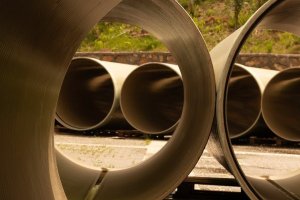
The basis for reliable fiberglass piping systems are the specifications that lay out the requirements to the system regarding material quality, engineering, installation and inspection and test plans.

Cooling water installations are designed to cool an installation in the event of a nearby fire. This can be necessary if the contents of a tank or pressure vessel are likely to expand with heat. We can use BOSfluids to perform hydraulic calculations of steady state flows in a cooling water system that includes many deluge nozzles (sprinklers).

The latest BOSfluids release brings a new, low-cost license option that is aimed at users who are primarily interested in performing steady state analyses.

Dynaflow Research Group has recently performed several level 1 and 3 assessments resulting in either extended service lifetimes or recommendation of component replacement.

The new BOSfluids release brings many small and large improvements to its user interface that make it even more efficient and versatile.
Dynaflow proudly presents a new online training course: “Pipe Stress Analysis”.
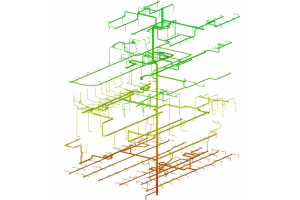
Dynaflow Research Group has performed the design and analysis for the firewater deluge layout of two large production modules of a floating production storage and
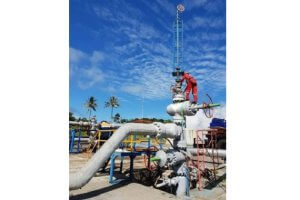
Two of the key challenges currently encountered in operating geothermal wells using conventional steel casings are corrosion and scaling. These problems significantly reduce the lifespan

Today Dynaflow Research Group will join the TU Delft Institute for Computational Science and Engineering (DCSE) in hosting an introductory course in the use of

When do you need to perform a fatigue analyses according ASME BPVC? This webinar explains the screening methods that are provided in ASME-VIII – Div 2.
Coming weeks Dynaflow Research Group will host a webinar series around the use of the stress envelope for FRP stress analysis. In this webinar series

Seawind have developed with early partners Offshore Wind Plant layouts and is applying for sea area concessions in the Mediterranean Sea sector. The Mediterranean Sea
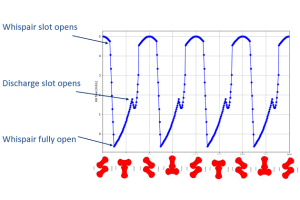
Dynaflow performed an pulsation analysis study for a client where a silencer check was required to dampen the pulsations generated by a rotary lobe blower.

Piping models that you produce are not 100% accurate. To make sure that uncertainties in design do not immediately result in failures in your piping

Table of Contents A Good GRP Code Covers a Large Variety of Products and Loading Conditions A robust Glass Reinforced Plastic (GRP) piping code must
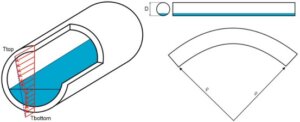
Thermal bowing is a structural phenomenon that arises when a temperature gradient exists across the cross-section of a pipe or vessel. In typical pipe design,

Table of Contents As the demand for flexible, energy-efficient, and reliable compressor operation grows—particularly in hydrogen and process gas applications—our clients increasingly turn to stepless

Table of Contents Multiphase flow is a recurring challenge in process engineering, where multiple fluid phases—such as gases, liquids, or solids—interact within a single flow

In the chemical and energy industries, liquid products such as LNG, ammonia, or naphtha are commonly transferred between ships and onshore storage tanks. These transfers
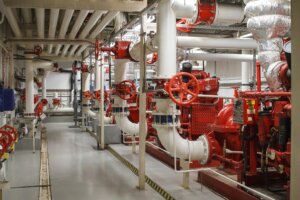
In the engineering domain, accurately simulating transient events in pipeline systems is critical, particularly for essential safety mechanisms such as firewater systems. These systems, typically

Introduction Pressure vessels are critical components in a wide range of industries, including power generation, petrochemical processing, and industrial manufacturing. These vessels are designed to
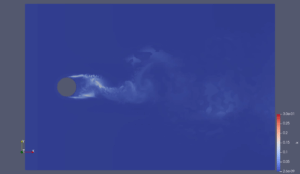
When Theodor von Kármán first discovered vortex shedding in 1911, he likely had no idea how pivotal his work would become for modern engineering, particularly
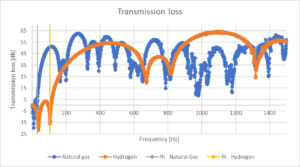
In a previous article, we introduced the risks and design considerations of repurposing an existing natural gas compressor system for hydrogen. That discussion focused on

ON-DEMAND 🕖 30 MIN 🌏︎ ENGLISH Understanding and Mitigating AIV and FIV in Modern Plant Design David Tickner Senior Engineer Get instant access
ON-DEMAND 🕖 30 MIN 🌏︎ ENGLISH How To Predict Stresses From Slug Flows Daniëlle de Jong Senior Engineer Get instant access Free recording
ON-DEMAND 🕖 60 MIN 🌏︎ ENGLISH Building models using the import PCF file feature & model verification In BOSfluids Thijs Krijger Project Engineer

ON-DEMAND 🕖 60 MIN 🌏︎ ENGLISH Solving Vibrations In A Two-Phase Process Line Frank Bos Partner Get instant access Free. Recording + slide

ON-DEMAND 🕖 50 MIN 🌏︎ ENGLISH Surge and dynamic stress analysis for an offshore wind farm using BOSfluids Mark Groen Software Lead Engineer

ON-DEMAND 🕖 25 MIN 🌏︎ ESPAÑOL Integración de BOSfluids con Caesar II y otros programas de tensión de tuberías Uri Peker Engineer Get instant
ON-DEMAND 🕖 35 MIN 🌏︎ ENGLISH BOSfluids integration with CAESAR II and other pipe stress programs Ryan Metcalf Manager USA Get instant access
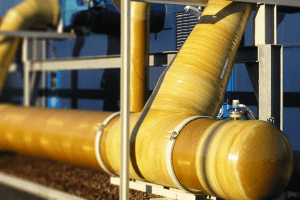
Introduction In the process of extending an existing power plant, the addition of a new power plant was deemed necessary. This new facility was designed around a Combined Cycle Unit (CCU), which integrated both a Gas Turbine and a Steam System. Notably, the surface condenser of this new plant was
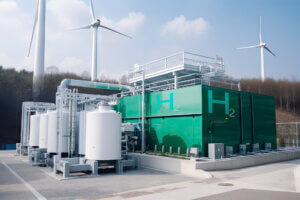
Hydrogen generation equipment has an inherent risk for internal explosions, posing an issue to safety. The hydrogen piping and equipment are required to withstand internal explosions by limiting the damage to deformation. Although this disqualifies the component for future use, safety is not compromised. The objective was to find a
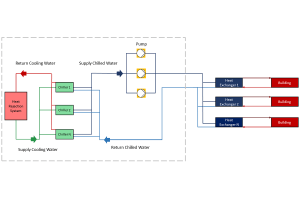
A District Cooling System (DCS) fits the sustainability challenges that our society is challenged with. It provides cooling capacity from a central facility; chilled water is distributed from this central facility to multiple buildings through a network of underground pipelines. The central cooling facility works more power efficient and it
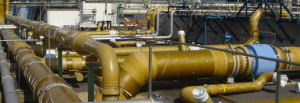
Shell is building a biofuels facility at the Shell Energy and Chemicals Park Rotterdam, the Netherlands (Pernis Refinery) that will have an annual production capacity of 820,000 tonnes of biofuel. The biofuels facility is expected to start production in 2024. The project is ranked at position 7 in the top
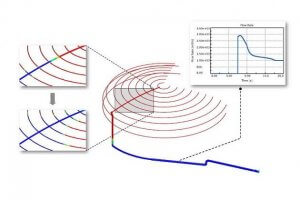
Why Pay Attention to a Line Filling Process? During a start-up/line filling process a wave front of fluid progresses it’s way through the empty* parts of the line. However, when this front is required to change direction through bends the change in momentum generates an unbalanced force, this unbalanced force
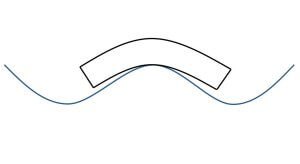
What is Hogging and Sagging and what are the effects on piping? When waves pass over the length of a ship, the ships profile rises and bows following the peaks and troughs of said wave due to the changes in bouyancy along the length. This effect is known as hogging
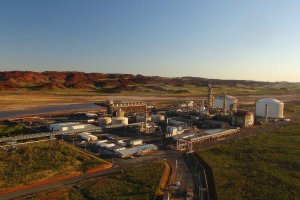
For an ammonia plant in Western Australia, cooling water is supplied by a Sea Cooling water (SCW) as well as a Fresh Cooling Water (FCW) system. Both piping systems were constructed out of fiberglass material with pipe diameters of up to 72”. Heat exchangers acts as the interface between the
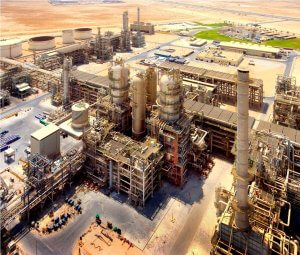
Dynaflow Research Group has performed a root-cause analysis for a cooling water system that had 3 recent leakages. The failures were in 10” pipe and 18” pipe made of fiberglass material. Dynaflow Research Group reviewed the material data, engineering analyses and failure info and determined the root-causes of the failures.
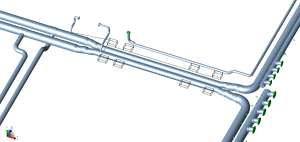
Dynaflow Research Group provided consultancy services to finalize the construction of cooling water (CW) system of a chemical plant in the Texas, USA. The construction was interrupted for a period of 2 years. The CW system was constructed out of fiberglass material. A full design review was performed for the
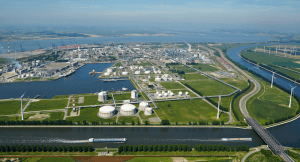
Air Liquide and BASF want to capture and store the CO2 of five factories at the BASF site in Antwerp. Dynaflow was requested to perform a feasibility of the CO2 transport line that takes the CO2 from the five factories at the BASF site and transports it outside the BASF
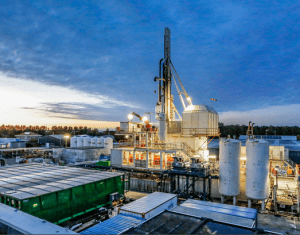
The geothermal installation Trias Westaland, with presently 2 geothermal doublets, produces 40MW of sustainable thermal energy that is supplying heat to 54 greenhouses and several hundreds of households. Geothermal wells typically produce gas along with the hot saline water that is pumped up from large depths. Therefore, most geothermal production

DRG provides a complete set of engineering and consultancy services for Fiberglass piping (FRP) networks. This includes detailed engineering studies, product development, factory audits, site supervision, FEED support, third-party review for EPC projects, and root-cause investigation of failures. DRG recently completed a third-party review project for the construction of a

Introduction The two-phase flow in the finger pipe of a finger-type slug catcher is analyzed using CFD techniques. When the fluid flow in the inlet header manifold is evenly distributed among the different fingers, it is necessary to obtain stratified flow to promote liquid separation. Analysis The two-phase flow in
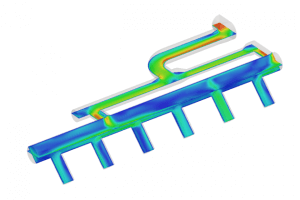
Introduction The flow in the header of a finger-type slug catcher is analyzed using CFD techniques. In order to design a high-performance finger-type slug catcher, it is necessary that the fluid flow in the inlet header manifold is evenly distributed among the different fingers. Analysis A detailed flow analysis by

Combined Pressure Surge and Dynamic Stress Analysis Introduction At BASF Antwerp a steel pipeline was under construction, this pipeline was to be used for the offloading of naphtha from ships arriving at a jetty. The pipeline is 1.6 km long with several pipe bridges. The jetty contains Emergency Release Couplers
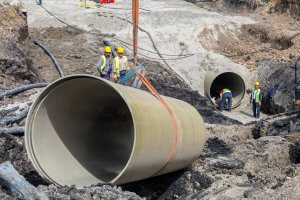
Pressure Surge Analysis Introduction An existing power plant of Essent will be extended with a new power plant. The new power plant is based on a Combined Cycle Unit (CCU) which includes the combination of a Gas Turbine with a Steam System. The surface condenser of the new power plant
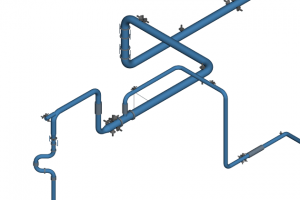
Combined Pressure Surge and Dynamic Stress Analysis Introduction In the harbor of Antwerp an unloading line was being commissioned for use with cyclohexane. This line features two ship loading arms, located at the end of a jetty. From the loading arms, the unloading line runs towards two storage tanks. Transient
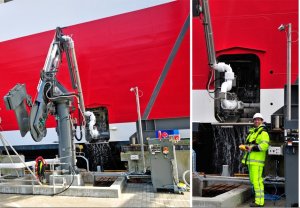
Pressure Surge Analysis Introduction An LNG-plant was planning to construct an additional LNG bunkering line that will be used to fuel ferry ships in Stavanger. Both a main and booster pump are used to achieve the flow through the 600-meter-long pipe line connecting to the ships through a loading arm,
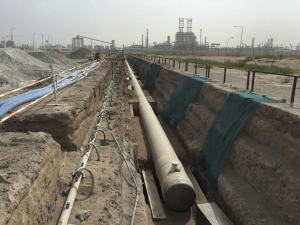
Feasibility Study Introduction A cooling water system consists of a large underground branched GRP piping system connecting to steel branch continuations at each U/G-A/G interface. In the detailed design phase the fitness for purpose of the GRP part of the system will be demonstrated by the GRP supplier by means

Vibrations had been seen in the piping of a reciprocating compressor plant and the operator of the plant was worried that fatigue cracks could occur. Therefore a study was conducted by DRG to determine how the vibration levels could be reduced and whether they were leading to stress levels exceeding

Accumulators are used to reduce pressure pulsations from reciprocating pumps by adding volume to the piping. In the preliminary design stage the size and position of the accumulator needs to be determined before the piping design is completed. The performance of the system including the pump and connected piping is

DYNAFLOW RESEARCH GROUP (“DRG”) Enters into Reseller Agreement with Quality Professional Software (“QPS”) RIJSWIJK, The Netherlands – January 24, 2024 (Dynaflow Research Group BV) –

Dynaflow Research Group and Seawind Ocean Technology announce collaboration focusing on technical readiness of floating offshore wind applications in the Mediterranean Sea. This landmark partnership