
Engineering Training
FEPipe Essentials Training Course
Dynaflow Research Group has released a new online course: FEPipe Essentials. The objective of this course is to give FEPipe users a strong understanding of

Dynaflow Research Group has released a new online course: FEPipe Essentials. The objective of this course is to give FEPipe users a strong understanding of

On February 9th, Edwin Schimmel, project engineer at Dynaflow Research Group will join a session of EngineeringTrainerTV: “Fiberglass and Steel Piping: Differences in Engineering”. Together

The J-integral Approach in Elastic-Plastic Fatigue Analysis by Tammo Dukker In a fatigue analysis one would like to investigate the susceptibility of a structural component

Last month Dynaflow co-presented a graduate course: “Practical Introduction to Parallel Programming”. The course was organized by the chair on Multiscale Engineering Fluid Dynamics at

Geothermal wells – European sponsored GRE-GEO project: Development of a corrosion-free fiberglass composite well casing as an alternative for a steel casing. As part of
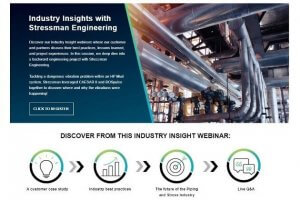
June 9th Dynaflow will join Hexagon PPM’s Industry Insight with Stressman Engineering. Our lead software engineer Mark Groen will join this event to discuss the

In samenwerking met R-Vent hebben wij afgelopen week de webinar: “Hoe visualiseer ik de verspreiding van aerosolen in mijn gebouw?” gepresenteerd. VentiScan heeft een speciaal

Dynaflow Research Group and Hexagon PPM join forces for a series of webinar sessions. In three webinar live sessions we will elaborate how leveraging BOSfluids

The new version of the PRG Finite Element Analysis (FEA) software suite has been released. PRG 2021 contains FEPipe v15.0, NozzlePRO v15.0 and FEATools v15.0

Screw compressors generate pulsations similar to other displacement machines such as reciprocating pumps and compressors. The pulsation suppression devices for screw compressors are also called
” Samen staan we sterker” is een veelal gebruikte slogan sinds dat de Corona-pandemie onder ons is. VentiScan werd opgericht met de gedachte een bijdrage

This year we launched our new service to support schools and other buildings in The Netherlands to optimise their room ventilation against Corona spreading. By
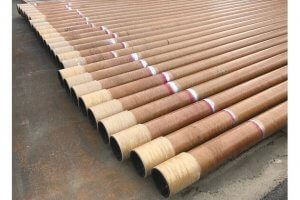
GEOTHERMICA launches Project “Glass Fiber Reinforced Epoxy Casing System for Geothermal Application (GRE GEO)” Some of the main challenges in geothermal are corrosion and scaling.

Many industrial processes involve the transport of granular particles in flowing fluids. Simulation of these granular fluid flows is not trivial because of the different

Press Release Dynaflow Research Group is happy to announce that the European Geothermica project proposal “Glass Fiber Reinforced Epoxy Casing Systems for Geothermal Application” (GRE-GEO)

We are proud to announce the launch of our new service to support schools and other buildings in The Netherlands to optimise their room ventilation

Use DRG cloud licenses: Work more effective from home! During these Covid-19 times many people are working remotely. Software programs which rely on physical devices

Static equipment and piping are designed for a certain design life, often 25 years. During this prolonged use, the material may deteriorate even when the

A detailed Surge analysis leads to a more economic system design compared to a Joukowsky estimate Performing a surge analysis is important to study the

Dynaflow Research Group has a long history in solving advanced flow problems using Computational Fluid Dynamics (CFD) techniques. CFD is applied to a wide range
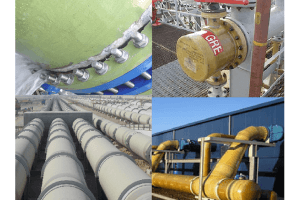
Safety Factors in Fiberglass Engineeringby Mick Bouman (Fiberglass Engineering) For a pipe system or an individual component an engineer must always verify whether the strength

Hydrogen is considered to be a key element in the energy transition. This molecule is the most notable option for the decarbonisation of hard-to-abate sectors
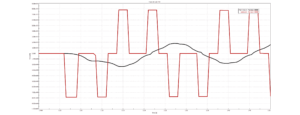
As part of our responsibilities at DRG, we conduct both standard pressure drop calculations and surge/slug analyses for firewater systems. Our involvement spans various stages,
Geothermal energy is a promising renewable energy source, but it comes with its own set of challenges. Two significant issues in geothermal well operations are
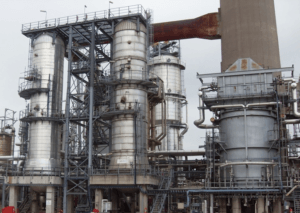
Flow-induced vibrations in piping systems are a critical aspect of mechanical engineering, impacting the reliability and integrity of various industrial setups. The Japan Society of

Introduction In the field of engineering design, the precision of pipe flexibility analysis models is critically important for accurately assessing nozzle loads in steel piping

In 2013, a major incident occurred in a Louisiana chemical plant. In a nonroutine operation, plant operators attempted to start a heat exchanger which had

To understand pressure surges in large piping systems, a good place to start is at home. When you finish washing your hands, turning off the

Brief introduction to piping vibrations Vibrations are an oscillatory motion about an equilibrium. The oscillatory movement causes alternating stresses in the system, which, if excessive

The pulsation challenge of a variable speed reciprocating compressorA pulsation analysis according to the API 618 is a good method of preventing excessive vibrations in

ON-DEMAND 🕖 30 MIN 🌏︎ ENGLISH Understanding and Mitigating AIV and FIV in Modern Plant Design David Tickner Senior Engineer Get instant access
ON-DEMAND 🕖 30 MIN 🌏︎ ENGLISH How To Predict Stresses From Slug Flows Daniëlle de Jong Senior Engineer Get instant access Free recording
ON-DEMAND 🕖 60 MIN 🌏︎ ENGLISH Building models using the import PCF file feature & model verification In BOSfluids Thijs Krijger Project Engineer

ON-DEMAND 🕖 60 MIN 🌏︎ ENGLISH Solving Vibrations In A Two-Phase Process Line Frank Bos Partner Get instant access Free. Recording + slide

ON-DEMAND 🕖 50 MIN 🌏︎ ENGLISH Surge and dynamic stress analysis for an offshore wind farm using BOSfluids Mark Groen Software Lead Engineer

ON-DEMAND 🕖 25 MIN 🌏︎ ESPAÑOL Integración de BOSfluids con Caesar II y otros programas de tensión de tuberías Uri Peker Engineer Get instant
ON-DEMAND 🕖 35 MIN 🌏︎ ENGLISH BOSfluids integration with CAESAR II and other pipe stress programs Ryan Metcalf Manager USA Get instant access

Two existing steel cooling water headers were to be replaced with Glass Reinforced Epoxy (GRE) piping under two Technical Change Requests. This case study covers the first request, for the main cooling water header “boiler”. The second, covers the “lube” header. A flexibility analysis was required, together with recommendations, to

An 8-inch line carrying two-phase content from a heat exchanger to a gasoil stripper at a refinery had been vibrating for years, mainly in the two shorter horizontal sections, one downstream of the heat exchanger and one just upstream of the stripper. The operator had reported vibration for 5 to

A line in the creep range, where the weight loads set the support design The line studied here is the revised fluegas overhead line between the third stage separator and the superheater. It operates at 725 °C in the hot walled sections and 200 °C in the cold walled section,

A coil anchored at both ends, with the cross-over overloaded In a refinery furnace, the radiant coil carries crude. Under a project designated high TAN, the existing carbon steel radiant coil piping is to be replaced by stainless steel, grade A312 TP316Ti. This account presents the stress analysis of the

Lines assessed 4 Pipe content Two-phase gas-liquid flow, all process conditions Flow regime, start-up Slug flow Flow regime, normal operation Annular flow Pipe material A 358 type 321, main material Design temperature 400 °C Design pressure 77.5 bar, Lines 1 and 3; 81.0 bar, Lines 2 and 4 Liquid slug

Line temperature 700 °C Design temperature 755 °C Design pressure 4.2 barg Pipe material A 312 type 304H Allowable stresses ASME B31.3 Appendix A Expansion loop 4 inch, 6,000 mm deep Creep-range service on the catalyst withdrawal line A waste catalyst line runs from the regenerator to the waste catalyst

Recently, fatigue cracks were discovered in the first-stage discharge line’s small-bore instrumentation branches of a hydrogen compressor. Initial investigations pointed to excessive out-of-plane vibrations as the primary driver of these failures. While the system was originally installed in 1995 with a pulsation study, and further axial supporting was added in

In industrial effluent systems, piping integrity is often threatened by the geotechnical behavior of the surrounding soil. This case study examines the peer review of a stress analysis for effluent pipelines situated between valve chambers. The primary challenge identified is differential settlement, where unpiled concrete pit walls shift relative to
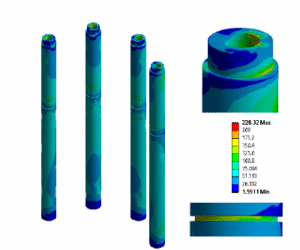
Introduction This case study presents the finite element analysis (FEA) and verification process conducted for the pressure-containing parts of the F35-340 actuator, developed by Actuator Technology Company. The primary goal was to demonstrate the structural integrity of the actuator under specified operating conditions and to ensure compliance with the requirements

This case study presents the fatigue assessment of the 28L oil separator (Atlas part number 1625481501), performed to verify the vessel’s durability under cyclical internal pressure in accordance with the AD2000 S2 standard. The separator is subject to a cyclic pressure loading from atmospheric pressure up to 15 barg, which
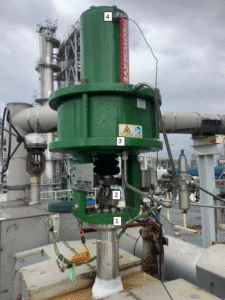
This project examines the root cause of increased vibrations observed in the control valve 670FC005-VC at Shell Pernis following its replacement with a new valve from a different manufacturer. The resulting vibrations led to a critical mechanical failure at the connection between the valve stem and the actuator. The objectives

At BP Geel, a new extension of the fire protection system experienced operational failures during start-up due to surge effects. A similar incident with line AFW-023025 had previously prompted a surge analysis, leading to the current study focused on the adjacent foam system, line AFW-023024. The foam line, running nearly
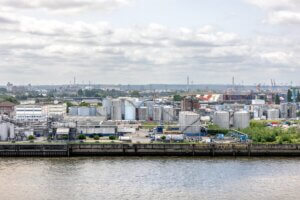
At the BP Geel facility, a previous failure of the fire protection system during start-up prompted a detailed investigation into surge effects within the network. The incident occurred on line AFW-023025, and subsequent studies identified hydraulic transients as the primary cause. Given the similar configuration and operating principle of the

The ONE GUYANA Floating Production Storage and Offloading (FPSO) unit has been designed to operate in deepwater conditions with a production capacity of 250,000 barrels of oil per day. The FPSO is designed for a 20-year operational life, handling complex processes including water and gas injection. Previous projects highlighted the

During this project the optimal wearplate thickness for pipe supports on the FPSO Maria Quiteria was investigated, aligning with the Yinson project specifications. The primary objective was to validate whether the prescribed wearplate thicknesses—6mm for pipes of 10” and smaller, 10mm for larger pipes, and 12.7mm for pipes with higher

On the Goliat Floating Production Storage and Offloading (FPSO) unit, significant vibration and cavitation phenomena were observed downstream of control valve 71PV1103 on the minimum flow line of pump B during maximum flow conditions. Additionally, pressure surges were reported during system start-up through this minimum flow line. Such issues posed

The Petrojarl I Floating Production, Storage, and Offloading (FPSO) facility, in operation since 1986 in the North Sea, underwent critical modifications to prepare for deployment at the Atlanta oil field offshore Brazil. The relocation entailed adapting the crude oil offloading system to manage Brazilian crude with higher viscosity and to
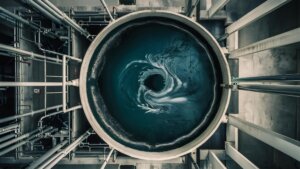
The client commissioned a surge analysis for the Waste Water (WW) system at the Rotterdam terminal. The analysis aimed to quantify transient pressures and unbalanced forces generated by various hydraulic events: pump trips, pump startups, pump switchovers, and the closure of two key butterfly valves. The analysis was performed using
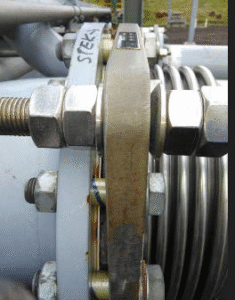
This case study presents the findings of a comprehensive pipe stress analysis of several tank lines following a leakage incident at an expansion joint. The analysis was initiated after segments of the tank lines were replaced with new routing. Upon operation of the system, a leak was detected at the
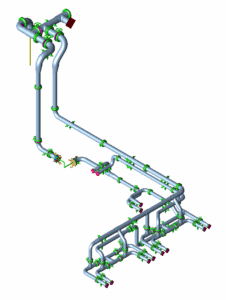
The project focused on evaluating the mechanical integrity and support strategy of a glass-reinforced plastic (FRP) piping system lined with unplasticized polyvinyl chloride (PVC-U), designed to protect the glass-reinforced plastic structural layer against the corrosive gas mixture. The temporary installation provides an additional gas cleaning stage for the sulphuric acid
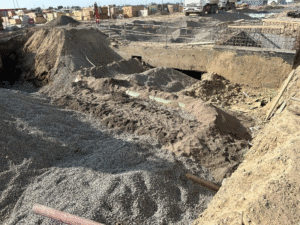
This case study presents a technical assessment of the Glass Reinforced Plastic (GRP) piping system installation at a power plant, based on a visit conducted at its site. The evaluation focused on the material quality, engineering, and site installation activities for the project’s cooling water and firewater systems. Particular attention

DYNAFLOW RESEARCH GROUP (“DRG”) Enters into Reseller Agreement with Quality Professional Software (“QPS”) RIJSWIJK, The Netherlands – January 24, 2024 (Dynaflow Research Group BV) –

Dynaflow Research Group and Seawind Ocean Technology announce collaboration focusing on technical readiness of floating offshore wind applications in the Mediterranean Sea. This landmark partnership