
Software
Dynaflow Announces Major Software Release
Dynaflow Research Group is pleased to announce the new major releases of all of the DRG software products, including BOSfluids, BOSpulse, ISOtracer, and BOSview. Version 7.1.

Dynaflow Research Group is pleased to announce the new major releases of all of the DRG software products, including BOSfluids, BOSpulse, ISOtracer, and BOSview. Version 7.1.

Dynaflow Research Group will be one of the exhibitors at TPS Turbomachinery & Pump Symposia (TPS) in Houston, Texas. TPS is a vital industry event,

On July 5th Dynaflow will organize a Software User Day. During this event participants will learn about new and upcoming features, discuss existing features and meet other

Recently Dynaflow Research Group together with online training platform EngineeringTrainer.com released “How to Review a Pulsation Study” training course. The course objective is to explain

In April of this year Dynaflow Research Group will present two papers at the International Conference on Pressure Surges.

Dynaflow Research Group will give a technical presentation during the SPE Symposium: Non-Metallics in Abu Dhabi February 2023.

We are pleased to announce that Frank Bos has been elected partner at Dynaflow Research Group.

From March 20th until March 24th, Dynaflow Research Group will collaborate with the Numerical Analysis group of the Department of Applied Mathematics at Delft University

We are glad to announce that the BOSfluids course has been updated. The course has been restructured and expanded to provide insights on the latest version of the BOSfluids program.
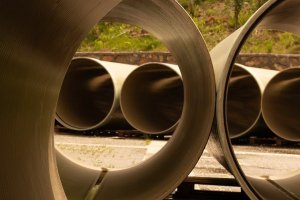
The basis for reliable fiberglass piping systems are the specifications that lay out the requirements to the system regarding material quality, engineering, installation and inspection and test plans.

Cooling water installations are designed to cool an installation in the event of a nearby fire. This can be necessary if the contents of a tank or pressure vessel are likely to expand with heat. We can use BOSfluids to perform hydraulic calculations of steady state flows in a cooling water system that includes many deluge nozzles (sprinklers).

The latest BOSfluids release brings a new, low-cost license option that is aimed at users who are primarily interested in performing steady state analyses.

Dynaflow Research Group has recently performed several level 1 and 3 assessments resulting in either extended service lifetimes or recommendation of component replacement.

The new BOSfluids release brings many small and large improvements to its user interface that make it even more efficient and versatile.
Dynaflow proudly presents a new online training course: “Pipe Stress Analysis”.
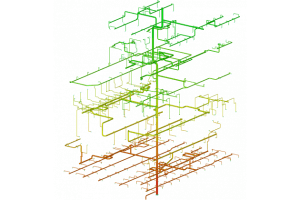
Dynaflow Research Group has performed the design and analysis for the firewater deluge layout of two large production modules of a floating production storage and
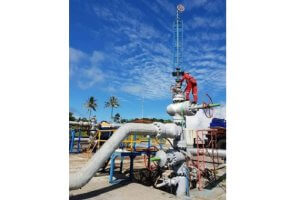
Two of the key challenges currently encountered in operating geothermal wells using conventional steel casings are corrosion and scaling. These problems significantly reduce the lifespan

Today Dynaflow Research Group will join the TU Delft Institute for Computational Science and Engineering (DCSE) in hosting an introductory course in the use of

When do you need to perform a fatigue analyses according ASME BPVC? This webinar explains the screening methods that are provided in ASME-VIII – Div 2.
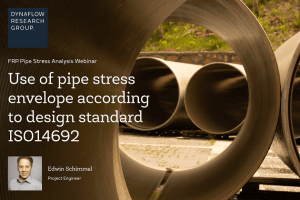
Coming weeks Dynaflow Research Group will host a webinar series around the use of the stress envelope for FRP stress analysis. In this webinar series

Seawind have developed with early partners Offshore Wind Plant layouts and is applying for sea area concessions in the Mediterranean Sea sector. The Mediterranean Sea

Benefit of computational simulation of a pulsation dampener compared to an analytical method Accumulators are used to reduce pressure pulsations from reciprocating pumps by adding

ON-DEMAND 🕖 50 MIN 🌏︎ ENGLISH Acoustically Induced Fatigue in Gas Filled Piping Systems Using BOSfluids Remco Boere Senior Software Engineer Get instant access

ON-DEMAND 🕖 60 MIN 🌏︎ ENGLISH Simulation Strategies and Practical Application for Vapour Cavity Formation Dr. Ir. Erik Jan Lingen Software Director Get
ON-DEMAND 🕖 60 MIN 🌏︎ ENGLISH Fundamentals, Failure Mechanisms, and Engineering Consequences of Vapor Cavity Formation Dr. Ir. Erik Jan Lingen Software Director

ON-DEMAND 🕖 45 MIN 🌏︎ ENGLISH Bridging the Gap: From NFPA 15 Steady-State Design to Transient Surge Analysis in Tank Terminals Uri Peker

ON-DEMAND 🕖 45 MIN 🌏︎ ENGLISH Support Stiffness Effects on Mechanical Natural Frequencies in Reciprocating Compressor Piping Systems Thijs Krijger Project Engineer Get

ON-DEMAND 🕖 60 MIN 🌏︎ ENGLISH Beyond hydraulics: a practical guide to fire water analyses with BOSfluids Dr. Ir. Erik Jan Lingen Software
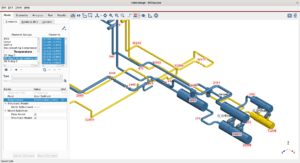
ON-DEMAND 🕖 3 SESSIONS x 45 MIN 🌏︎ ENGLISH Complete Pulsation Analysis Using BOSpulse Tim Gebraad Software Lead Engineer Marienne Faro Software Sales Engineer

ON-DEMAND 🕖 60 MIN 🌏︎ ENGLISH Getting the Timing Right: Why Time Step Size Is Critical In Surge Analysis Dr. Ir. Erik Jan
ON-DEMAND 🕖 30 MIN 🌏︎ ENGLISH Protecting Tank Terminal Assets Through Surge and FFS Analyses Thijs Krijger Project Engineer Katrine van Overhagen Engineer

ON-DEMAND 🕖 60 MIN 🌏︎ ENGLISH Choosing the right GRE piping standard: a comparison of ISO 14692 and ASME NM.2 Edwin Schimmel Project Engineer

ON-DEMAND 🕖 50 MIN 🌏︎ ENGLISH How Stepless Capacity Control Shapes Flow and Pulsations Thijs Krijger Project Engineer Get instant access Free. Recording

ON-DEMAND 🕖 60 MIN 🌏︎ ENGLISH Water Hammer Analysis & Mitigation in Pipeline Systems with BOSfluids Dr. Ir. Erik Jan Lingen Software Director

ON-DEMAND 🕖 60 MIN 🌏︎ ENGLISH Water Hammer Analysis & Mitigation in Pipeline Systems with BOSfluids Dr. Ir. Erik Jan Lingen Software Director

ON-DEMAND 🕖 35 MIN 🌏︎ ENGLISH Understanding, Modelling, and Managing Thermal Bowing using CAESAR II David Tickner Senior Engineer Get instant access Free.
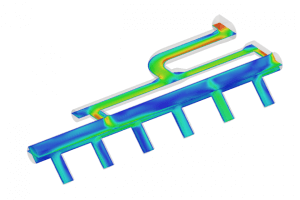
ON-DEMAND 🕖 35 MIN 🌏︎ ENGLISH Using CFD for optimizing multiphase process engineering Bart van der Zalm Senior Engineer Get instant access Free.

DRG CONFERENCE – 35TH ANNIVERSARY 🌏︎ ENGLISH Innovations that Change the Engineering Industry Get instant access Free. Recording + slide deck available Event Description

ON-DEMAND 🕖 35 MIN 🌏︎ ENGLISH Fatigue Assessment According to ASME B&PV VIII Div.2 Lukas Bajarunas Senior Software Engineer Get instant access Free
ON-DEMAND 🕖 45 MIN 🌏︎ ENGLISH Fiberglass Piping Stress Envelope According to ISO 14692 using CAESAR II Edwin Schimmel Project Engineer Get instant

ON-DEMAND 🕖 30 MIN 🌏︎ ENGLISH Understanding and Mitigating AIV and FIV in Modern Plant Design David Tickner Senior Engineer Get instant access
ON-DEMAND 🕖 30 MIN 🌏︎ ENGLISH How To Predict Stresses From Slug Flows Daniëlle de Jong Senior Engineer Get instant access Free recording
ON-DEMAND 🕖 60 MIN 🌏︎ ENGLISH Building models using the import PCF file feature & model verification In BOSfluids Thijs Krijger Project Engineer

A manhole interrupts the load-bearing shell of an elbow or tee, so the component is regarded as a non-standard piping fitting. The three fittings here are two 20 inch long-radius elbows, EX-23 and EZ-22, in SA-234 Gr. WP11 Cl. 1, and one 32 inch ASME B16.9 welding tee, FB-11, in

Furnace F-501 at a refinery heats crude through radiant coils made of A312 TP316Ti stainless steel. Each coil enters the radiant section at grade level, runs 21 loops parallel to the refractory lined furnace wall, crosses over to the roof section, makes 8 further loops against the roof, and leaves

Two identical Visbreaker bottom pumps at an onshore refinery were due for replacement. The existing pumps were of single side suction execution, the new pumps of double side suction execution. For the new pumps a minimum straight length of five times the diameter (5D) was specified directly upstream of the

A gas line between the high and low pressure separators of a hydrocracking unit failed in service, probably through material fatigue caused by vibration. An additional 3-way stop was fitted just downstream of the TSO valve to reduce vibration levels, and vibration was then measured at nine locations on the

The crude heating system serves one of two distillation trains: crude is preheated in a convection box, heated in the radiant section of the furnace and carried by a feed line to the tower. Crude heating generates two-phase flow, whose fluctuations impose the unsteady unbalanced loads at elbows and tees

At a refinery, a branch connection designated W31056, the 2″ line that ties in to the high-pressure steam attemperator J-3103 (a desuperheater), failed in service. A similar failure had occurred about twenty years earlier, in 1992. On-site observations report periodic movement of the connecting header, line 6″-S31022, which contains the

A refinery operator is replacing two existing steel main cooling water headers with Glass Reinforced Epoxy (GRE) piping. The two changes were raised as Technical Change Requests, and this case study covers the second of them, the “lube” cooling water header. The GRE consists of a header and a branch

A wash oil line was vibrating in the vertical section downstream of its angle control valve. It has been reported that the vibration amplitude increases with increasing flow, and in the future the mass flow rate may still be increased further. No vibration measurements had been carried out, so the

Undesirable vibrations were observed in the wash oil line between two vessels during activation of the wash oil flow, most severe in the vertical section immediately downstream of the angle control valve. An earlier study had already identified slug flow as the most probable cause and proposed mitigation measures, and

The 10″ inlet and outlet lines of furnace H301 carry two-phase content during all process conditions. Under certain process conditions, staff reported feeling like getting seasick when standing on the platform of the furnace, and the piping was seen vibrating mainly near the furnace. The impact of these dynamic effects

A flue-gas overhead line runs from a third stage separator to a waste heat boiler. It carries gas at a maximum operating temperature of 740 °C upstream of the orifice chamber and is designed for 755 °C in the hot-walled sections. At those temperatures the hot-wall material, stainless steel A240

Two existing steel cooling water headers were to be replaced with Glass Reinforced Epoxy (GRE) piping under two Technical Change Requests. This case study covers the first request, for the main cooling water header “boiler”. The second, covers the “lube” header. A flexibility analysis was required, together with recommendations, to

An 8-inch line carrying two-phase content from a heat exchanger to a gasoil stripper at a refinery had been vibrating for years, mainly in the two shorter horizontal sections, one downstream of the heat exchanger and one just upstream of the stripper. The operator had reported vibration for 5 to

A line in the creep range, where the weight loads set the support design The line studied here is the revised fluegas overhead line between the third stage separator and the superheater. It operates at 725 °C in the hot walled sections and 200 °C in the cold walled section,

A coil anchored at both ends, with the cross-over overloaded In a refinery furnace, the radiant coil carries crude. Under a project designated high TAN, the existing carbon steel radiant coil piping is to be replaced by stainless steel, grade A312 TP316Ti. This account presents the stress analysis of the

Lines assessed 4 Pipe content Two-phase gas-liquid flow, all process conditions Flow regime, start-up Slug flow Flow regime, normal operation Annular flow Pipe material A 358 type 321, main material Design temperature 400 °C Design pressure 77.5 bar, Lines 1 and 3; 81.0 bar, Lines 2 and 4 Liquid slug

Line temperature 700 °C Design temperature 755 °C Design pressure 4.2 barg Pipe material A 312 type 304H Allowable stresses ASME B31.3 Appendix A Expansion loop 4 inch, 6,000 mm deep Creep-range service on the catalyst withdrawal line A waste catalyst line runs from the regenerator to the waste catalyst

Recently, fatigue cracks were discovered in the first-stage discharge line’s small-bore instrumentation branches of a hydrogen compressor. Initial investigations pointed to excessive out-of-plane vibrations as the primary driver of these failures. While the system was originally installed in 1995 with a pulsation study, and further axial supporting was added in

In industrial effluent systems, piping integrity is often threatened by the geotechnical behavior of the surrounding soil. This case study examines the peer review of a stress analysis for effluent pipelines situated between valve chambers. The primary challenge identified is differential settlement, where unpiled concrete pit walls shift relative to
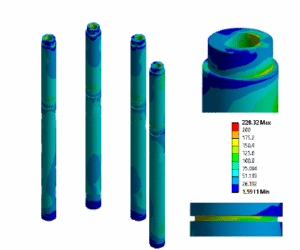
Introduction This case study presents the finite element analysis (FEA) and verification process conducted for the pressure-containing parts of the F35-340 actuator, developed by Actuator Technology Company. The primary goal was to demonstrate the structural integrity of the actuator under specified operating conditions and to ensure compliance with the requirements

This case study presents the fatigue assessment of the 28L oil separator (Atlas part number 1625481501), performed to verify the vessel’s durability under cyclical internal pressure in accordance with the AD2000 S2 standard. The separator is subject to a cyclic pressure loading from atmospheric pressure up to 15 barg, which

DYNAFLOW RESEARCH GROUP (“DRG”) Enters into Reseller Agreement with Quality Professional Software (“QPS”) RIJSWIJK, The Netherlands – January 24, 2024 (Dynaflow Research Group BV) –

Dynaflow Research Group and Seawind Ocean Technology announce collaboration focusing on technical readiness of floating offshore wind applications in the Mediterranean Sea. This landmark partnership