
Software
Annual User day
On July 5th Dynaflow will organize a Software User Day. During this event participants will learn about new and upcoming features, discuss existing features and meet other

On July 5th Dynaflow will organize a Software User Day. During this event participants will learn about new and upcoming features, discuss existing features and meet other

Recently Dynaflow Research Group together with online training platform EngineeringTrainer.com released “How to Review a Pulsation Study” training course. The course objective is to explain

In April of this year Dynaflow Research Group will present two papers at the International Conference on Pressure Surges.

Dynaflow Research Group will give a technical presentation during the SPE Symposium: Non-Metallics in Abu Dhabi February 2023.

We are pleased to announce that Frank Bos has been elected partner at Dynaflow Research Group.

From March 20th until March 24th, Dynaflow Research Group will collaborate with the Numerical Analysis group of the Department of Applied Mathematics at Delft University

We are glad to announce that the BOSfluids course has been updated. The course has been restructured and expanded to provide insights on the latest version of the BOSfluids program.
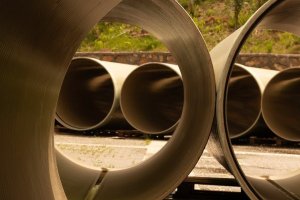
The basis for reliable fiberglass piping systems are the specifications that lay out the requirements to the system regarding material quality, engineering, installation and inspection and test plans.

Cooling water installations are designed to cool an installation in the event of a nearby fire. This can be necessary if the contents of a tank or pressure vessel are likely to expand with heat. We can use BOSfluids to perform hydraulic calculations of steady state flows in a cooling water system that includes many deluge nozzles (sprinklers).

The latest BOSfluids release brings a new, low-cost license option that is aimed at users who are primarily interested in performing steady state analyses.

Dynaflow Research Group has recently performed several level 1 and 3 assessments resulting in either extended service lifetimes or recommendation of component replacement.

The new BOSfluids release brings many small and large improvements to its user interface that make it even more efficient and versatile.
Dynaflow proudly presents a new online training course: “Pipe Stress Analysis”.
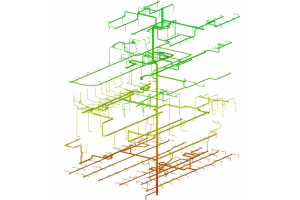
Dynaflow Research Group has performed the design and analysis for the firewater deluge layout of two large production modules of a floating production storage and
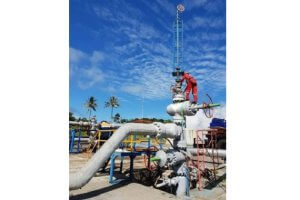
Two of the key challenges currently encountered in operating geothermal wells using conventional steel casings are corrosion and scaling. These problems significantly reduce the lifespan

Today Dynaflow Research Group will join the TU Delft Institute for Computational Science and Engineering (DCSE) in hosting an introductory course in the use of

When do you need to perform a fatigue analyses according ASME BPVC? This webinar explains the screening methods that are provided in ASME-VIII – Div 2.
Coming weeks Dynaflow Research Group will host a webinar series around the use of the stress envelope for FRP stress analysis. In this webinar series

Seawind have developed with early partners Offshore Wind Plant layouts and is applying for sea area concessions in the Mediterranean Sea sector. The Mediterranean Sea
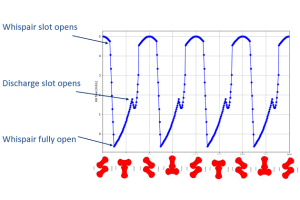
Dynaflow performed an pulsation analysis study for a client where a silencer check was required to dampen the pulsations generated by a rotary lobe blower.

Piping models that you produce are not 100% accurate. To make sure that uncertainties in design do not immediately result in failures in your piping

Benefit of computational simulation of a pulsation dampener compared to an analytical method Accumulators are used to reduce pressure pulsations from reciprocating pumps by adding

ON-DEMAND 🕖 50 MIN 🌏︎ ENGLISH Acoustically Induced Fatigue in Gas Filled Piping Systems Using BOSfluids Remco Boere Senior Software Engineer Get instant access

ON-DEMAND 🕖 60 MIN 🌏︎ ENGLISH Simulation Strategies and Practical Application for Vapour Cavity Formation Dr. Ir. Erik Jan Lingen Software Director Get
ON-DEMAND 🕖 60 MIN 🌏︎ ENGLISH Fundamentals, Failure Mechanisms, and Engineering Consequences of Vapor Cavity Formation Dr. Ir. Erik Jan Lingen Software Director

ON-DEMAND 🕖 45 MIN 🌏︎ ENGLISH Bridging the Gap: From NFPA 15 Steady-State Design to Transient Surge Analysis in Tank Terminals Uri Peker

ON-DEMAND 🕖 45 MIN 🌏︎ ENGLISH Support Stiffness Effects on Mechanical Natural Frequencies in Reciprocating Compressor Piping Systems Thijs Krijger Project Engineer Get

ON-DEMAND 🕖 60 MIN 🌏︎ ENGLISH Beyond hydraulics: a practical guide to fire water analyses with BOSfluids Dr. Ir. Erik Jan Lingen Software
AIV Fundamentals At what pipe diameter and wall thickness should one be concerned about AIV? What is the relevant D/T ratio? This depends on the
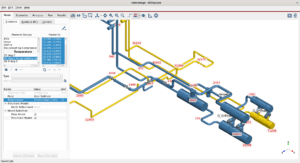
ON-DEMAND 🕖 3 SESSIONS x 45 MIN 🌏︎ ENGLISH Complete Pulsation Analysis Using BOSpulse Tim Gebraad Software Lead Engineer Marienne Faro Software Sales Engineer

ON-DEMAND 🕖 60 MIN 🌏︎ ENGLISH Getting the Timing Right: Why Time Step Size Is Critical In Surge Analysis Dr. Ir. Erik Jan
ON-DEMAND 🕖 30 MIN 🌏︎ ENGLISH Protecting Tank Terminal Assets Through Surge and FFS Analyses Thijs Krijger Project Engineer Katrine van Overhagen Engineer

ON-DEMAND 🕖 60 MIN 🌏︎ ENGLISH Choosing the right GRE piping standard: a comparison of ISO 14692 and ASME NM.2 Edwin Schimmel Project Engineer

ON-DEMAND 🕖 50 MIN 🌏︎ ENGLISH How Stepless Capacity Control Shapes Flow and Pulsations Thijs Krijger Project Engineer Get instant access Free. Recording

ON-DEMAND 🕖 60 MIN 🌏︎ ENGLISH Water Hammer Analysis & Mitigation in Pipeline Systems with BOSfluids Dr. Ir. Erik Jan Lingen Software Director

ON-DEMAND 🕖 60 MIN 🌏︎ ENGLISH Water Hammer Analysis & Mitigation in Pipeline Systems with BOSfluids Dr. Ir. Erik Jan Lingen Software Director

ON-DEMAND 🕖 35 MIN 🌏︎ ENGLISH Understanding, Modelling, and Managing Thermal Bowing using CAESAR II David Tickner Senior Engineer Get instant access Free.
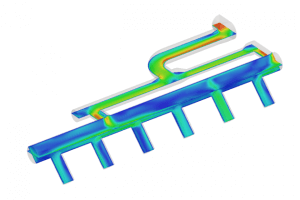
What are the key challenges in applying CFD to simulate and optimize multiphase processes in complex industrial systems? The main challenge here is the ability

Do CAESAR II formulas for thermal bowing and output results match with FEA? Short Answer: There can be significant differences between the results of CAESAR II and FEA.Explanation:The
ON-DEMAND 🕖 35 MIN 🌏︎ ENGLISH Using CFD for optimizing multiphase process engineering Bart van der Zalm Senior Engineer Get instant access Free.

DRG CONFERENCE – 35TH ANNIVERSARY 🌏︎ ENGLISH Innovations that Change the Engineering Industry Get instant access Free. Recording + slide deck available Event Description

ON-DEMAND 🕖 35 MIN 🌏︎ ENGLISH Fatigue Assessment According to ASME B&PV VIII Div.2 Lukas Bajarunas Senior Software Engineer Get instant access Free
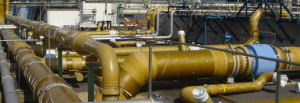
ON-DEMAND 🕖 45 MIN 🌏︎ ENGLISH Fiberglass Piping Stress Envelope According to ISO 14692 using CAESAR II Edwin Schimmel Project Engineer Get instant

At an oil refinery plant in Saudi Arabia, a fiberglass-reinforced plastic (FRP) pipe fire water system has been installed, predominantly buried underground. Since its installation, the system has experienced several failures. DRG was tasked with conducting a comprehensive pipe stress analysis to assess the system’s integrity. This analysis focused on

In a new industrial process, an existing floating head heat exchanger is being repurposed. The operational conditions involve cyclic loading, which were not originally considered during its design phase. To evaluate the impact of these cyclic loads on the heat exchanger, Dynaflow Research Group conducted a comprehensive fatigue analysis. Analysis

A gas compressor station, comprising five similar compressor units connected by an inlet and outlet header, is planned for offshore construction in Mexico. Each unit features three compressor stages that elevate the gas pressure from ambient levels to 95 bar. This substantial pressure increase is accompanied by a significant temperature

Dynaflow Research Group (DRG) conducted comprehensive pipe stress analyses for a large oil and gas extraction facility. This facility comprises three onshore flow stations, one offshore flow station, and a gas export compressor station. Crude oil and gas are transported from the wells to the flow stations, where the crude
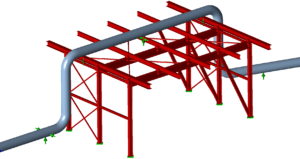
A steel pipeline was under construction for offloading naphtha from ships arriving at a jetty. A surge analysis was conducted to evaluate the pipeline’s capability under various transient upset scenarios. Following this, a dynamic stress and flexibility study was performed based on the calculated pressure surges. Analysis A transient one-dimensional
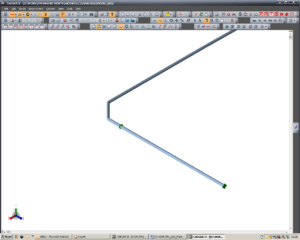
A comprehensive stress and surge analysis was performed for the firewater piping system of an LNG plant located in South America. The system, constructed using Glassfiber Reinforced Epoxy (GRE) pipes, underwent a dynamic response analysis to account for the largest and most critical unbalanced forces. Surge Analysis The existing firewater

This case study examines the detailed fatigue stress analysis conducted on a heat exchanger used to heat Polyol before it entered a refinery reactor. The complex 8-pass, U-tube configuration with a flanged stationary tube sheet required thorough investigation to ensure operational integrity and longevity. Analysis Methodology Engineers identified and analyzed
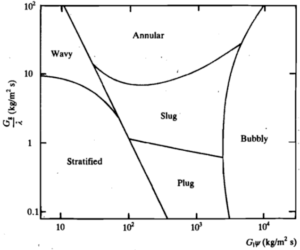
A fuel jetty terminal operator expressed concerns about potential two-phase flow issues during off-loading operations. The client indicated that trapped nitrogen used for purging lines could mix with the liquid being off-loaded when empty ship tanks were flushed with inert nitrogen. This scenario raised the possibility of slug flow development,

In this case study, a number of critical sections in an already installed fire water system were selected for review. At the time of the analysis, earlier on-site interventions had already been made, motivated by pipe failures. The analysis aimed to determine if additional interventions were necessary. Analysis Based on

This case study describes the stress analysis performed on a firewater piping system located in the Middle East. The system was constructed using Glassfier Reinforced Epoxy (GRE) pipes. Most of the piping was buried underground and included several connections to above-ground steel piping, fire hydrants, and similar equipment. Analysis The

Introduction At a Flow Station in Nigeria, vibration issues were observed in the suction and discharge headers, as well as the pump recirculation line. To address these concerns and identify potential underlying issues, DRG conducted a comprehensive pulsation analysis combined with a mechanical response assessment. Analysis A stress model was

Introduction In this case study, we explored the pulsation and vibration phenomena at a gas compression station equipped with four centrifugal compressors. These compressors generate flow pulsations due to the action of the impellors, which can excite the system’s acoustic and mechanical natural frequencies. To understand and evaluate the system’s

Introduction During the start-up and normal operation phases of a Gasoil Hydrofiner system, significant vibrations were observed in its piping. These vibrations, described as “large amplitude,” were particularly concerning. The unit’s piping was divided across four separate pipelines. Analysis Upon examining the system under various process conditions, it was determined
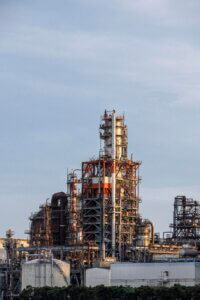
Pressure surges ocurr in piping systems whenever there are sudden changes in flow resistance from steady operation. Surges can cause significant damage, also at locations far removed from where they are initiated. For large or complex piping systems, this can make their impact challenging to predict without specialist analysis. Dynaflow

Introduction In this case study, we encountered undesirable vibrations in the downstream line of an angle control valve within a wash oil line. Initially, the upstream wash oil boasted a pressure of 150 bar and a temperature of 400°C. However, downstream of the valve, there was a significant pressure drop

Introduction A surge analysis and static stress analysis were necessitated for an FRP ballast water system following a prior incident to prevent its recurrence. The ballast system’s function was to redistribute water among compartments to balance oil storage. Analysis Surge Analysis One of the main objectives of the surge analysis

Introduction In the North Sea, three monopiles were equipped with a deluge fire-fighting system. To ensure its effectiveness, a water hammer calculation was carried out. This system comprised a two-ring fire water setup, with four sprinkler lines linked to the lower ring. Additionally, considerations were made for potential future scenarios

Introduction In the context of a gas facility, the addition of new units necessitated the enhancement of the existing firewater system. This system was designed to ensure a reliable source of firewater storage, make-up, and distribution capacity to effectively address the plant’s fire safety requirements. Analysis The objectives of the

Introduction In this case study, the focal point was addressing the high vibration levels observed in the process piping extending from a heat exchanger to a separator. Concerns were raised regarding the potential for dynamic stress to induce fatigue failures in the equipment nozzles over time. The flow within the
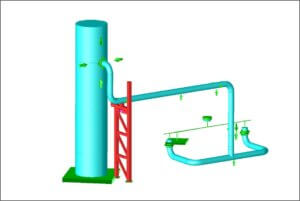
Introduction In this case study, we addressed a notable vibration issue observed in the main 16” line at a chemical plant, which was suspected to stem from slug flow. Specifically, the concern centered around the 16” pipe connection linking a low-temperature separator and a heat exchanger. Dynaflow Research Group was
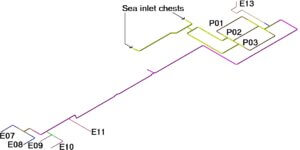
Introduction This case involved fulfilling a client’s request to perform a surge analysis and static and dynamic stress analysis about the cooling water lines and associated supporting steel on a dredger. Analysis The objective of the surge analysis was to define the cooling water flow rates during a steady state

DYNAFLOW RESEARCH GROUP (“DRG”) Enters into Reseller Agreement with Quality Professional Software (“QPS”) RIJSWIJK, The Netherlands – January 24, 2024 (Dynaflow Research Group BV) –

Dynaflow Research Group and Seawind Ocean Technology announce collaboration focusing on technical readiness of floating offshore wind applications in the Mediterranean Sea. This landmark partnership