Software
Complete Pulsation Analysis Using BOSpulse – Q&A Session
Is it required to have node increments in piping according to flow direction? The node numbering is not related to the flow direction. The flow

Is it required to have node increments in piping according to flow direction? The node numbering is not related to the flow direction. The flow

Our 2025 classroom training course schedule for CAESAR II Statics, CAESAR II Dynamic and PV-Elite is online! We also offer a wide range of online training courses in fiberglass engineering, fluid flow, piping and pressure vessel design.

The combustion air system of an incinerator is a crucial component for its operation, consisting of a fan, two skids, interconnecting piping, and the incinerator

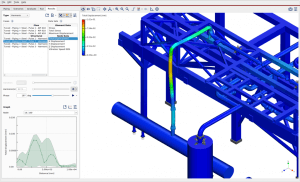
Introduction In a large industrial plant located in the southern Netherlands, a complex pipeline network traverses multiple sections separated by two major highways. This network,
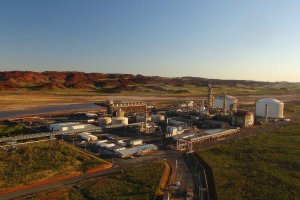
A new off-loading system is under consideration for an ammonia storage plant, designed to transfer ammonia (NH3) from a jetty to three storage tanks. This

The exploration of various methods to enhance the Finite Element Analysis (FEA) of a 6-bed polybed vessel focuses on addressing potential fatigue issues. A Finite
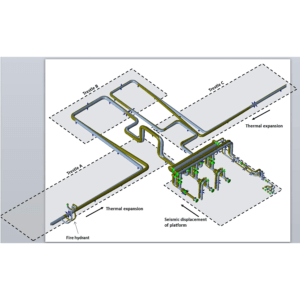
During the design phase of a sea jetty for an oil terminal, Dynaflow Research Group (DRG) conducted a comprehensive stress analysis for the glass reinforced

The vessel under consideration features three horizontal trays positioned at different elevations. These perforated trays are supported by and welded to a support ring, which

A finite element analysis (FEA) was requested for a fiberglass coupler used in centrifugal cast fiberglass pipes. The aim was to evaluate the structural integrity
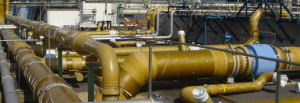
In the framework of a testing program for glass-reinforced epoxy (GRE) pipes, the long-term material strength properties at a high temperature of 150°C are determined
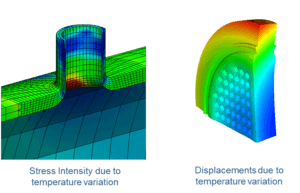
A shell and tube heat exchanger is utilized to condense propylene gas. The temperature of the propylene gas entering the shell side cycles through a

The client requested a static stress analysis for two cooling water headers, which were to be replaced with headers made from Glass Reinforced Epoxy (GRE).

Two identical spherical tanks, designed and commissioned in the 1960s for the storage of pressurized liquid butane, require re-evaluation for a new purpose. Each tank

A dryer vessel is designed for the purpose of removing water from ‘wet’ propylene liquid, where ‘wet’ denotes the presence of a small quantity of
A 5-inch glass-reinforced epoxy (GRE) transportation line has been installed underground, featuring several above-ground steel pipe connections. Designed to withstand a pressure of 150 bar

A planned modification to a cokes gas piping involves the installation of a new pipeline to a gas user and the decommissioning of an existing

A stress analysis was conducted on a tubular heat condenser utilizing finite element analysis (FEA). This condenser configuration includes a rotational asymmetric tube bundle secured

Introduction Following the replacement of an older tail gas heater, issues with leakage from the top tubesheet flange connection have emerged during production. Despite attempts
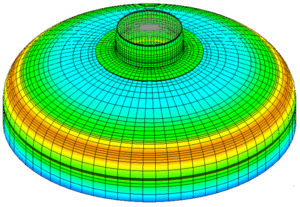
This case study details the determination of wall thickness for a Glass Reinforced Epoxy (GRE) tank. Analysis The process of defining the wall thickness was

A large-diameter seawater dump caisson, constructed from Glass Reinforced Epoxy (GRE), required a comprehensive strength assessment. This caisson featured five nozzles, with one positioned in

Dynaflow Research Group (DRG) conducted a static analysis of a rectifier or afterwash column, which consisted of a carbon steel shell with a 15 mm

Benefit of computational simulation of a pulsation dampener compared to an analytical method Accumulators are used to reduce pressure pulsations from reciprocating pumps by adding

ON-DEMAND 🕖 50 MIN 🌏︎ ENGLISH Acoustically Induced Fatigue in Gas Filled Piping Systems Using BOSfluids Remco Boere Senior Software Engineer Get instant access

ON-DEMAND 🕖 60 MIN 🌏︎ ENGLISH Simulation Strategies and Practical Application for Vapour Cavity Formation Dr. Ir. Erik Jan Lingen Software Director Get
ON-DEMAND 🕖 60 MIN 🌏︎ ENGLISH Fundamentals, Failure Mechanisms, and Engineering Consequences of Vapor Cavity Formation Dr. Ir. Erik Jan Lingen Software Director

ON-DEMAND 🕖 45 MIN 🌏︎ ENGLISH Bridging the Gap: From NFPA 15 Steady-State Design to Transient Surge Analysis in Tank Terminals Uri Peker

ON-DEMAND 🕖 45 MIN 🌏︎ ENGLISH Support Stiffness Effects on Mechanical Natural Frequencies in Reciprocating Compressor Piping Systems Thijs Krijger Project Engineer Get

ON-DEMAND 🕖 60 MIN 🌏︎ ENGLISH Beyond hydraulics: a practical guide to fire water analyses with BOSfluids Dr. Ir. Erik Jan Lingen Software
AIV Fundamentals At what pipe diameter and wall thickness should one be concerned about AIV? What is the relevant D/T ratio? This depends on the
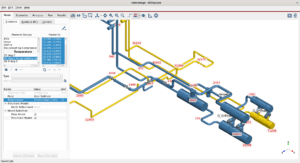
ON-DEMAND 🕖 3 SESSIONS x 45 MIN 🌏︎ ENGLISH Complete Pulsation Analysis Using BOSpulse Tim Gebraad Software Lead Engineer Marienne Faro Software Sales Engineer

ON-DEMAND 🕖 60 MIN 🌏︎ ENGLISH Getting the Timing Right: Why Time Step Size Is Critical In Surge Analysis Dr. Ir. Erik Jan
ON-DEMAND 🕖 30 MIN 🌏︎ ENGLISH Protecting Tank Terminal Assets Through Surge and FFS Analyses Thijs Krijger Project Engineer Katrine van Overhagen Engineer

ON-DEMAND 🕖 60 MIN 🌏︎ ENGLISH Choosing the right GRE piping standard: a comparison of ISO 14692 and ASME NM.2 Edwin Schimmel Project Engineer

ON-DEMAND 🕖 50 MIN 🌏︎ ENGLISH How Stepless Capacity Control Shapes Flow and Pulsations Thijs Krijger Project Engineer Get instant access Free. Recording

ON-DEMAND 🕖 60 MIN 🌏︎ ENGLISH Water Hammer Analysis & Mitigation in Pipeline Systems with BOSfluids Dr. Ir. Erik Jan Lingen Software Director

ON-DEMAND 🕖 60 MIN 🌏︎ ENGLISH Water Hammer Analysis & Mitigation in Pipeline Systems with BOSfluids Dr. Ir. Erik Jan Lingen Software Director

ON-DEMAND 🕖 35 MIN 🌏︎ ENGLISH Understanding, Modelling, and Managing Thermal Bowing using CAESAR II David Tickner Senior Engineer Get instant access Free.
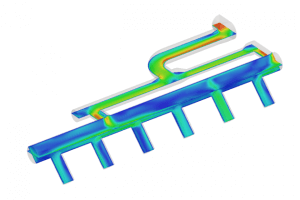
What are the key challenges in applying CFD to simulate and optimize multiphase processes in complex industrial systems? The main challenge here is the ability

Do CAESAR II formulas for thermal bowing and output results match with FEA? Short Answer: There can be significant differences between the results of CAESAR II and FEA.Explanation:The
ON-DEMAND 🕖 35 MIN 🌏︎ ENGLISH Using CFD for optimizing multiphase process engineering Bart van der Zalm Senior Engineer Get instant access Free.

DRG CONFERENCE – 35TH ANNIVERSARY 🌏︎ ENGLISH Innovations that Change the Engineering Industry Get instant access Free. Recording + slide deck available Event Description

ON-DEMAND 🕖 35 MIN 🌏︎ ENGLISH Fatigue Assessment According to ASME B&PV VIII Div.2 Lukas Bajarunas Senior Software Engineer Get instant access Free
ON-DEMAND 🕖 45 MIN 🌏︎ ENGLISH Fiberglass Piping Stress Envelope According to ISO 14692 using CAESAR II Edwin Schimmel Project Engineer Get instant

A coil anchored at both ends, with the cross-over overloaded In a refinery furnace, the radiant coil carries crude. Under a project designated high TAN, the existing carbon steel radiant coil piping is to be replaced by stainless steel, grade A312 TP316Ti. This account presents the stress analysis of the

Lines assessed 4 Pipe content Two-phase gas-liquid flow, all process conditions Flow regime, start-up Slug flow Flow regime, normal operation Annular flow Pipe material A 358 type 321, main material Design temperature 400 °C Design pressure 77.5 bar, Lines 1 and 3; 81.0 bar, Lines 2 and 4 Liquid slug

Line temperature 700 °C Design temperature 755 °C Design pressure 4.2 barg Pipe material A 312 type 304H Allowable stresses ASME B31.3 Appendix A Expansion loop 4 inch, 6,000 mm deep Creep-range service on the catalyst withdrawal line A waste catalyst line runs from the regenerator to the waste catalyst

Recently, fatigue cracks were discovered in the first-stage discharge line’s small-bore instrumentation branches of a hydrogen compressor. Initial investigations pointed to excessive out-of-plane vibrations as the primary driver of these failures. While the system was originally installed in 1995 with a pulsation study, and further axial supporting was added in

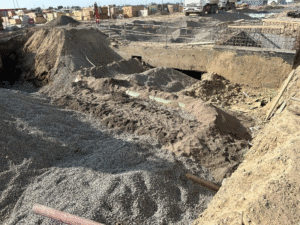
In industrial effluent systems, piping integrity is often threatened by the geotechnical behavior of the surrounding soil. This case study examines the peer review of a stress analysis for effluent pipelines situated between valve chambers. The primary challenge identified is differential settlement, where unpiled concrete pit walls shift relative to
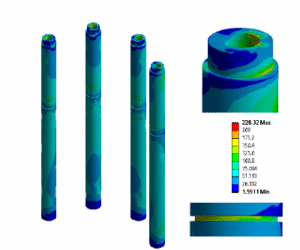
Introduction This case study presents the finite element analysis (FEA) and verification process conducted for the pressure-containing parts of the F35-340 actuator, developed by Actuator Technology Company. The primary goal was to demonstrate the structural integrity of the actuator under specified operating conditions and to ensure compliance with the requirements

This case study presents the fatigue assessment of the 28L oil separator (Atlas part number 1625481501), performed to verify the vessel’s durability under cyclical internal pressure in accordance with the AD2000 S2 standard. The separator is subject to a cyclic pressure loading from atmospheric pressure up to 15 barg, which
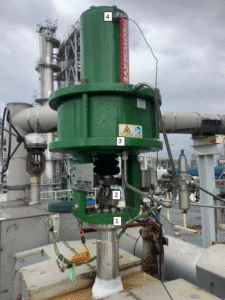
This project examines the root cause of increased vibrations observed in the control valve 670FC005-VC at Shell Pernis following its replacement with a new valve from a different manufacturer. The resulting vibrations led to a critical mechanical failure at the connection between the valve stem and the actuator. The objectives

At BP Geel, a new extension of the fire protection system experienced operational failures during start-up due to surge effects. A similar incident with line AFW-023025 had previously prompted a surge analysis, leading to the current study focused on the adjacent foam system, line AFW-023024. The foam line, running nearly
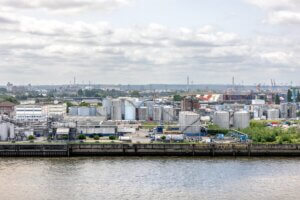
At the BP Geel facility, a previous failure of the fire protection system during start-up prompted a detailed investigation into surge effects within the network. The incident occurred on line AFW-023025, and subsequent studies identified hydraulic transients as the primary cause. Given the similar configuration and operating principle of the
The ONE GUYANA Floating Production Storage and Offloading (FPSO) unit has been designed to operate in deepwater conditions with a production capacity of 250,000 barrels of oil per day. The FPSO is designed for a 20-year operational life, handling complex processes including water and gas injection. Previous projects highlighted the

During this project the optimal wearplate thickness for pipe supports on the FPSO Maria Quiteria was investigated, aligning with the Yinson project specifications. The primary objective was to validate whether the prescribed wearplate thicknesses—6mm for pipes of 10” and smaller, 10mm for larger pipes, and 12.7mm for pipes with higher

On the Goliat Floating Production Storage and Offloading (FPSO) unit, significant vibration and cavitation phenomena were observed downstream of control valve 71PV1103 on the minimum flow line of pump B during maximum flow conditions. Additionally, pressure surges were reported during system start-up through this minimum flow line. Such issues posed

The Petrojarl I Floating Production, Storage, and Offloading (FPSO) facility, in operation since 1986 in the North Sea, underwent critical modifications to prepare for deployment at the Atlanta oil field offshore Brazil. The relocation entailed adapting the crude oil offloading system to manage Brazilian crude with higher viscosity and to

The client commissioned a surge analysis for the Waste Water (WW) system at the Rotterdam terminal. The analysis aimed to quantify transient pressures and unbalanced forces generated by various hydraulic events: pump trips, pump startups, pump switchovers, and the closure of two key butterfly valves. The analysis was performed using
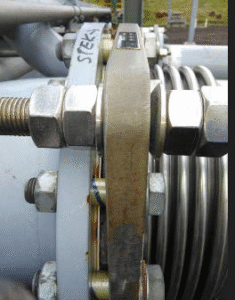
This case study presents the findings of a comprehensive pipe stress analysis of several tank lines following a leakage incident at an expansion joint. The analysis was initiated after segments of the tank lines were replaced with new routing. Upon operation of the system, a leak was detected at the
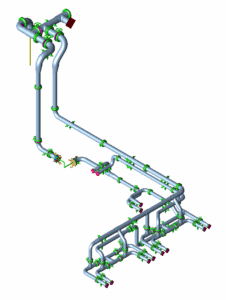
The project focused on evaluating the mechanical integrity and support strategy of a glass-reinforced plastic (FRP) piping system lined with unplasticized polyvinyl chloride (PVC-U), designed to protect the glass-reinforced plastic structural layer against the corrosive gas mixture. The temporary installation provides an additional gas cleaning stage for the sulphuric acid
This case study presents a technical assessment of the Glass Reinforced Plastic (GRP) piping system installation at a power plant, based on a visit conducted at its site. The evaluation focused on the material quality, engineering, and site installation activities for the project’s cooling water and firewater systems. Particular attention

The client experienced multiple unexpected failures in the underground firewater (FW) network at one of their facilities. The network utilizes fiberglass-reinforced plastic (FRP) piping. To determine the root causes of these failures, a material investigation was conducted by Dynaflow Research Group on pipe samples. This case study presents the methodology,
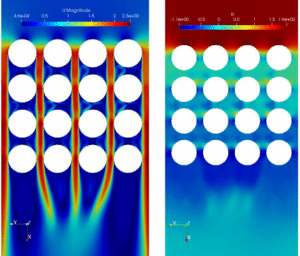
A heat exchanger was found to have fluid leakage from the tube side into the shell side after approximately 3 years of operation. Initial inspections suggested that flow-induced vibrations (FIV) were causing support rods to puncture through tube walls. To diagnose and address the source and effects of the FIV
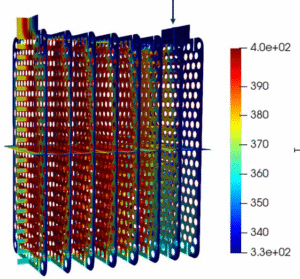
This project presents a detailed technical assessment of two vertical tube cooker (shell-and-tube heat exchanger) designs using Computational Fluid Dynamics (CFD). The analysis was conducted for Tanis, a manufacturer of candy production lines, with the objective of verifying and improving the thermal performance of the tube cooker, a critical process

DYNAFLOW RESEARCH GROUP (“DRG”) Enters into Reseller Agreement with Quality Professional Software (“QPS”) RIJSWIJK, The Netherlands – January 24, 2024 (Dynaflow Research Group BV) –

Dynaflow Research Group and Seawind Ocean Technology announce collaboration focusing on technical readiness of floating offshore wind applications in the Mediterranean Sea. This landmark partnership