Software
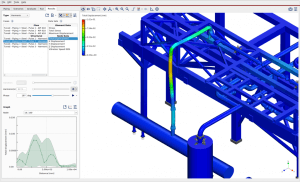
Complete Pulsation Analysis Using BOSpulse – Q&A Session
Is it required to have node increments in piping according to flow direction? The node numbering is not related to the flow direction. The flow

Is it required to have node increments in piping according to flow direction? The node numbering is not related to the flow direction. The flow
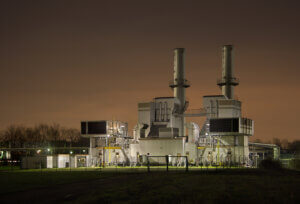
AIV Fundamentals At what pipe diameter and wall thickness should one be concerned about AIV? What is the relevant D/T ratio? This depends on the

Our 2025 classroom training course schedule for CAESAR II Statics, CAESAR II Dynamic and PV-Elite is online! We also offer a wide range of online training courses in fiberglass engineering, fluid flow, piping and pressure vessel design.
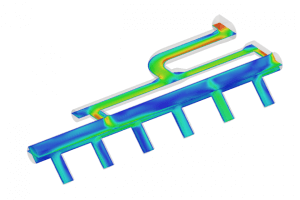
What are the key challenges in applying CFD to simulate and optimize multiphase processes in complex industrial systems? The main challenge here is the ability

Do CAESAR II formulas for thermal bowing and output results match with FEA? Short Answer: There can be significant differences between the results of CAESAR II and FEA.Explanation:The

A Glass Reinforced Epoxy (GRE) fire water header, installed on a Liquefied Natural Gas (LNG) jetty, comprises DN700 pipes and is subjected to seismic accelerations.

The above-ground seawater supply header is designed to transport seawater from two tie-ins in a discharge manifold of the seawater pumps to AGA. A comprehensive

At an LNG terminal, an unexpected settlement of 12 inches of soil, containing several sections of Vacuum Insulated Piping (VIP), occurred. Because the above-ground pipe
This case study explores the static stress assessment of a continuous steam generation system (SGS) using finite element method analysis. The focus is on a

This case study presents a comprehensive review of gasholder sizing within a cokes gas network. The primary objective is to evaluate the impact of adjusting

DRG was engaged to conduct a stress analysis for two sulphur recovery burners, adhering to ASME VIII Division 1 Boiler and Pressure Vessel Code. This

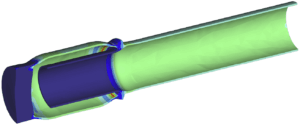
This case study focuses on the finite element analysis (FEA) conducted for a filament wound coupler designed for 42-inch centrifugal cast fiberglass pipes. The objective

A comprehensive finite element method (FEM) analysis was conducted on a molten salt/oil heat exchanger used in a solar plant facility. This heat exchanger is

In maintenance operations involving a vacuum tower approximately 50 meters in height, additional scaffolding is necessary. This scaffolding introduces increased wind loads, which, in turn,
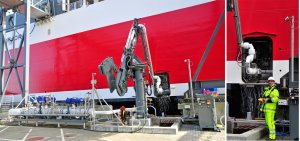
At a Liquefied Natural Gas (LNG) plant, a new LNG bunkering line is being constructed to supply ships with liquid LNG. This project involves the

Since the early 1980s, cracks have been observed in the off-gas cleaning section of the ethylbenzene hydroperoxide (EBHP) reaction unit. To address environmental concerns, EBHP

Finite Element Analysis (FEA) is conducted on the skirt-to-head weld of an Acetylene Converter to evaluate the impact of a hot-box installation. Positioned on the

This case study examines a stress analysis conducted in accordance with ASME VIII Division 1 Boiler and Pressure Vessel Code for a main burner system.

This case study explores the findings from a detailed flow analysis conducted on three different wastewater treatment reactors. In these reactors, component ‘A’ is intended

This case study examines the findings from a comprehensive flow analysis conducted on two identical suction lines connected to VIS Breaker Bottom Pumps. The existing

A comprehensive stress analysis was conducted on an assembly comprising two burners and two interconnected chambers. Each burner generates a substantial flame, which combusts waste

Benefit of computational simulation of a pulsation dampener compared to an analytical method Accumulators are used to reduce pressure pulsations from reciprocating pumps by adding

DYNAFLOW RESEARCH GROUP (“DRG”) Enters into Reseller Agreement with Quality Professional Software (“QPS”) RIJSWIJK, The Netherlands – January 24, 2024 (Dynaflow Research Group BV) –

Dynaflow Research Group and Seawind Ocean Technology announce collaboration focusing on technical readiness of floating offshore wind applications in the Mediterranean Sea. This landmark partnership