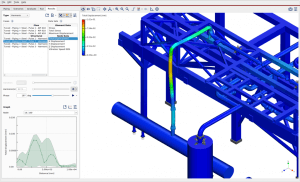
Software
Complete Pulsation Analysis Using BOSpulse – Q&A Session
Is it required to have node increments in piping according to flow direction? The node numbering is not related to the flow direction. The flow

Is it required to have node increments in piping according to flow direction? The node numbering is not related to the flow direction. The flow

Our 2025 classroom training course schedule for CAESAR II Statics, CAESAR II Dynamic and PV-Elite is online! We also offer a wide range of online training courses in fiberglass engineering, fluid flow, piping and pressure vessel design.

The combustion air system of an incinerator is a crucial component for its operation, consisting of a fan, two skids, interconnecting piping, and the incinerator

Introduction In a large industrial plant located in the southern Netherlands, a complex pipeline network traverses multiple sections separated by two major highways. This network,
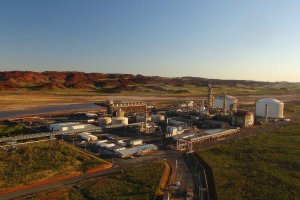
A new off-loading system is under consideration for an ammonia storage plant, designed to transfer ammonia (NH3) from a jetty to three storage tanks. This

The exploration of various methods to enhance the Finite Element Analysis (FEA) of a 6-bed polybed vessel focuses on addressing potential fatigue issues. A Finite
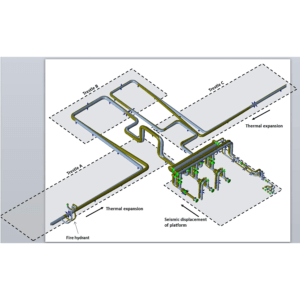
During the design phase of a sea jetty for an oil terminal, Dynaflow Research Group (DRG) conducted a comprehensive stress analysis for the glass reinforced

The vessel under consideration features three horizontal trays positioned at different elevations. These perforated trays are supported by and welded to a support ring, which

A finite element analysis (FEA) was requested for a fiberglass coupler used in centrifugal cast fiberglass pipes. The aim was to evaluate the structural integrity
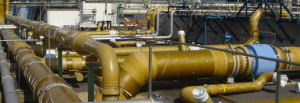
In the framework of a testing program for glass-reinforced epoxy (GRE) pipes, the long-term material strength properties at a high temperature of 150°C are determined
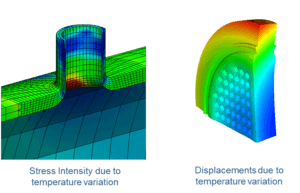
A shell and tube heat exchanger is utilized to condense propylene gas. The temperature of the propylene gas entering the shell side cycles through a

The client requested a static stress analysis for two cooling water headers, which were to be replaced with headers made from Glass Reinforced Epoxy (GRE).

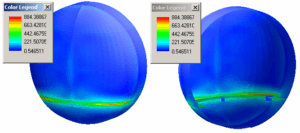
Two identical spherical tanks, designed and commissioned in the 1960s for the storage of pressurized liquid butane, require re-evaluation for a new purpose. Each tank

A dryer vessel is designed for the purpose of removing water from ‘wet’ propylene liquid, where ‘wet’ denotes the presence of a small quantity of
A 5-inch glass-reinforced epoxy (GRE) transportation line has been installed underground, featuring several above-ground steel pipe connections. Designed to withstand a pressure of 150 bar

A planned modification to a cokes gas piping involves the installation of a new pipeline to a gas user and the decommissioning of an existing

A stress analysis was conducted on a tubular heat condenser utilizing finite element analysis (FEA). This condenser configuration includes a rotational asymmetric tube bundle secured

Introduction Following the replacement of an older tail gas heater, issues with leakage from the top tubesheet flange connection have emerged during production. Despite attempts
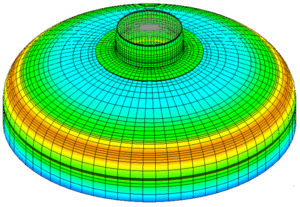
This case study details the determination of wall thickness for a Glass Reinforced Epoxy (GRE) tank. Analysis The process of defining the wall thickness was

A large-diameter seawater dump caisson, constructed from Glass Reinforced Epoxy (GRE), required a comprehensive strength assessment. This caisson featured five nozzles, with one positioned in

Dynaflow Research Group (DRG) conducted a static analysis of a rectifier or afterwash column, which consisted of a carbon steel shell with a 15 mm

Benefit of computational simulation of a pulsation dampener compared to an analytical method Accumulators are used to reduce pressure pulsations from reciprocating pumps by adding

ON-DEMAND 🕖 30 MIN 🌏︎ ENGLISH Understanding and Mitigating AIV and FIV in Modern Plant Design David Tickner Senior Engineer Get instant access
ON-DEMAND 🕖 30 MIN 🌏︎ ENGLISH How To Predict Stresses From Slug Flows Daniëlle de Jong Senior Engineer Get instant access Free recording
ON-DEMAND 🕖 60 MIN 🌏︎ ENGLISH Building models using the import PCF file feature & model verification In BOSfluids Thijs Krijger Project Engineer

ON-DEMAND 🕖 60 MIN 🌏︎ ENGLISH Solving Vibrations In A Two-Phase Process Line Frank Bos Partner Get instant access Free. Recording + slide

ON-DEMAND 🕖 50 MIN 🌏︎ ENGLISH Surge and dynamic stress analysis for an offshore wind farm using BOSfluids Mark Groen Software Lead Engineer

ON-DEMAND 🕖 25 MIN 🌏︎ ESPAÑOL Integración de BOSfluids con Caesar II y otros programas de tensión de tuberías Uri Peker Engineer Get instant
ON-DEMAND 🕖 35 MIN 🌏︎ ENGLISH BOSfluids integration with CAESAR II and other pipe stress programs Ryan Metcalf Manager USA Get instant access
Dynaflow ran a finite element analysis to ASME VIII Division 2 of a stainless steel SA240 316L support ring welded into a carbon steel Claus reactor. All primary stresses were within the allowable. At the head-to-ring connection, however, secondary stress reached 885 MPa (259 percent of the allowable), and fatigue
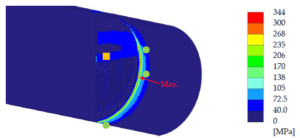
Two identical condensers cool sulphur gas to a temperature close to its dew point. The gas passes through 363 SA-179 tubes of 38.1 mm outside diameter and 8840 mm straight length, set on a 48 mm triangular pitch between two stationary tube sheets. On the shell side, water maintains a
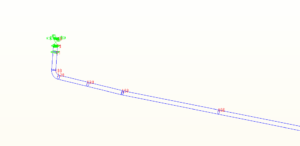
New water hydrants were installed as part of an upgrade of the firewater system at a main degassing station. Each hydrant valve joins the steel hydrant part to the underground glass-reinforced epoxy (GRE) piping, and the GRE piping connects to steel piping coming from the above-ground equipment. The GRE is
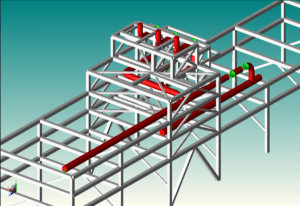
Firing of three relief valves on a steam line operating at 225 °C and 9.5 barg was analysed in CAESAR II, with dynamic loads generated in BOSfluids. The spectrum analysis gave a combined dynamic and static stress of 128% of the occasional allowable stress and the time-history analysis including the
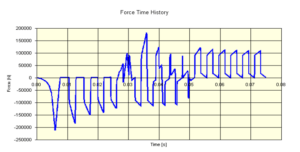
Condensation and Steam Hammer in a Cold Steam Line The analyses assumed steam at 380°C and 40 Barg entering a 36-inch high-pressure steam line with a pipe temperature of +5°C. Potential problems are anticipated at start-up because the steam condenses on entering the cold pipe. Steam remaining in the line
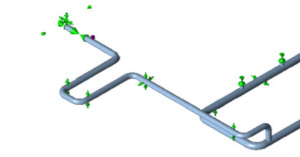
A BOSfluids surge analysis and slug impact calculation of a 12-inch steam start-up line gave maximum unbalanced forces of 1.32 kN, 1.3 kN and 3.2 kN for three surge scenarios, and 16.5 kN and 23 kN for 7 m and 10 m slug impacts on the pressure control valve. CAESAR
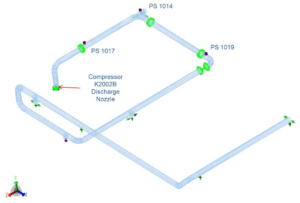
During re-alignment of the suction and discharge piping for sales gas compressors K2002A and K2002B, ready for connection to the compressor nozzles, the discharge line of K2002B could not be correctly aligned. The displacement at constant load hanger 04-SS-1017 (PS 1017) took the hanger out of its operating range. A
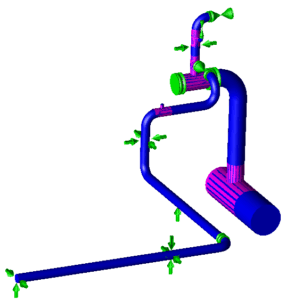
A CAESAR II stress analysis of a revised high-pressure blowdown line operating at 20.6 barg and 160 °C found that the system as proposed did not meet ASME B31.3 because of large thermal displacements of the DN600 header. If guide support S1 is replaced by a restraint in the z-direction
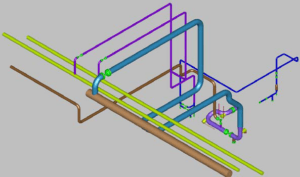
At a refinery, instrument air is supplied by three Atlas Copco compressors. Two are motor driven; the third is driven by a Coppus RHLA-24 steam turbine commissioned in 2008. Two months after start-up, a plain bearing malfunctioned. The turbine was overhauled and reassembled at site in August 2009, after which
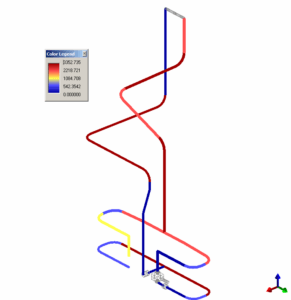
Weld 34 Crack and Dead-End Configuration The circulation system has two pumps, one operating and one spare. The operating pump feeds cooling water back into the Benson vessel at the top of the system. In the situation analysed, one pump had been taken out for revision. A blind valve was
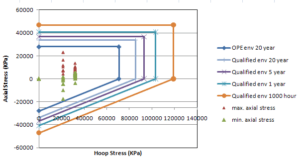
Branch Failures in a Buried GRP Firewater Ring The firewater system is made from glass-reinforced plastic (GRP) pipe and is mainly underground. The main is a ring with large-bore branch connections, and smaller-bore branch connections feed the hydrants and monitors above ground. In early operation the system suffered a number
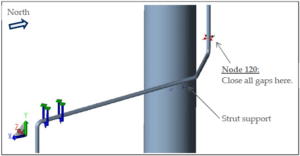
Slug Flow Operation and Two Elbow Fatigue Failures At a gas-to-liquids facility, the water feed line to an HCN/NH3 stripper (1C-1201) regularly operated in the slug flow regime. Slugs can generate large dynamic loads on the piping, which can eventually result in fatigue failures. Two leakage incidents occurred, each caused
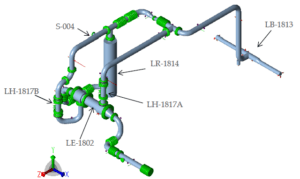
Flange Leakage in 44-Inch Catalytic Oxidiser Piping The 44-inch top and bottom nozzles of a catalytic oxidiser are connected to the shell and tube sides of a recuperative heater by 44-inch piping. The hot design temperature is 527 °C. The required piping flexibility is provided by a number of expansion
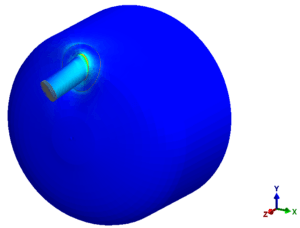
Steam-Out Cycles of the Carbon Bed Vessels In the offgas cleaning system of an EBHP reaction section, vessels V105A to V105D absorb EB from the offgas on active carbon beds, because the EB has to be removed before flaring for environmental reasons. Once a bed is saturated, it is steamed
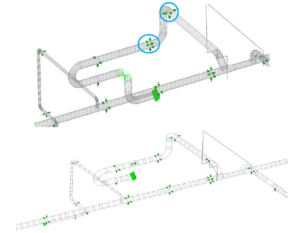
A Branch Failure on a Methanol Plant Steam Header A methanol plant operating on a 3,000 tonnes per day basis suffered a piping failure on 19 May 2012. A ¾ inch branch broke off the medium-pressure (MP) steam header when the turbine driving the synthesis gas compressor tripped. In normal
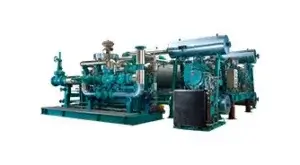
A pulsation analysis to API 618 Design Approach 1 checked the proposed dampener bottles of onshore and offshore reciprocating compressors against a guideline of 70 percent of the allowable pulsation levels. All proposed bottles gave levels within the API 618 allowable. At the line connection nozzle, only the offshore discharge
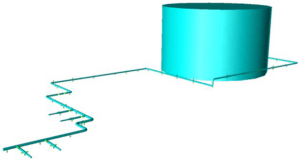
Condensate Forwarding Duty at a Nigerian Gas Plant At a gas plant in Nigeria, four reciprocating pumps on an N+1 philosophy (three running, one spare) forward condensate from a storage and separation tank into a gas pipeline. A 12-inch suction header carries the condensate from the tank to the pumps,
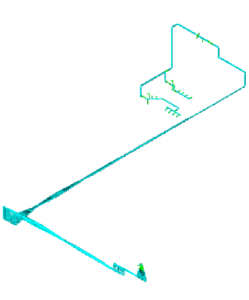
Severe Vibration in Vaporiser Feed Pump Piping The suction and discharge piping connected to the quadruplex methanol vaporiser feed pumps was suffering from severe vibration. A pulsation analysis combined with a mechanical response analysis of the as-built piping was performed to establish the root cause. The analyses determined the stress
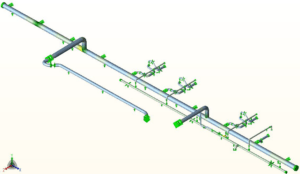
At the Utorogu Flow Station in Nigeria, vibration was observed in the suction header, the discharge header and the pump recirculation line. Dynaflow Research Group performed pulsation, mechanical response and static stress analyses to find the root cause, identify any other possible problems and recommend improvements. The station pumps crude
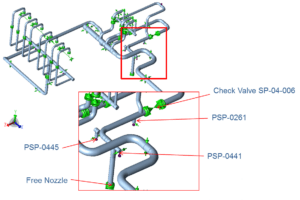
A third-party review of the HP discharge line at a gas compression station found that the designer’s stress report shows the discharge nozzle conforming to the vendor’s allowable values with the springs pinned, as API 686 requires. At the 7th April alignment check the flange separation exceeded the 4.5mm vendor
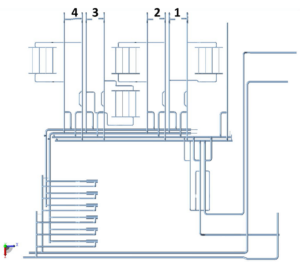
A new natural gas booster plant at Winksele, Belgium, was undergoing Site Approval Tests (SAT) after the end of construction. The SAT scope included a pipe vibration level assessment to verify that all vibration levels were within acceptable limits. This case study describes the measurement campaign and the VDI 3842

DYNAFLOW RESEARCH GROUP (“DRG”) Enters into Reseller Agreement with Quality Professional Software (“QPS”) RIJSWIJK, The Netherlands – January 24, 2024 (Dynaflow Research Group BV) –

Dynaflow Research Group and Seawind Ocean Technology announce collaboration focusing on technical readiness of floating offshore wind applications in the Mediterranean Sea. This landmark partnership