
Fluid Dynamics
Fatigue screening methods according ASME BPV Code Webinar
When do you need to perform a fatigue analyses according ASME BPVC? This webinar explains the screening methods that are provided in ASME-VIII – Div 2.

When do you need to perform a fatigue analyses according ASME BPVC? This webinar explains the screening methods that are provided in ASME-VIII – Div 2.
Coming weeks Dynaflow Research Group will host a webinar series around the use of the stress envelope for FRP stress analysis. In this webinar series

Seawind have developed with early partners Offshore Wind Plant layouts and is applying for sea area concessions in the Mediterranean Sea sector. The Mediterranean Sea
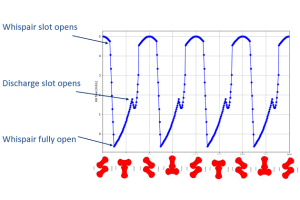
Dynaflow performed an pulsation analysis study for a client where a silencer check was required to dampen the pulsations generated by a rotary lobe blower.

Piping models that you produce are not 100% accurate. To make sure that uncertainties in design do not immediately result in failures in your piping

Dynaflow Research Group has released a new online course: FEPipe Essentials. The objective of this course is to give FEPipe users a strong understanding of

On February 9th, Edwin Schimmel, project engineer at Dynaflow Research Group will join a session of EngineeringTrainerTV: “Fiberglass and Steel Piping: Differences in Engineering”. Together

The J-integral Approach in Elastic-Plastic Fatigue Analysis by Tammo Dukker In a fatigue analysis one would like to investigate the susceptibility of a structural component

Last month Dynaflow co-presented a graduate course: “Practical Introduction to Parallel Programming”. The course was organized by the chair on Multiscale Engineering Fluid Dynamics at

Geothermal wells – European sponsored GRE-GEO project: Development of a corrosion-free fiberglass composite well casing as an alternative for a steel casing. As part of
June 9th Dynaflow will join Hexagon PPM’s Industry Insight with Stressman Engineering. Our lead software engineer Mark Groen will join this event to discuss the

In samenwerking met R-Vent hebben wij afgelopen week de webinar: “Hoe visualiseer ik de verspreiding van aerosolen in mijn gebouw?” gepresenteerd. VentiScan heeft een speciaal

Dynaflow Research Group and Hexagon PPM join forces for a series of webinar sessions. In three webinar live sessions we will elaborate how leveraging BOSfluids

The new version of the PRG Finite Element Analysis (FEA) software suite has been released. PRG 2021 contains FEPipe v15.0, NozzlePRO v15.0 and FEATools v15.0

Screw compressors generate pulsations similar to other displacement machines such as reciprocating pumps and compressors. The pulsation suppression devices for screw compressors are also called
” Samen staan we sterker” is een veelal gebruikte slogan sinds dat de Corona-pandemie onder ons is. VentiScan werd opgericht met de gedachte een bijdrage

This year we launched our new service to support schools and other buildings in The Netherlands to optimise their room ventilation against Corona spreading. By
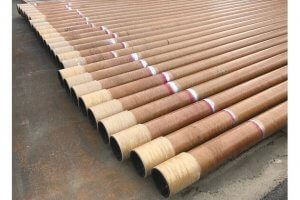
GEOTHERMICA launches Project “Glass Fiber Reinforced Epoxy Casing System for Geothermal Application (GRE GEO)” Some of the main challenges in geothermal are corrosion and scaling.

Many industrial processes involve the transport of granular particles in flowing fluids. Simulation of these granular fluid flows is not trivial because of the different

Press Release Dynaflow Research Group is happy to announce that the European Geothermica project proposal “Glass Fiber Reinforced Epoxy Casing Systems for Geothermal Application” (GRE-GEO)

We are proud to announce the launch of our new service to support schools and other buildings in The Netherlands to optimise their room ventilation

Hydrogen is considered to be a key element in the energy transition. This molecule is the most notable option for the decarbonisation of hard-to-abate sectors
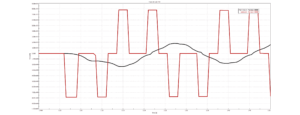
As part of our responsibilities at DRG, we conduct both standard pressure drop calculations and surge/slug analyses for firewater systems. Our involvement spans various stages,
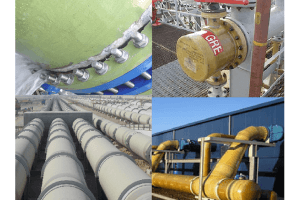
Geothermal energy is a promising renewable energy source, but it comes with its own set of challenges. Two significant issues in geothermal well operations are
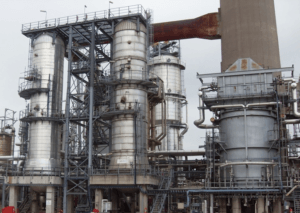
Flow-induced vibrations in piping systems are a critical aspect of mechanical engineering, impacting the reliability and integrity of various industrial setups. The Japan Society of

Introduction In the field of engineering design, the precision of pipe flexibility analysis models is critically important for accurately assessing nozzle loads in steel piping

In 2013, a major incident occurred in a Louisiana chemical plant. In a nonroutine operation, plant operators attempted to start a heat exchanger which had

To understand pressure surges in large piping systems, a good place to start is at home. When you finish washing your hands, turning off the

Brief introduction to piping vibrations Vibrations are an oscillatory motion about an equilibrium. The oscillatory movement causes alternating stresses in the system, which, if excessive

The pulsation challenge of a variable speed reciprocating compressorA pulsation analysis according to the API 618 is a good method of preventing excessive vibrations in

ON-DEMAND 🕖 50 MIN 🌏︎ ENGLISH Acoustically Induced Fatigue in Gas Filled Piping Systems Using BOSfluids Remco Boere Senior Software Engineer Get instant access

ON-DEMAND 🕖 60 MIN 🌏︎ ENGLISH Simulation Strategies and Practical Application for Vapour Cavity Formation Dr. Ir. Erik Jan Lingen Software Director Get
ON-DEMAND 🕖 60 MIN 🌏︎ ENGLISH Fundamentals, Failure Mechanisms, and Engineering Consequences of Vapor Cavity Formation Dr. Ir. Erik Jan Lingen Software Director

ON-DEMAND 🕖 45 MIN 🌏︎ ENGLISH Bridging the Gap: From NFPA 15 Steady-State Design to Transient Surge Analysis in Tank Terminals Uri Peker

ON-DEMAND 🕖 45 MIN 🌏︎ ENGLISH Support Stiffness Effects on Mechanical Natural Frequencies in Reciprocating Compressor Piping Systems Thijs Krijger Project Engineer Get

ON-DEMAND 🕖 60 MIN 🌏︎ ENGLISH Beyond hydraulics: a practical guide to fire water analyses with BOSfluids Dr. Ir. Erik Jan Lingen Software
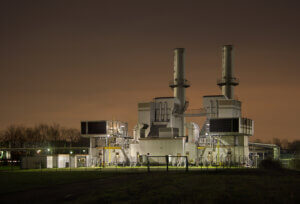
AIV Fundamentals At what pipe diameter and wall thickness should one be concerned about AIV? What is the relevant D/T ratio? This depends on the
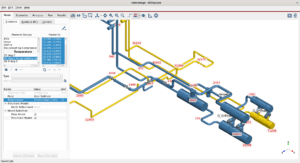
ON-DEMAND 🕖 3 SESSIONS x 45 MIN 🌏︎ ENGLISH Complete Pulsation Analysis Using BOSpulse Tim Gebraad Software Lead Engineer Marienne Faro Software Sales Engineer

ON-DEMAND 🕖 60 MIN 🌏︎ ENGLISH Getting the Timing Right: Why Time Step Size Is Critical In Surge Analysis Dr. Ir. Erik Jan
ON-DEMAND 🕖 30 MIN 🌏︎ ENGLISH Protecting Tank Terminal Assets Through Surge and FFS Analyses Thijs Krijger Project Engineer Katrine van Overhagen Engineer

ON-DEMAND 🕖 60 MIN 🌏︎ ENGLISH Choosing the right GRE piping standard: a comparison of ISO 14692 and ASME NM.2 Edwin Schimmel Project Engineer

ON-DEMAND 🕖 50 MIN 🌏︎ ENGLISH How Stepless Capacity Control Shapes Flow and Pulsations Thijs Krijger Project Engineer Get instant access Free. Recording

ON-DEMAND 🕖 60 MIN 🌏︎ ENGLISH Water Hammer Analysis & Mitigation in Pipeline Systems with BOSfluids Dr. Ir. Erik Jan Lingen Software Director

ON-DEMAND 🕖 60 MIN 🌏︎ ENGLISH Water Hammer Analysis & Mitigation in Pipeline Systems with BOSfluids Dr. Ir. Erik Jan Lingen Software Director

ON-DEMAND 🕖 35 MIN 🌏︎ ENGLISH Understanding, Modelling, and Managing Thermal Bowing using CAESAR II David Tickner Senior Engineer Get instant access Free.
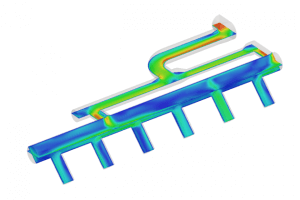
What are the key challenges in applying CFD to simulate and optimize multiphase processes in complex industrial systems? The main challenge here is the ability

Do CAESAR II formulas for thermal bowing and output results match with FEA? Short Answer: There can be significant differences between the results of CAESAR II and FEA.Explanation:The
ON-DEMAND 🕖 35 MIN 🌏︎ ENGLISH Using CFD for optimizing multiphase process engineering Bart van der Zalm Senior Engineer Get instant access Free.

DRG CONFERENCE – 35TH ANNIVERSARY 🌏︎ ENGLISH Innovations that Change the Engineering Industry Get instant access Free. Recording + slide deck available Event Description

ON-DEMAND 🕖 35 MIN 🌏︎ ENGLISH Fatigue Assessment According to ASME B&PV VIII Div.2 Lukas Bajarunas Senior Software Engineer Get instant access Free
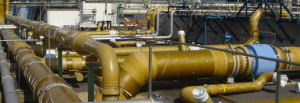
ON-DEMAND 🕖 45 MIN 🌏︎ ENGLISH Fiberglass Piping Stress Envelope According to ISO 14692 using CAESAR II Edwin Schimmel Project Engineer Get instant
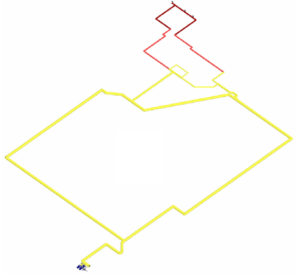
A new unit was added to an existing gas complex, and the firewater ring main was extended to serve it. Three sets of four 3-inch hydrant valves were modelled, twelve hydrants in total. Each hydrant is required to produce a minimum of 1452 l/min at 7.0 barg, and the hydrant
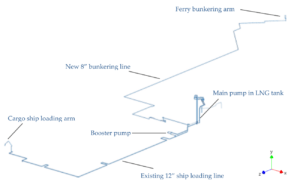
Extending an LNG terminal with a new cryogenic bunkering line At an LNG storage and loading terminal, a new line was constructed to supply liquefied natural gas directly to ferries. This 8-inch bunkering line branches from an existing 12-inch line that is used to load LNG into cargo ships. A
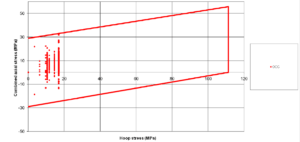
Surge loads from deluge valve closure were applied to nine composite firewater deluge systems in a CAESAR II time-history analysis and checked as occasional stresses against the ISO 14692 envelope. With three axial stops added in S4, all stress points lie within the envelope; the highest of the nine Smax
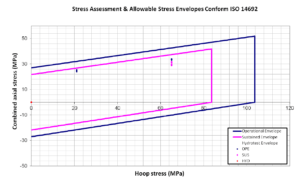
Elbows replaced after hydrotest problems A 5-inch glass-reinforced epoxy (GRE) transportation line runs buried between two locations. It connects to above-ground steel piping at both ends and to a steel manifold at about halfway. In total there are four connections between GRE and steel. The line is designed for 150
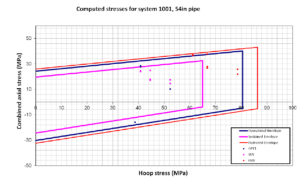
Buried Fibreglass Piping and an Undefined Compression Envelope The underground part of a seawater network at a gas field development was to be built in filament-wound fibreglass reinforced epoxy pipe buried in sand. The scope covered two systems, 1001 and 1002. Each system consists of a header of 54-inch and
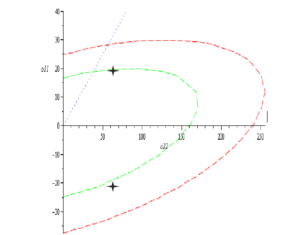
This project covered a family of glass fibre reinforced plastic (GRP) couplers, designated FWC, in five configurations: a DN600 coupler in a small (S) and a medium (M) variant, a DN1200 medium coupler, a DN2400 large coupler, and a DN3600 extra large coupler. Each coupler is a long cylindrical GRP

Technical Evaluation of Three Candidate GRP Pipe Suppliers For a glass-reinforced plastic (GRP) pipe system on a project, the client selected three potential GRP pipe suppliers, each to be evaluated from a technical perspective. Each supplier submitted a set of technical documents describing its component design, qualification testing and system
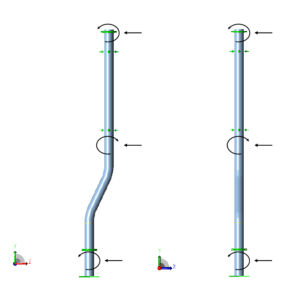
A seawater dump caisson made of glass-reinforced epoxy (GRE) needed its wall, laminate and joint details defined. The task was to find thicknesses and bonding lengths that would keep stresses within the allowable stress envelope conforming to ISO 14692, and to determine the loads that the restraints, flanges, laminated joints
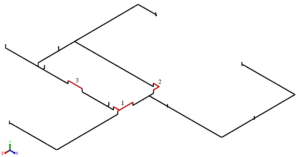
The Firewater Network The firewater network in this case is built from glass-fibre reinforced epoxy (GRE), grade Wavistrong EST 20, with DN150 pipe running mainly underground. Above ground, steel sections connect to the GRE by flanges, and vertical branches rise to fire hydrants and similar connections. The system was specified

A manhole interrupts the load-bearing shell of an elbow or tee, so the component is regarded as a non-standard piping fitting. The three fittings here are two 20 inch long-radius elbows, EX-23 and EZ-22, in SA-234 Gr. WP11 Cl. 1, and one 32 inch ASME B16.9 welding tee, FB-11, in

Furnace F-501 at a refinery heats crude through radiant coils made of A312 TP316Ti stainless steel. Each coil enters the radiant section at grade level, runs 21 loops parallel to the refractory lined furnace wall, crosses over to the roof section, makes 8 further loops against the roof, and leaves

Two identical Visbreaker bottom pumps at an onshore refinery were due for replacement. The existing pumps were of single side suction execution, the new pumps of double side suction execution. For the new pumps a minimum straight length of five times the diameter (5D) was specified directly upstream of the

A gas line between the high and low pressure separators of a hydrocracking unit failed in service, probably through material fatigue caused by vibration. An additional 3-way stop was fitted just downstream of the TSO valve to reduce vibration levels, and vibration was then measured at nine locations on the

The crude heating system serves one of two distillation trains: crude is preheated in a convection box, heated in the radiant section of the furnace and carried by a feed line to the tower. Crude heating generates two-phase flow, whose fluctuations impose the unsteady unbalanced loads at elbows and tees

At a refinery, a branch connection designated W31056, the 2″ line that ties in to the high-pressure steam attemperator J-3103 (a desuperheater), failed in service. A similar failure had occurred about twenty years earlier, in 1992. On-site observations report periodic movement of the connecting header, line 6″-S31022, which contains the

A refinery operator is replacing two existing steel main cooling water headers with Glass Reinforced Epoxy (GRE) piping. The two changes were raised as Technical Change Requests, and this case study covers the second of them, the “lube” cooling water header. The GRE consists of a header and a branch

A wash oil line was vibrating in the vertical section downstream of its angle control valve. It has been reported that the vibration amplitude increases with increasing flow, and in the future the mass flow rate may still be increased further. No vibration measurements had been carried out, so the

Undesirable vibrations were observed in the wash oil line between two vessels during activation of the wash oil flow, most severe in the vertical section immediately downstream of the angle control valve. An earlier study had already identified slug flow as the most probable cause and proposed mitigation measures, and

The 10″ inlet and outlet lines of furnace H301 carry two-phase content during all process conditions. Under certain process conditions, staff reported feeling like getting seasick when standing on the platform of the furnace, and the piping was seen vibrating mainly near the furnace. The impact of these dynamic effects

A flue-gas overhead line runs from a third stage separator to a waste heat boiler. It carries gas at a maximum operating temperature of 740 °C upstream of the orifice chamber and is designed for 755 °C in the hot-walled sections. At those temperatures the hot-wall material, stainless steel A240

Two existing steel cooling water headers were to be replaced with Glass Reinforced Epoxy (GRE) piping under two Technical Change Requests. This case study covers the first request, for the main cooling water header “boiler”. The second, covers the “lube” header. A flexibility analysis was required, together with recommendations, to

DYNAFLOW RESEARCH GROUP (“DRG”) Enters into Reseller Agreement with Quality Professional Software (“QPS”) RIJSWIJK, The Netherlands – January 24, 2024 (Dynaflow Research Group BV) –

Dynaflow Research Group and Seawind Ocean Technology announce collaboration focusing on technical readiness of floating offshore wind applications in the Mediterranean Sea. This landmark partnership