Software
Complete Pulsation Analysis Using BOSpulse – Q&A Session
Is it required to have node increments in piping according to flow direction? The node numbering is not related to the flow direction. The flow

Is it required to have node increments in piping according to flow direction? The node numbering is not related to the flow direction. The flow

Our 2025 classroom training course schedule for CAESAR II Statics, CAESAR II Dynamic and PV-Elite is online! We also offer a wide range of online training courses in fiberglass engineering, fluid flow, piping and pressure vessel design.

The combustion air system of an incinerator is a crucial component for its operation, consisting of a fan, two skids, interconnecting piping, and the incinerator

Introduction In a large industrial plant located in the southern Netherlands, a complex pipeline network traverses multiple sections separated by two major highways. This network,
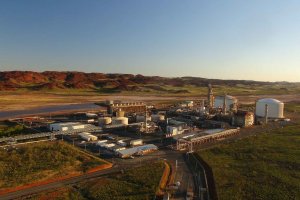
A new off-loading system is under consideration for an ammonia storage plant, designed to transfer ammonia (NH3) from a jetty to three storage tanks. This

The exploration of various methods to enhance the Finite Element Analysis (FEA) of a 6-bed polybed vessel focuses on addressing potential fatigue issues. A Finite
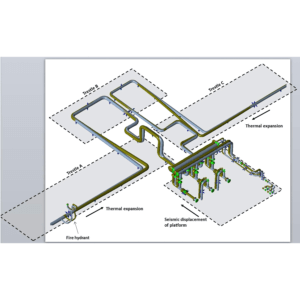
During the design phase of a sea jetty for an oil terminal, Dynaflow Research Group (DRG) conducted a comprehensive stress analysis for the glass reinforced

The vessel under consideration features three horizontal trays positioned at different elevations. These perforated trays are supported by and welded to a support ring, which

A finite element analysis (FEA) was requested for a fiberglass coupler used in centrifugal cast fiberglass pipes. The aim was to evaluate the structural integrity
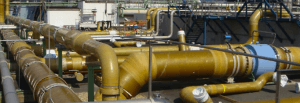
In the framework of a testing program for glass-reinforced epoxy (GRE) pipes, the long-term material strength properties at a high temperature of 150°C are determined
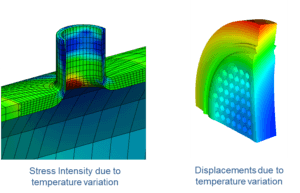
A shell and tube heat exchanger is utilized to condense propylene gas. The temperature of the propylene gas entering the shell side cycles through a

The client requested a static stress analysis for two cooling water headers, which were to be replaced with headers made from Glass Reinforced Epoxy (GRE).

Two identical spherical tanks, designed and commissioned in the 1960s for the storage of pressurized liquid butane, require re-evaluation for a new purpose. Each tank

A dryer vessel is designed for the purpose of removing water from ‘wet’ propylene liquid, where ‘wet’ denotes the presence of a small quantity of
A 5-inch glass-reinforced epoxy (GRE) transportation line has been installed underground, featuring several above-ground steel pipe connections. Designed to withstand a pressure of 150 bar

A planned modification to a cokes gas piping involves the installation of a new pipeline to a gas user and the decommissioning of an existing

A stress analysis was conducted on a tubular heat condenser utilizing finite element analysis (FEA). This condenser configuration includes a rotational asymmetric tube bundle secured

Introduction Following the replacement of an older tail gas heater, issues with leakage from the top tubesheet flange connection have emerged during production. Despite attempts
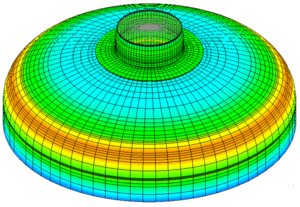
This case study details the determination of wall thickness for a Glass Reinforced Epoxy (GRE) tank. Analysis The process of defining the wall thickness was

A large-diameter seawater dump caisson, constructed from Glass Reinforced Epoxy (GRE), required a comprehensive strength assessment. This caisson featured five nozzles, with one positioned in

Dynaflow Research Group (DRG) conducted a static analysis of a rectifier or afterwash column, which consisted of a carbon steel shell with a 15 mm

Table of Contents A Good GRP Code Covers a Large Variety of Products and Loading Conditions A robust Glass Reinforced Plastic (GRP) piping code must
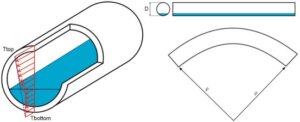
Thermal bowing is a structural phenomenon that arises when a temperature gradient exists across the cross-section of a pipe or vessel. In typical pipe design,

Table of Contents As the demand for flexible, energy-efficient, and reliable compressor operation grows—particularly in hydrogen and process gas applications—our clients increasingly turn to stepless

Table of Contents Multiphase flow is a recurring challenge in process engineering, where multiple fluid phases—such as gases, liquids, or solids—interact within a single flow

In the chemical and energy industries, liquid products such as LNG, ammonia, or naphtha are commonly transferred between ships and onshore storage tanks. These transfers
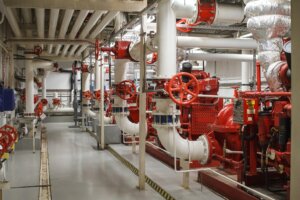
In the engineering domain, accurately simulating transient events in pipeline systems is critical, particularly for essential safety mechanisms such as firewater systems. These systems, typically

Introduction Pressure vessels are critical components in a wide range of industries, including power generation, petrochemical processing, and industrial manufacturing. These vessels are designed to
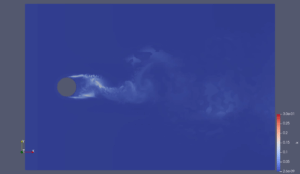
When Theodor von Kármán first discovered vortex shedding in 1911, he likely had no idea how pivotal his work would become for modern engineering, particularly
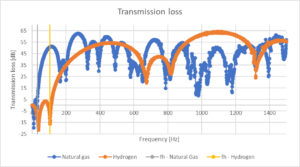
In a previous article, we introduced the risks and design considerations of repurposing an existing natural gas compressor system for hydrogen. That discussion focused on

ON-DEMAND 🕖 50 MIN 🌏︎ ENGLISH Acoustically Induced Fatigue in Gas Filled Piping Systems Using BOSfluids Remco Boere Senior Software Engineer Get instant access

ON-DEMAND 🕖 60 MIN 🌏︎ ENGLISH Simulation Strategies and Practical Application for Vapour Cavity Formation Dr. Ir. Erik Jan Lingen Software Director Get
ON-DEMAND 🕖 60 MIN 🌏︎ ENGLISH Fundamentals, Failure Mechanisms, and Engineering Consequences of Vapor Cavity Formation Dr. Ir. Erik Jan Lingen Software Director

ON-DEMAND 🕖 45 MIN 🌏︎ ENGLISH Bridging the Gap: From NFPA 15 Steady-State Design to Transient Surge Analysis in Tank Terminals Uri Peker

ON-DEMAND 🕖 45 MIN 🌏︎ ENGLISH Support Stiffness Effects on Mechanical Natural Frequencies in Reciprocating Compressor Piping Systems Thijs Krijger Project Engineer Get

ON-DEMAND 🕖 60 MIN 🌏︎ ENGLISH Beyond hydraulics: a practical guide to fire water analyses with BOSfluids Dr. Ir. Erik Jan Lingen Software
AIV Fundamentals At what pipe diameter and wall thickness should one be concerned about AIV? What is the relevant D/T ratio? This depends on the
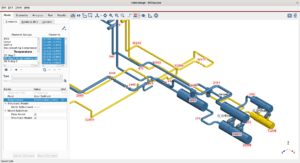
ON-DEMAND 🕖 3 SESSIONS x 45 MIN 🌏︎ ENGLISH Complete Pulsation Analysis Using BOSpulse Tim Gebraad Software Lead Engineer Marienne Faro Software Sales Engineer

ON-DEMAND 🕖 60 MIN 🌏︎ ENGLISH Getting the Timing Right: Why Time Step Size Is Critical In Surge Analysis Dr. Ir. Erik Jan
ON-DEMAND 🕖 30 MIN 🌏︎ ENGLISH Protecting Tank Terminal Assets Through Surge and FFS Analyses Thijs Krijger Project Engineer Katrine van Overhagen Engineer

ON-DEMAND 🕖 60 MIN 🌏︎ ENGLISH Choosing the right GRE piping standard: a comparison of ISO 14692 and ASME NM.2 Edwin Schimmel Project Engineer

ON-DEMAND 🕖 50 MIN 🌏︎ ENGLISH How Stepless Capacity Control Shapes Flow and Pulsations Thijs Krijger Project Engineer Get instant access Free. Recording

ON-DEMAND 🕖 60 MIN 🌏︎ ENGLISH Water Hammer Analysis & Mitigation in Pipeline Systems with BOSfluids Dr. Ir. Erik Jan Lingen Software Director

ON-DEMAND 🕖 60 MIN 🌏︎ ENGLISH Water Hammer Analysis & Mitigation in Pipeline Systems with BOSfluids Dr. Ir. Erik Jan Lingen Software Director

ON-DEMAND 🕖 35 MIN 🌏︎ ENGLISH Understanding, Modelling, and Managing Thermal Bowing using CAESAR II David Tickner Senior Engineer Get instant access Free.
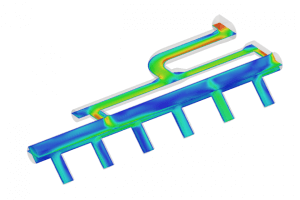
What are the key challenges in applying CFD to simulate and optimize multiphase processes in complex industrial systems? The main challenge here is the ability

Do CAESAR II formulas for thermal bowing and output results match with FEA? Short Answer: There can be significant differences between the results of CAESAR II and FEA.Explanation:The
ON-DEMAND 🕖 35 MIN 🌏︎ ENGLISH Using CFD for optimizing multiphase process engineering Bart van der Zalm Senior Engineer Get instant access Free.

DRG CONFERENCE – 35TH ANNIVERSARY 🌏︎ ENGLISH Innovations that Change the Engineering Industry Get instant access Free. Recording + slide deck available Event Description

ON-DEMAND 🕖 35 MIN 🌏︎ ENGLISH Fatigue Assessment According to ASME B&PV VIII Div.2 Lukas Bajarunas Senior Software Engineer Get instant access Free
ON-DEMAND 🕖 45 MIN 🌏︎ ENGLISH Fiberglass Piping Stress Envelope According to ISO 14692 using CAESAR II Edwin Schimmel Project Engineer Get instant
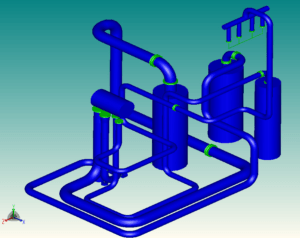
Compressor Piping Under Combined Marine and Process Loading The compressor module was located roughly halfway along the hull. Its connected piping had to accommodate thermal and pressure loads, wind loads, accelerations from wave-driven barge rocking and relative displacements from hull deformation. These loads could produce pipe deflection and bending and
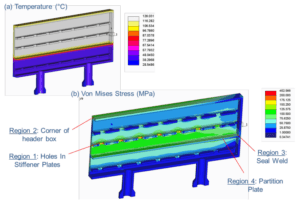
Cyclic Thermal Duty in a Gas Treatment Air Cooler An air-cooled heat exchanger for a gas treatment plant is subjected to a varying inlet temperature. In the analysed winter case, which has the largest temperature variation, the fluid cycles between 7.5°C and 288°C during each 100-minute cycle. The first part
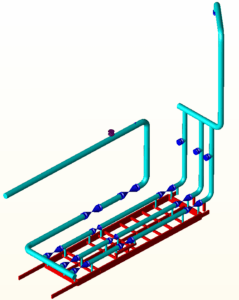
Consolidating Gas Flow onto a Single Metered Line A platform gas metering station has three parallel metering lines, two active and one spare. The modification replaces the orifice-type flow meter in the most eastern line with an ultrasonic (US) flow meter and directs the complete gas flow through that line.
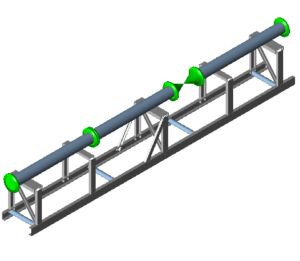
Nitrogen Skid Stress Verification Requirement A manufacturer produces a nitrogen metering skid for a project. As a result of a client performance requirement, the existing design had to be verified by stress analysis. The skid is a straight pipe configuration with valves and flow meters, supported approximately 1000 mm above
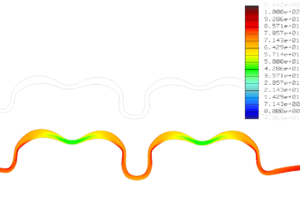
An axisymmetric finite element analysis checked the flued flange expansion joint of a fixed-fixed tubesheet reboiler for low cycle fatigue, high cycle fatigue and primary stress to ASME Section VIII Division 2, at mean (26 mm) and minimum (22 mm) wall thickness. The largest low cycle fatigue stress range was
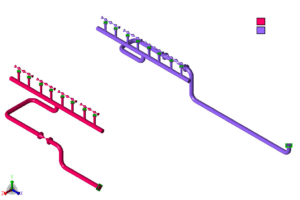
The station model of the Winksele Compressor Station, to be built in Belgium, was divided into two models with some mutual overlap, a compressor model and a filter model, each covered by a separate stress report. A third report covers the gas air coolers as model C, an add-on to
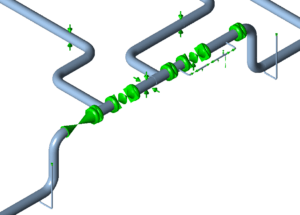
An additional separator was installed in Phase 2 of a cluster project and was to be connected to the existing lines through a modified above-ground (A/G) manifold. The manifold also connects to an existing buried (underground, or U/G) line. The analysis applied pressures of 100 / 225 Barg and temperature
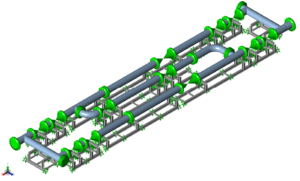
A combined CAESAR II model of a gas metering skid and its structural steel frames was assessed against ASME B31.3 (2006). The piping stresses were below the allowables, the steel stresses were within the allowable limits for the sustained and expansion load cases, and several bolt shear loads exceeded the
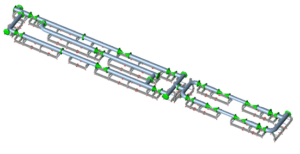
Multi-Mode Metering Skid with Undefined Connecting Piping The unit assessed was a 24-inch, 300# ethane metering skid. Gas can be routed through a normal operating line (line 1), a testing and maintenance line (line 2), two flow control lines (lines 3 and 4) and a bypass. No more than one
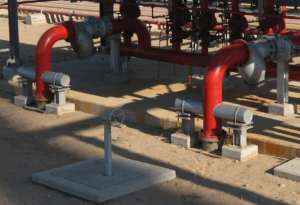
CAESAR II stress analysis of 13 critical sections of a buried GRP fire water system, to ISO 14692, expected no problems for the underground piping under pressure and temperature loads. High stresses occurred in vertical above-ground GRP pipes where the pipe is vertically restrained; in section D, guide and rest
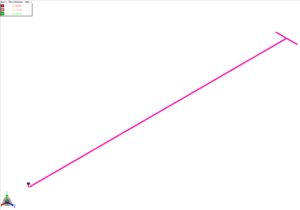
Seventeen underground GRE firewater subsystems at a degassing station were analysed in CAESAR II for three load cases, hydrotest, operational and sustained, to ISO 14692. It may be concluded that, upon implementation of the recommendations, the static pipe stresses are acceptable and the flange loads are moderate. Underground GRE Firewater
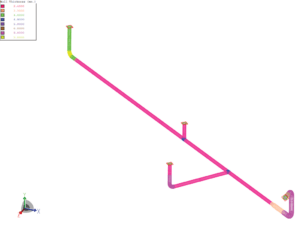
Thirteen buried GRE firewater subsystems were modelled in CAESAR II and assessed to ISO 14692 for hydrotest, operating and sustained load cases. On implementation of the recommendations, static pipe stresses are acceptable and flange loads are moderate. The buried glass-reinforced epoxy (GRE) piping in the firewater system upgrade at a
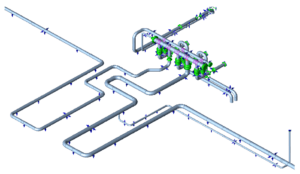
The main firewater line for a new oil terminal jetty is made from glass reinforced epoxy (GRE) pipe. It starts at the onshore transition between underground and above-ground pipe, where it connects to steel lines, and follows a jetty about 1.5 km long. A firefighting platform about one third of
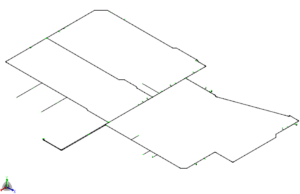
Static stress analysis of two buried GRE firewater subsystems in CAESAR II covered three load cases with a design pressure of 13.4 barg and a maximum design temperature of 40 °C. The stress analysis report, a preliminary issue, records wall thickness increases and polystyrene on five isometrics and concludes that,
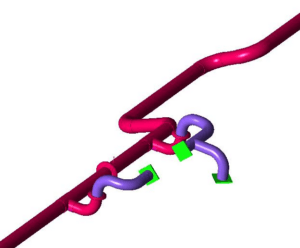
Nine underground GRE firewater systems, 77 stressed isometrics in total, were analysed in CAESAR II against the ISO 14692 allowable stress envelopes, with soil-pipe interaction modelled to the American Lifelines Alliance (2001) soil model. Modifications included a support bracing, polystyrene foam, NBR gasket stiffness limits and additional laminate for a
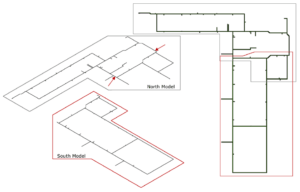
A CAESAR II static stress analysis of a buried GRE firewater network against ISO 14692 found 18 bends and 10 tees overstressed in the original design. In the modified models, all stress points are within the ISO 14692 envelopes for the sustained, operational and hydro load cases, provided the system
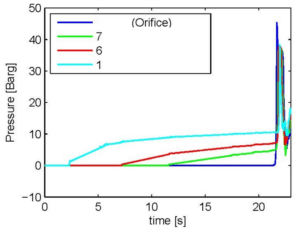
An underground storage station was being expanded with an additional compressor and a third injection well cluster, and the existing firewater package was being extended as part of the project. Two jockey pumps pressurise the system. When a blowout alarm is raised, the deluge valves open and the main firewater
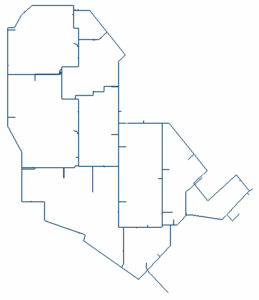
A buried GRE fire water ring was assessed in CAESAR II against the ISO 14692 allowable stress envelope. Static stresses stayed within the envelope for all load cases after additional lamination at nine bends, and the settlement analysis set a 4 MPa axial margin on the operational or occasional envelope.
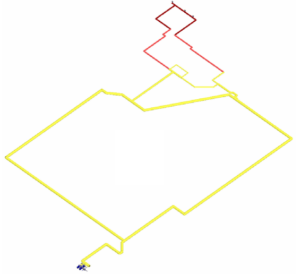
A new unit was added to an existing gas complex, and the firewater ring main was extended to serve it. Three sets of four 3-inch hydrant valves were modelled, twelve hydrants in total. Each hydrant is required to produce a minimum of 1452 l/min at 7.0 barg, and the hydrant
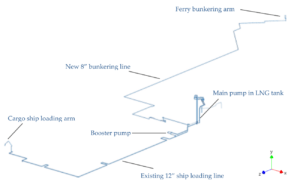
Extending an LNG terminal with a new cryogenic bunkering line At an LNG storage and loading terminal, a new line was constructed to supply liquefied natural gas directly to ferries. This 8-inch bunkering line branches from an existing 12-inch line that is used to load LNG into cargo ships. A
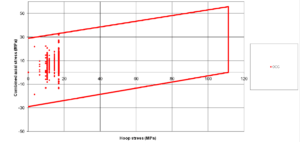
Surge loads from deluge valve closure were applied to nine composite firewater deluge systems in a CAESAR II time-history analysis and checked as occasional stresses against the ISO 14692 envelope. With three axial stops added in S4, all stress points lie within the envelope; the highest of the nine Smax

DYNAFLOW RESEARCH GROUP (“DRG”) Enters into Reseller Agreement with Quality Professional Software (“QPS”) RIJSWIJK, The Netherlands – January 24, 2024 (Dynaflow Research Group BV) –

Dynaflow Research Group and Seawind Ocean Technology announce collaboration focusing on technical readiness of floating offshore wind applications in the Mediterranean Sea. This landmark partnership