
The offshore oil and gas industry encounters distinctive challenges in managing high-pressure piping systems, where the repercussions of failure can be dire. Therefore, ensuring the structural integrity of these piping systems is paramount.
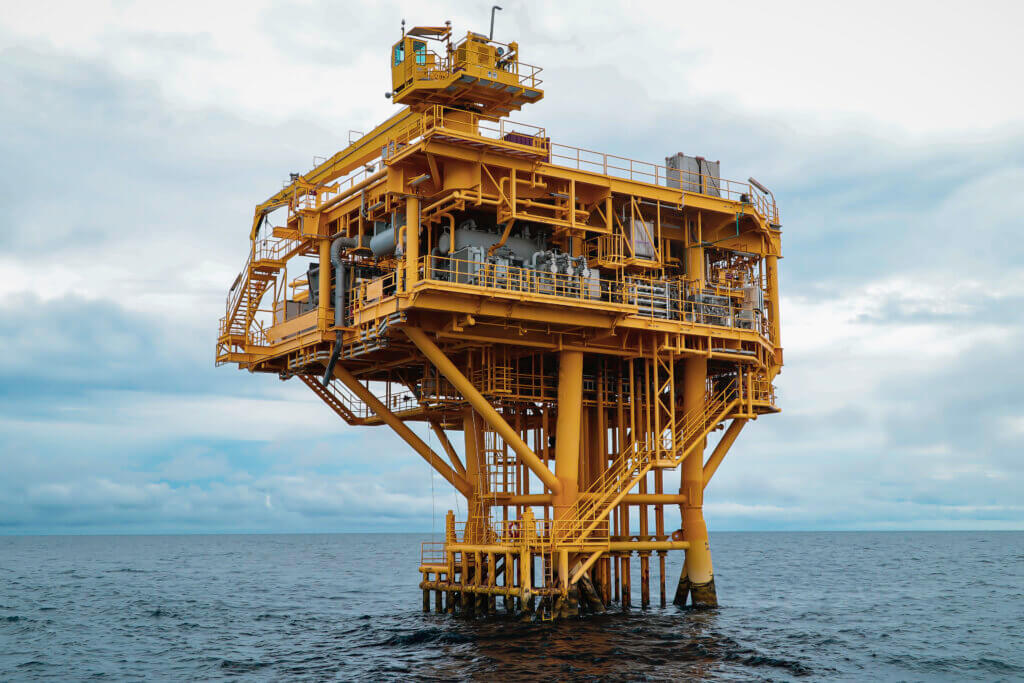
This case study examines a critical investigation conducted during the Detailed Design Phase of an Offshore Topside Wellhead (WHD) Platform. The project focused on the ultra-High Pressure Topside Flowlines’ Piping System, designed in compliance with the ASME B1.3 Ch. IX Code (2018 Edition). The primary objective was to address three residual non-conformities identified in the piping system, specifically related to Vibration Induced Fatigue (VIF) failure prevention mechanisms: Flow-Induced Turbulence (FIT) and Pulsation-Flow Induced Excitation (P-FIE).
Identifying Non-Conformities in Vibration-Induced Fatigue Prevention
The investigation centered on two specific issues:
- Two flowlines failed to meet the screening-design criteria for VIF failure prevention due to FIT.
- The 6″x3″ “dead-leg” branch connections did not comply with the criteria for VIF failure prevention due to P-FIE.
These non-conformities posed potential risks to the structural integrity of the piping system, necessitating a comprehensive analysis to ensure safe and reliable operation under high-pressure conditions.
Multi-Stage Computational Approach for Vibration Risk Assessment
- Review of the client’s piping vibration study to ensure alignment with the Energy Institute Guidelines (EG) screening criteria for VIF failure prevention.
- Generating Computational Fluid Dynamics (CFD) Simulations:
- Steady-state turbulent simulations were conducted on isolated components to identify areas with high levels of broadband kinetic energy, predicting the most severe cases of dynamic excitations.
- Transient simulation based on the steady-state results were performed to extract time-history variations of dynamic excitation forces. This step was crucial in providing a more accurate representation of the vibrational forces acting on the piping system.
- Dynamic Pipe Stress Analysis: The time-history results from the transient CFD simulations were used as input for dynamic pipe stress analysis using CAESAR II software. This analysis quantified potential fatigue damage and assessed the overall structural integrity of the piping system.
CFD Simulation Results and Dynamic Stress Analysis Findings
The screening CFD simulations revealed high levels of broadband kinetic energy, indicating potential risks of turbulence-induced vibrations (TIV). This finding confirmed the criticality of the flowlines to TIV, as initially suggested by the screening-design criteria.
Detailed transient simulations provided essential insights into the dynamic behavior of the system. The analysis identified dynamic excitation forces exhibiting both negative and positive magnitudes. Fourier transform analysis confirmed the presence of broadband vibrations interacting with the piping’s natural frequencies, particularly within the lower-frequency range.
The dynamic time-history analysis, conducted using CAESAR II, yielded the most significant results. The induced stresses were found to be within the range of 500 kPa. This stress level is considered negligible in the context of high-pressure systems, suggesting that the piping system is robust against vibrational effects caused by Fluid Induced Vibrations (FIV) and Periodic Flow Induced Excitations (PFIE).
Evaluation of Design Robustness and Empirical Guideline Limitations
Given the results of the comprehensive analysis, no immediate structural modifications or additional vibration mitigation measures were deemed necessary. The existing design of the ultra-High Pressure Topside Flowlines’ Piping System appears to be sufficiently robust to withstand the predicted vibrational effects.
However, it is important to note that the empirical guidelines provided by the Energy Institute may not fully account for the unique characteristics of high-pressure systems with thick-walled piping. This discrepancy could lead to an overestimation of induced stresses from FIV when relying solely on these guidelines.
Implications of Advanced Vibration Analysis for Offshore Engineering Practices
This case study demonstrates the successful application of advanced computational techniques in addressing complex vibrational challenges in high-pressure offshore piping systems. The project not only confirmed the robustness of the specific piping system but also provided valuable insights into the methodologies required for accurate assessment of vibrational risks in specialized engineering applications.
Key takeaways from this investigation include:
- The importance of advanced analysis techniques, such as transient CFD simulations and dynamic time-history analysis, in accurately assessing vibrational effects and potential fatigue risks in complex systems.
- The potential limitations of empirical guidelines when applied to specialized systems like ultra-high-pressure pipework, highlighting the need for tailored analysis methods.
- The effectiveness of integrating CFD simulations with dynamic stress analysis to provide a comprehensive understanding of system behavior under challenging conditions.
These findings have significant implications for future offshore platform designs and assessments. By combining advanced CFD simulations with dynamic stress analysis, engineers can more accurately predict and mitigate potential vibrational issues, leading to safer and more efficient offshore structures. This approach sets a new standard for the evaluation of ultra-high-pressure piping systems, potentially influencing industry guidelines and best practices in the field of offshore engineering.