Software
Complete Pulsation Analysis Using BOSpulse – Q&A Session
Is it required to have node increments in piping according to flow direction? The node numbering is not related to the flow direction. The flow

Is it required to have node increments in piping according to flow direction? The node numbering is not related to the flow direction. The flow

Our 2025 classroom training course schedule for CAESAR II Statics, CAESAR II Dynamic and PV-Elite is online! We also offer a wide range of online training courses in fiberglass engineering, fluid flow, piping and pressure vessel design.

The combustion air system of an incinerator is a crucial component for its operation, consisting of a fan, two skids, interconnecting piping, and the incinerator

Introduction In a large industrial plant located in the southern Netherlands, a complex pipeline network traverses multiple sections separated by two major highways. This network,
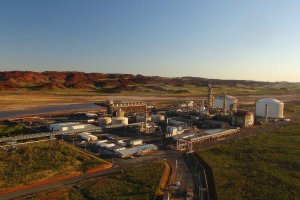
A new off-loading system is under consideration for an ammonia storage plant, designed to transfer ammonia (NH3) from a jetty to three storage tanks. This

The exploration of various methods to enhance the Finite Element Analysis (FEA) of a 6-bed polybed vessel focuses on addressing potential fatigue issues. A Finite
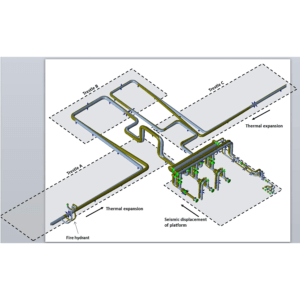
During the design phase of a sea jetty for an oil terminal, Dynaflow Research Group (DRG) conducted a comprehensive stress analysis for the glass reinforced

The vessel under consideration features three horizontal trays positioned at different elevations. These perforated trays are supported by and welded to a support ring, which

A finite element analysis (FEA) was requested for a fiberglass coupler used in centrifugal cast fiberglass pipes. The aim was to evaluate the structural integrity
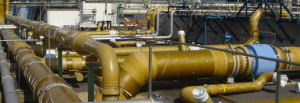
In the framework of a testing program for glass-reinforced epoxy (GRE) pipes, the long-term material strength properties at a high temperature of 150°C are determined
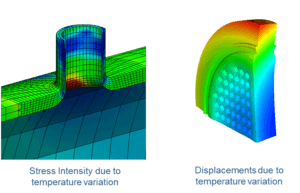
A shell and tube heat exchanger is utilized to condense propylene gas. The temperature of the propylene gas entering the shell side cycles through a

The client requested a static stress analysis for two cooling water headers, which were to be replaced with headers made from Glass Reinforced Epoxy (GRE).

Two identical spherical tanks, designed and commissioned in the 1960s for the storage of pressurized liquid butane, require re-evaluation for a new purpose. Each tank

A dryer vessel is designed for the purpose of removing water from ‘wet’ propylene liquid, where ‘wet’ denotes the presence of a small quantity of

A 5-inch glass-reinforced epoxy (GRE) transportation line has been installed underground, featuring several above-ground steel pipe connections. Designed to withstand a pressure of 150 bar

A planned modification to a cokes gas piping involves the installation of a new pipeline to a gas user and the decommissioning of an existing

A stress analysis was conducted on a tubular heat condenser utilizing finite element analysis (FEA). This condenser configuration includes a rotational asymmetric tube bundle secured

Introduction Following the replacement of an older tail gas heater, issues with leakage from the top tubesheet flange connection have emerged during production. Despite attempts
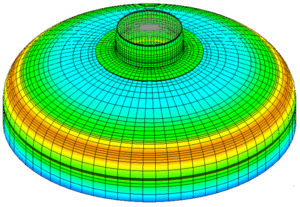
This case study details the determination of wall thickness for a Glass Reinforced Epoxy (GRE) tank. Analysis The process of defining the wall thickness was

A large-diameter seawater dump caisson, constructed from Glass Reinforced Epoxy (GRE), required a comprehensive strength assessment. This caisson featured five nozzles, with one positioned in

Dynaflow Research Group (DRG) conducted a static analysis of a rectifier or afterwash column, which consisted of a carbon steel shell with a 15 mm

Table of Contents A Good GRP Code Covers a Large Variety of Products and Loading Conditions A robust Glass Reinforced Plastic (GRP) piping code must
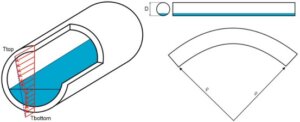
Thermal bowing is a structural phenomenon that arises when a temperature gradient exists across the cross-section of a pipe or vessel. In typical pipe design,

Table of Contents As the demand for flexible, energy-efficient, and reliable compressor operation grows—particularly in hydrogen and process gas applications—our clients increasingly turn to stepless

Table of Contents Multiphase flow is a recurring challenge in process engineering, where multiple fluid phases—such as gases, liquids, or solids—interact within a single flow

In the chemical and energy industries, liquid products such as LNG, ammonia, or naphtha are commonly transferred between ships and onshore storage tanks. These transfers
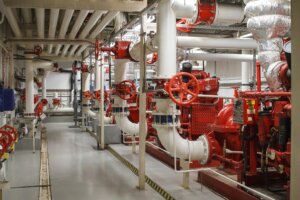
In the engineering domain, accurately simulating transient events in pipeline systems is critical, particularly for essential safety mechanisms such as firewater systems. These systems, typically

Introduction Pressure vessels are critical components in a wide range of industries, including power generation, petrochemical processing, and industrial manufacturing. These vessels are designed to
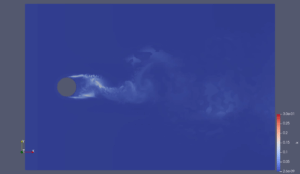
When Theodor von Kármán first discovered vortex shedding in 1911, he likely had no idea how pivotal his work would become for modern engineering, particularly
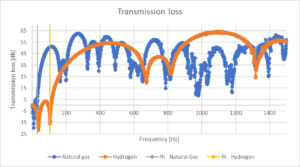
In a previous article, we introduced the risks and design considerations of repurposing an existing natural gas compressor system for hydrogen. That discussion focused on

ON-DEMAND 🕖 30 MIN 🌏︎ ENGLISH Understanding and Mitigating AIV and FIV in Modern Plant Design David Tickner Senior Engineer Get instant access
ON-DEMAND 🕖 30 MIN 🌏︎ ENGLISH How To Predict Stresses From Slug Flows Daniëlle de Jong Senior Engineer Get instant access Free recording

ON-DEMAND 🕖 60 MIN 🌏︎ ENGLISH Building models using the import PCF file feature & model verification In BOSfluids Thijs Krijger Project Engineer

ON-DEMAND 🕖 60 MIN 🌏︎ ENGLISH Solving Vibrations In A Two-Phase Process Line Frank Bos Partner Get instant access Free. Recording + slide

ON-DEMAND 🕖 50 MIN 🌏︎ ENGLISH Surge and dynamic stress analysis for an offshore wind farm using BOSfluids Mark Groen Software Lead Engineer

ON-DEMAND 🕖 25 MIN 🌏︎ ESPAÑOL Integración de BOSfluids con Caesar II y otros programas de tensión de tuberías Uri Peker Engineer Get instant
ON-DEMAND 🕖 35 MIN 🌏︎ ENGLISH BOSfluids integration with CAESAR II and other pipe stress programs Ryan Metcalf Manager USA Get instant access

This case study examines a stress analysis conducted in accordance with ASME VIII Division 1 Boiler and Pressure Vessel Code for a main burner system. The burner in question features a vessel with an air inlet nozzle and connects to a “gun” with both a fuel gas inlet and an

This case study explores the findings from a detailed flow analysis conducted on three different wastewater treatment reactors. In these reactors, component ‘A’ is intended to be removed from the wastewater stream by converting it into component ‘B’. However, the original reactor design exhibited a significant parasitic reaction, where ‘A’

This case study examines the findings from a comprehensive flow analysis conducted on two identical suction lines connected to VIS Breaker Bottom Pumps. The existing Bottom Pumps were slated for replacement with new models. According to the pump supplier’s specifications, a minimum straight length of five times the diameter (5D)

A comprehensive stress analysis was conducted on an assembly comprising two burners and two interconnected chambers. Each burner generates a substantial flame, which combusts waste gas within the chambers. The top chamber is stacked atop the bottom chamber, with both chambers connected by piping that channels flue gas to the

The installation of a new Glass Reinforced Epoxy (GRE) saltwater system at a chemical processing site required comprehensive support layout planning and stress assessment. This system included several extended piping lines, both above ground and buried, as well as multiple compact manifolds situated between tanks and pumps. The Dynaflow Research

A comprehensive vibration analysis was conducted on a water feed line operating in a slug flow regime. Slug flow, characterized by large intermittent fluid slugs within the pipeline, can exert significant dynamic forces on piping systems, potentially leading to structural failures. A recent leakage incident at an elbow joint highlighted
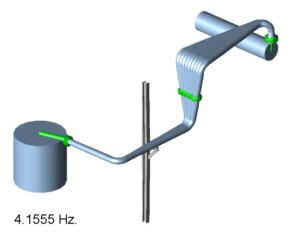
This case study focuses on the vibration assessment of a pentane line, specifically evaluating vibration stresses and the risk of fatigue issues at the nozzle/shell interfaces. Vibration measurement data provided by the client was analyzed. Initially, it was hypothesized that the vibration problem stemmed from a mechanical resonance phenomenon, implying

A gas metering skid is being designed for use in a flow station. DRG was commissioned by a client to conduct a comprehensive noise and vibration study of the metering skid to assess its vulnerability to fatigue failure. The potential for fatigue failure arises if the mechanical resonance modes of
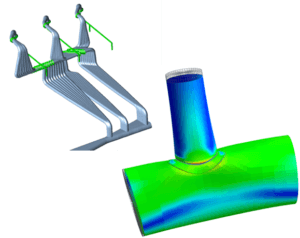
Large amplitude vibrations in a process line have resulted in damage to several pipe supports. DRG was engaged to identify the root cause of these vibrations, assess potential fatigue issues, and recommend remedial actions for the client. Analysis DRG performed a comprehensive visual inspection to determine the resonance modes being

Surge analysis in LNG bunkering systems is essential to ensure safe and efficient operations, particularly when fueling ferry ships. This analysis involves evaluating several worst-case scenarios to understand surge phenomena in a 600-meter long LNG bunkering line. The system utilizes a main pump and a booster pump to achieve flow,

A branch connection linking to a high-pressure steam attemperator has experienced a failure, similar to a previous incident. Observations on-site indicate periodic movement of the connecting header housing equipment J-3103, suggesting a fatigue failure. The objective of this analysis is to propose a permanent solution to prevent future cracks in

This project involves a feasibility study for designing a flue gas duct in a carbon capture and storage plant. The scope includes conceptualizing two large-diameter, thin-walled ducts that connect a heat exchanger to two boiler units. One of these ducts spans over an existing plant section, necessitating careful consideration of

At an oil refinery plant in Saudi Arabia, a fiberglass-reinforced plastic (FRP) pipe fire water system has been installed, predominantly buried underground. Since its installation, the system has experienced several failures. DRG was tasked with conducting a comprehensive pipe stress analysis to assess the system’s integrity. This analysis focused on

In a new industrial process, an existing floating head heat exchanger is being repurposed. The operational conditions involve cyclic loading, which were not originally considered during its design phase. To evaluate the impact of these cyclic loads on the heat exchanger, Dynaflow Research Group conducted a comprehensive fatigue analysis. Analysis

A gas compressor station, comprising five similar compressor units connected by an inlet and outlet header, is planned for offshore construction in Mexico. Each unit features three compressor stages that elevate the gas pressure from ambient levels to 95 bar. This substantial pressure increase is accompanied by a significant temperature

Dynaflow Research Group (DRG) conducted comprehensive pipe stress analyses for a large oil and gas extraction facility. This facility comprises three onshore flow stations, one offshore flow station, and a gas export compressor station. Crude oil and gas are transported from the wells to the flow stations, where the crude
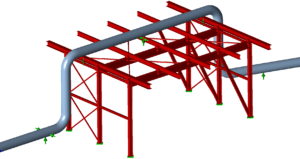
A steel pipeline was under construction for offloading naphtha from ships arriving at a jetty. A surge analysis was conducted to evaluate the pipeline’s capability under various transient upset scenarios. Following this, a dynamic stress and flexibility study was performed based on the calculated pressure surges. Analysis A transient one-dimensional
A comprehensive stress and surge analysis was performed for the firewater piping system of an LNG plant located in South America. The system, constructed using Glassfiber Reinforced Epoxy (GRE) pipes, underwent a dynamic response analysis to account for the largest and most critical unbalanced forces. Surge Analysis The existing firewater

This case study examines the detailed fatigue stress analysis conducted on a heat exchanger used to heat Polyol before it entered a refinery reactor. The complex 8-pass, U-tube configuration with a flanged stationary tube sheet required thorough investigation to ensure operational integrity and longevity. Analysis Methodology Engineers identified and analyzed
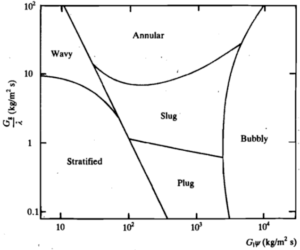
A fuel jetty terminal operator expressed concerns about potential two-phase flow issues during off-loading operations. The client indicated that trapped nitrogen used for purging lines could mix with the liquid being off-loaded when empty ship tanks were flushed with inert nitrogen. This scenario raised the possibility of slug flow development,

In this case study, a number of critical sections in an already installed fire water system were selected for review. At the time of the analysis, earlier on-site interventions had already been made, motivated by pipe failures. The analysis aimed to determine if additional interventions were necessary. Analysis Based on

DYNAFLOW RESEARCH GROUP (“DRG”) Enters into Reseller Agreement with Quality Professional Software (“QPS”) RIJSWIJK, The Netherlands – January 24, 2024 (Dynaflow Research Group BV) –

Dynaflow Research Group and Seawind Ocean Technology announce collaboration focusing on technical readiness of floating offshore wind applications in the Mediterranean Sea. This landmark partnership