Software
Complete Pulsation Analysis Using BOSpulse – Q&A Session
Is it required to have node increments in piping according to flow direction? The node numbering is not related to the flow direction. The flow

Is it required to have node increments in piping according to flow direction? The node numbering is not related to the flow direction. The flow

Our 2025 classroom training course schedule for CAESAR II Statics, CAESAR II Dynamic and PV-Elite is online! We also offer a wide range of online training courses in fiberglass engineering, fluid flow, piping and pressure vessel design.

The combustion air system of an incinerator is a crucial component for its operation, consisting of a fan, two skids, interconnecting piping, and the incinerator

Introduction In a large industrial plant located in the southern Netherlands, a complex pipeline network traverses multiple sections separated by two major highways. This network,
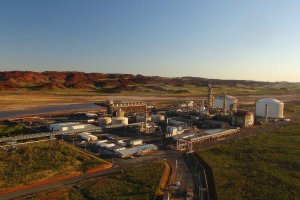
A new off-loading system is under consideration for an ammonia storage plant, designed to transfer ammonia (NH3) from a jetty to three storage tanks. This

The exploration of various methods to enhance the Finite Element Analysis (FEA) of a 6-bed polybed vessel focuses on addressing potential fatigue issues. A Finite
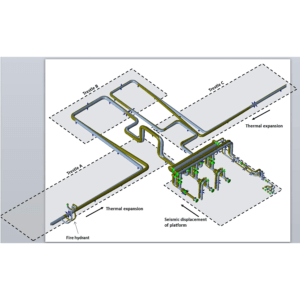
During the design phase of a sea jetty for an oil terminal, Dynaflow Research Group (DRG) conducted a comprehensive stress analysis for the glass reinforced

The vessel under consideration features three horizontal trays positioned at different elevations. These perforated trays are supported by and welded to a support ring, which

A finite element analysis (FEA) was requested for a fiberglass coupler used in centrifugal cast fiberglass pipes. The aim was to evaluate the structural integrity
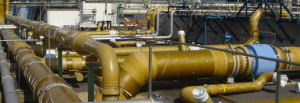
In the framework of a testing program for glass-reinforced epoxy (GRE) pipes, the long-term material strength properties at a high temperature of 150°C are determined
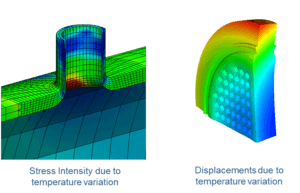
A shell and tube heat exchanger is utilized to condense propylene gas. The temperature of the propylene gas entering the shell side cycles through a

The client requested a static stress analysis for two cooling water headers, which were to be replaced with headers made from Glass Reinforced Epoxy (GRE).

Two identical spherical tanks, designed and commissioned in the 1960s for the storage of pressurized liquid butane, require re-evaluation for a new purpose. Each tank

A dryer vessel is designed for the purpose of removing water from ‘wet’ propylene liquid, where ‘wet’ denotes the presence of a small quantity of

A 5-inch glass-reinforced epoxy (GRE) transportation line has been installed underground, featuring several above-ground steel pipe connections. Designed to withstand a pressure of 150 bar

A planned modification to a cokes gas piping involves the installation of a new pipeline to a gas user and the decommissioning of an existing

A stress analysis was conducted on a tubular heat condenser utilizing finite element analysis (FEA). This condenser configuration includes a rotational asymmetric tube bundle secured

Introduction Following the replacement of an older tail gas heater, issues with leakage from the top tubesheet flange connection have emerged during production. Despite attempts
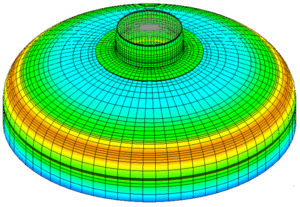
This case study details the determination of wall thickness for a Glass Reinforced Epoxy (GRE) tank. Analysis The process of defining the wall thickness was

A large-diameter seawater dump caisson, constructed from Glass Reinforced Epoxy (GRE), required a comprehensive strength assessment. This caisson featured five nozzles, with one positioned in

Dynaflow Research Group (DRG) conducted a static analysis of a rectifier or afterwash column, which consisted of a carbon steel shell with a 15 mm

Benefit of computational simulation of a pulsation dampener compared to an analytical method Accumulators are used to reduce pressure pulsations from reciprocating pumps by adding

ON-DEMAND 🕖 50 MIN 🌏︎ ENGLISH Acoustically Induced Fatigue in Gas Filled Piping Systems Using BOSfluids Remco Boere Senior Software Engineer Get instant access

ON-DEMAND 🕖 60 MIN 🌏︎ ENGLISH Simulation Strategies and Practical Application for Vapour Cavity Formation Dr. Ir. Erik Jan Lingen Software Director Get
ON-DEMAND 🕖 60 MIN 🌏︎ ENGLISH Fundamentals, Failure Mechanisms, and Engineering Consequences of Vapor Cavity Formation Dr. Ir. Erik Jan Lingen Software Director

ON-DEMAND 🕖 45 MIN 🌏︎ ENGLISH Bridging the Gap: From NFPA 15 Steady-State Design to Transient Surge Analysis in Tank Terminals Uri Peker

ON-DEMAND 🕖 45 MIN 🌏︎ ENGLISH Support Stiffness Effects on Mechanical Natural Frequencies in Reciprocating Compressor Piping Systems Thijs Krijger Project Engineer Get

ON-DEMAND 🕖 60 MIN 🌏︎ ENGLISH Beyond hydraulics: a practical guide to fire water analyses with BOSfluids Dr. Ir. Erik Jan Lingen Software
AIV Fundamentals At what pipe diameter and wall thickness should one be concerned about AIV? What is the relevant D/T ratio? This depends on the
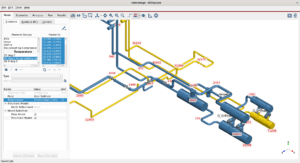
ON-DEMAND 🕖 3 SESSIONS x 45 MIN 🌏︎ ENGLISH Complete Pulsation Analysis Using BOSpulse Tim Gebraad Software Lead Engineer Marienne Faro Software Sales Engineer

ON-DEMAND 🕖 60 MIN 🌏︎ ENGLISH Getting the Timing Right: Why Time Step Size Is Critical In Surge Analysis Dr. Ir. Erik Jan
ON-DEMAND 🕖 30 MIN 🌏︎ ENGLISH Protecting Tank Terminal Assets Through Surge and FFS Analyses Thijs Krijger Project Engineer Katrine van Overhagen Engineer

ON-DEMAND 🕖 60 MIN 🌏︎ ENGLISH Choosing the right GRE piping standard: a comparison of ISO 14692 and ASME NM.2 Edwin Schimmel Project Engineer

ON-DEMAND 🕖 50 MIN 🌏︎ ENGLISH How Stepless Capacity Control Shapes Flow and Pulsations Thijs Krijger Project Engineer Get instant access Free. Recording

ON-DEMAND 🕖 60 MIN 🌏︎ ENGLISH Water Hammer Analysis & Mitigation in Pipeline Systems with BOSfluids Dr. Ir. Erik Jan Lingen Software Director

ON-DEMAND 🕖 60 MIN 🌏︎ ENGLISH Water Hammer Analysis & Mitigation in Pipeline Systems with BOSfluids Dr. Ir. Erik Jan Lingen Software Director

ON-DEMAND 🕖 35 MIN 🌏︎ ENGLISH Understanding, Modelling, and Managing Thermal Bowing using CAESAR II David Tickner Senior Engineer Get instant access Free.
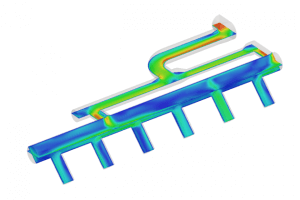
What are the key challenges in applying CFD to simulate and optimize multiphase processes in complex industrial systems? The main challenge here is the ability

Do CAESAR II formulas for thermal bowing and output results match with FEA? Short Answer: There can be significant differences between the results of CAESAR II and FEA.Explanation:The
ON-DEMAND 🕖 35 MIN 🌏︎ ENGLISH Using CFD for optimizing multiphase process engineering Bart van der Zalm Senior Engineer Get instant access Free.

DRG CONFERENCE – 35TH ANNIVERSARY 🌏︎ ENGLISH Innovations that Change the Engineering Industry Get instant access Free. Recording + slide deck available Event Description

ON-DEMAND 🕖 35 MIN 🌏︎ ENGLISH Fatigue Assessment According to ASME B&PV VIII Div.2 Lukas Bajarunas Senior Software Engineer Get instant access Free
ON-DEMAND 🕖 45 MIN 🌏︎ ENGLISH Fiberglass Piping Stress Envelope According to ISO 14692 using CAESAR II Edwin Schimmel Project Engineer Get instant
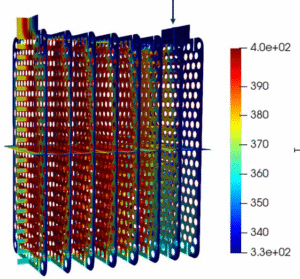
This project presents a detailed technical assessment of two vertical tube cooker (shell-and-tube heat exchanger) designs using Computational Fluid Dynamics (CFD). The analysis was conducted for Tanis, a manufacturer of candy production lines, with the objective of verifying and improving the thermal performance of the tube cooker, a critical process
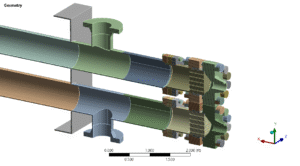
Dynaflow Research Group was asked to conduct a comprehensive finite element (FE) analysis on a custom hairpin heat exchanger. The primary objective was to assess the exchanger’s structural integrity under demanding cyclic loading conditions, focusing on fatigue life and ratcheting behavior in compliance with the ASME Boiler and Pressure Vessel

Effective mixing in bioreactors is essential for maximizing mass transfer, homogenizing chemical species, and ensuring uniform biological activity. The client undertook a computational fluid dynamics study in collaboration with Dynaflow Research Group to evaluate the performance of a 60 m³ hydrogen sulfide (H₂S) bioreactor, with a specific focus on mixing
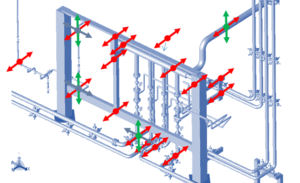
Excessive vibrations were detected in the discharge piping of compressor C801 at BP Rotterdam. The observed vibration frequencies corresponded to the compressor’s running speed and its harmonics, indicating the compressor as the primary excitation source. This prompted an in-depth technical investigation due to concerns over the integrity and reliability of
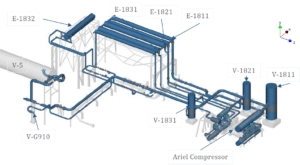
The API 618 DA3 study at the Q8 Terminal, commissioned by Wintershall Noordzee and executed by Dynaflow Research Group, was initiated to ensure the mechanical reliability and performance of the reciprocating compressor piping system. This study focuses on the evaluation of pulsation and vibration per API 618 (5th Edition, 2007)

Building directly on the preceding site verification and model augmentation phase, the objective of the stress assessment was to ensure the mechanical integrity and regulatory compliance of the entire piping network under all anticipated operational, test, and environmental scenarios. The assessment was carried out in accordance with ASME B31.3 and

Following the initial review of the pulsation and vibration analysis for the Q8 Terminal compressor station, a detailed site visit was conducted to resolve ambiguities in the as-built system configuration. The purpose of this site visit was to verify support functionality, assess current installations, confirm actual piping layouts, and gather
This case study presents a critical review of the pulsation and vibration analysis carried out by a third-party supplier, focusing on the Q8 Terminal compressor station. The analysis, conducted in accordance with API 618 Design Approach 3, aimed to assess the dynamic response of the compressor and associated piping systems.

The Ærfugl MEG (Monoethylene Glycol) injection skid, engineered by Hitec Products AS for deployment on the Skarv FPSO, is a critical system designed to inject MEG into subsea flowlines, thereby preventing hydrate formation. Following the comprehensive pulsation analysis, which established compliance with API 674 DA2 pulsation criteria through targeted mitigation

Following the successful verification of the static mechanical integrity of the Ærfugl MEG injection skid in Phase 1, Hitec Products AS commissioned Dynaflow Research Group to undertake a detailed pulsation analysis in accordance with API 674 DA2. The aim was to address the risks posed by pressure pulsations generated by

The Ærfugl MEG (Monoethylene Glycol) injection skid, designed and produced by Hitec Products AS for installation on the FPSO (Floating Production Storage and Offloading) vessel in the Skarv field, is a mission-critical component in the field’s flow assurance strategy. To ensure mechanical integrity and operational reliability, a comprehensive static pipe

Within Europoort Rotterdam, a tankpit of 37m diameter and 21m height was intended to be repurposed for storing a blend of Naphtha and Reformate. Reformate, a product of Naphtha, shares similar chemical properties, with both fluids being miscible (they mix well together). Dynaflow Research Group performed a CFD analysis on
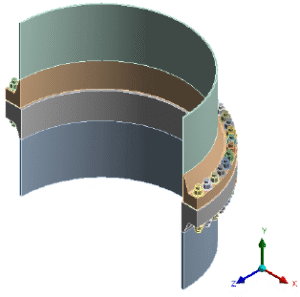
For a coil-wound liquified natural gas (LNG) heat exchanger, an existing 66” and new 72” bolted flange joint have been analysed and reviewed for mechanical loading and multiple thermal load cases in accordance to the 2013 edition of ASME VIII Div.1 and Div.2 by Dynaflow Research Group (DRG) using ANSYS

Dynaflow Research Group (DRG) has performed a stress and surge analysis using BOSfluids at Rotterdam Maasvlakte on an extension to their firewater system to accommodate the loading of LNG onto ships and barges at the jetty area. The extension of the firewater system consisted of an underground glass-reinforced epoxy (GRE)

An existing fiberglass firewater piping system was expanded to enhance its capacity, necessitating validation for the newly added components. The client, engaged in the RDCG Rotterdam capacity growth project, specializes in producing renewable fuels through the chemical conversion of vegetable and animal oils. The firewater system at this facility is

Our client was looking to repurpose a liquid transport and storage system for a different fuel. The new fuel blend has a larger viscosity and density. Heat tracing is applied to the pipe line to reduce the liquid viscosity during transport. The new fuel is pumped into a storage tank,

Our client reported multiple cracks at weld locations on a separation tank. These cracks are suspected to be caused by dynamic flow effects from the mixed inflow of acid gas and liquid. To address this issue, the client requested a Computational Fluid Dynamics (CFD) analysis to quantify the forces exerted

A client approached Dynaflow with concerns about potential dynamic loads on their piping system during the activation of a Pressure Safety Valve (PSV) protecting a degasser. During PSV opening, both gas and liquid (methane and water) are discharged together, creating complex flow conditions that could lead to transient forces and

The EVO-42 compressor package, featuring a screw compressor, oil separator, motor, dampener, and associated piping, was subject to a comprehensive evaluation by Dynaflow Research Group. This study aimed to assess its mechanical and acoustic performance under operating conditions, following the guidelines set out in API 619 and ASME VIII Div.

A client operates a reciprocating compressor at their terminal facilities, which is integral to their gas processing operations. During routine operations, excessive vibrations were observed within the system, raising concerns regarding equipment reliability, safety, and compliance with relevant industry standards. The compressor system in question features a 6-cylinder design with

The Tesoro Salt Lake City Refinery initiated a project to reduce the sulfur content in its products, necessitating modifications to the piping system on the discharge side of compressors K-701A/B. These changes prompted concerns about excessive pulsations and vibration-induced stresses, particularly as no previous pulsation study had been conducted. The

DYNAFLOW RESEARCH GROUP (“DRG”) Enters into Reseller Agreement with Quality Professional Software (“QPS”) RIJSWIJK, The Netherlands – January 24, 2024 (Dynaflow Research Group BV) –

Dynaflow Research Group and Seawind Ocean Technology announce collaboration focusing on technical readiness of floating offshore wind applications in the Mediterranean Sea. This landmark partnership