Software
Complete Pulsation Analysis Using BOSpulse – Q&A Session
Is it required to have node increments in piping according to flow direction? The node numbering is not related to the flow direction. The flow

Is it required to have node increments in piping according to flow direction? The node numbering is not related to the flow direction. The flow

Our 2025 classroom training course schedule for CAESAR II Statics, CAESAR II Dynamic and PV-Elite is online! We also offer a wide range of online training courses in fiberglass engineering, fluid flow, piping and pressure vessel design.

The combustion air system of an incinerator is a crucial component for its operation, consisting of a fan, two skids, interconnecting piping, and the incinerator

Introduction In a large industrial plant located in the southern Netherlands, a complex pipeline network traverses multiple sections separated by two major highways. This network,
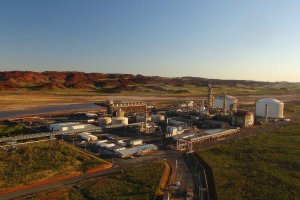
A new off-loading system is under consideration for an ammonia storage plant, designed to transfer ammonia (NH3) from a jetty to three storage tanks. This

The exploration of various methods to enhance the Finite Element Analysis (FEA) of a 6-bed polybed vessel focuses on addressing potential fatigue issues. A Finite
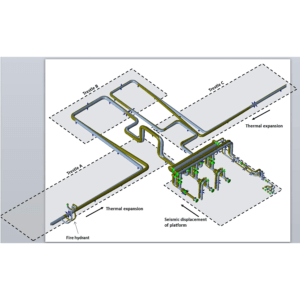
During the design phase of a sea jetty for an oil terminal, Dynaflow Research Group (DRG) conducted a comprehensive stress analysis for the glass reinforced

The vessel under consideration features three horizontal trays positioned at different elevations. These perforated trays are supported by and welded to a support ring, which

A finite element analysis (FEA) was requested for a fiberglass coupler used in centrifugal cast fiberglass pipes. The aim was to evaluate the structural integrity
In the framework of a testing program for glass-reinforced epoxy (GRE) pipes, the long-term material strength properties at a high temperature of 150°C are determined
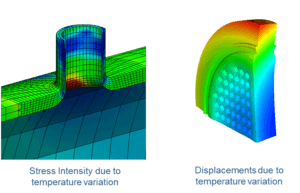
A shell and tube heat exchanger is utilized to condense propylene gas. The temperature of the propylene gas entering the shell side cycles through a

The client requested a static stress analysis for two cooling water headers, which were to be replaced with headers made from Glass Reinforced Epoxy (GRE).

Two identical spherical tanks, designed and commissioned in the 1960s for the storage of pressurized liquid butane, require re-evaluation for a new purpose. Each tank

A dryer vessel is designed for the purpose of removing water from ‘wet’ propylene liquid, where ‘wet’ denotes the presence of a small quantity of
A 5-inch glass-reinforced epoxy (GRE) transportation line has been installed underground, featuring several above-ground steel pipe connections. Designed to withstand a pressure of 150 bar

A planned modification to a cokes gas piping involves the installation of a new pipeline to a gas user and the decommissioning of an existing

A stress analysis was conducted on a tubular heat condenser utilizing finite element analysis (FEA). This condenser configuration includes a rotational asymmetric tube bundle secured

Introduction Following the replacement of an older tail gas heater, issues with leakage from the top tubesheet flange connection have emerged during production. Despite attempts
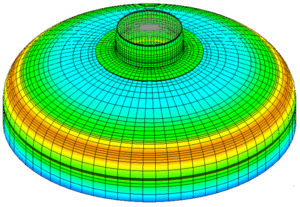
This case study details the determination of wall thickness for a Glass Reinforced Epoxy (GRE) tank. Analysis The process of defining the wall thickness was

A large-diameter seawater dump caisson, constructed from Glass Reinforced Epoxy (GRE), required a comprehensive strength assessment. This caisson featured five nozzles, with one positioned in

Dynaflow Research Group (DRG) conducted a static analysis of a rectifier or afterwash column, which consisted of a carbon steel shell with a 15 mm

Hydrogen is considered to be a key element in the energy transition. This molecule is the most notable option for the decarbonisation of hard-to-abate sectors
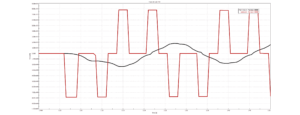
As part of our responsibilities at DRG, we conduct both standard pressure drop calculations and surge/slug analyses for firewater systems. Our involvement spans various stages,
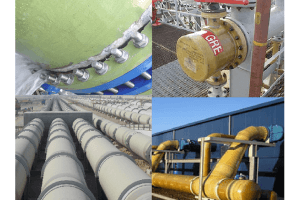
Geothermal energy is a promising renewable energy source, but it comes with its own set of challenges. Two significant issues in geothermal well operations are
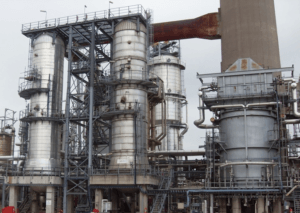
Flow-induced vibrations in piping systems are a critical aspect of mechanical engineering, impacting the reliability and integrity of various industrial setups. The Japan Society of

Introduction In the field of engineering design, the precision of pipe flexibility analysis models is critically important for accurately assessing nozzle loads in steel piping

In 2013, a major incident occurred in a Louisiana chemical plant. In a nonroutine operation, plant operators attempted to start a heat exchanger which had

To understand pressure surges in large piping systems, a good place to start is at home. When you finish washing your hands, turning off the

Brief introduction to piping vibrations Vibrations are an oscillatory motion about an equilibrium. The oscillatory movement causes alternating stresses in the system, which, if excessive

The pulsation challenge of a variable speed reciprocating compressorA pulsation analysis according to the API 618 is a good method of preventing excessive vibrations in

ON-DEMAND 🕖 50 MIN 🌏︎ ENGLISH Acoustically Induced Fatigue in Gas Filled Piping Systems Using BOSfluids Remco Boere Senior Software Engineer Get instant access

ON-DEMAND 🕖 60 MIN 🌏︎ ENGLISH Simulation Strategies and Practical Application for Vapour Cavity Formation Dr. Ir. Erik Jan Lingen Software Director Get
ON-DEMAND 🕖 60 MIN 🌏︎ ENGLISH Fundamentals, Failure Mechanisms, and Engineering Consequences of Vapor Cavity Formation Dr. Ir. Erik Jan Lingen Software Director

ON-DEMAND 🕖 45 MIN 🌏︎ ENGLISH Bridging the Gap: From NFPA 15 Steady-State Design to Transient Surge Analysis in Tank Terminals Uri Peker

ON-DEMAND 🕖 45 MIN 🌏︎ ENGLISH Support Stiffness Effects on Mechanical Natural Frequencies in Reciprocating Compressor Piping Systems Thijs Krijger Project Engineer Get

ON-DEMAND 🕖 60 MIN 🌏︎ ENGLISH Beyond hydraulics: a practical guide to fire water analyses with BOSfluids Dr. Ir. Erik Jan Lingen Software
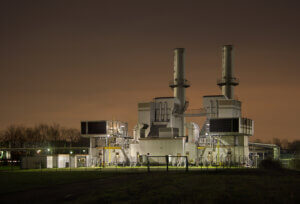
AIV Fundamentals At what pipe diameter and wall thickness should one be concerned about AIV? What is the relevant D/T ratio? This depends on the
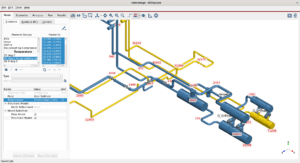
ON-DEMAND 🕖 3 SESSIONS x 45 MIN 🌏︎ ENGLISH Complete Pulsation Analysis Using BOSpulse Tim Gebraad Software Lead Engineer Marienne Faro Software Sales Engineer

ON-DEMAND 🕖 60 MIN 🌏︎ ENGLISH Getting the Timing Right: Why Time Step Size Is Critical In Surge Analysis Dr. Ir. Erik Jan
ON-DEMAND 🕖 30 MIN 🌏︎ ENGLISH Protecting Tank Terminal Assets Through Surge and FFS Analyses Thijs Krijger Project Engineer Katrine van Overhagen Engineer

ON-DEMAND 🕖 60 MIN 🌏︎ ENGLISH Choosing the right GRE piping standard: a comparison of ISO 14692 and ASME NM.2 Edwin Schimmel Project Engineer

ON-DEMAND 🕖 50 MIN 🌏︎ ENGLISH How Stepless Capacity Control Shapes Flow and Pulsations Thijs Krijger Project Engineer Get instant access Free. Recording

ON-DEMAND 🕖 60 MIN 🌏︎ ENGLISH Water Hammer Analysis & Mitigation in Pipeline Systems with BOSfluids Dr. Ir. Erik Jan Lingen Software Director

ON-DEMAND 🕖 60 MIN 🌏︎ ENGLISH Water Hammer Analysis & Mitigation in Pipeline Systems with BOSfluids Dr. Ir. Erik Jan Lingen Software Director

ON-DEMAND 🕖 35 MIN 🌏︎ ENGLISH Understanding, Modelling, and Managing Thermal Bowing using CAESAR II David Tickner Senior Engineer Get instant access Free.
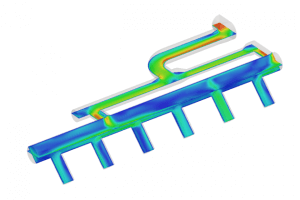
What are the key challenges in applying CFD to simulate and optimize multiphase processes in complex industrial systems? The main challenge here is the ability

Do CAESAR II formulas for thermal bowing and output results match with FEA? Short Answer: There can be significant differences between the results of CAESAR II and FEA.Explanation:The
ON-DEMAND 🕖 35 MIN 🌏︎ ENGLISH Using CFD for optimizing multiphase process engineering Bart van der Zalm Senior Engineer Get instant access Free.

DRG CONFERENCE – 35TH ANNIVERSARY 🌏︎ ENGLISH Innovations that Change the Engineering Industry Get instant access Free. Recording + slide deck available Event Description

ON-DEMAND 🕖 35 MIN 🌏︎ ENGLISH Fatigue Assessment According to ASME B&PV VIII Div.2 Lukas Bajarunas Senior Software Engineer Get instant access Free
ON-DEMAND 🕖 45 MIN 🌏︎ ENGLISH Fiberglass Piping Stress Envelope According to ISO 14692 using CAESAR II Edwin Schimmel Project Engineer Get instant
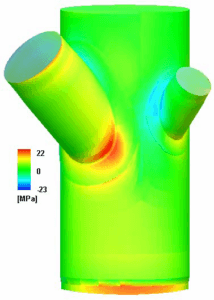
Caisson Configuration and Client-Specified Loads A seawater dump caisson is mounted on a deck of an offshore structure. It consists of a 56-inch (ID1400) GRE pipe header, EST series with a 55° winding angle, fixed at the main deck and guided at the upper deck. At the top section, two
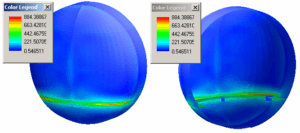
Dynaflow ran a finite element analysis to ASME VIII Division 2 of a stainless steel SA240 316L support ring welded into a carbon steel Claus reactor. All primary stresses were within the allowable. At the head-to-ring connection, however, secondary stress reached 885 MPa (259 percent of the allowable), and fatigue
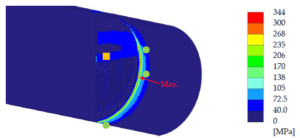
Two identical condensers cool sulphur gas to a temperature close to its dew point. The gas passes through 363 SA-179 tubes of 38.1 mm outside diameter and 8840 mm straight length, set on a 48 mm triangular pitch between two stationary tube sheets. On the shell side, water maintains a
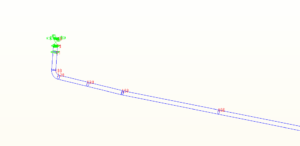
New water hydrants were installed as part of an upgrade of the firewater system at a main degassing station. Each hydrant valve joins the steel hydrant part to the underground glass-reinforced epoxy (GRE) piping, and the GRE piping connects to steel piping coming from the above-ground equipment. The GRE is
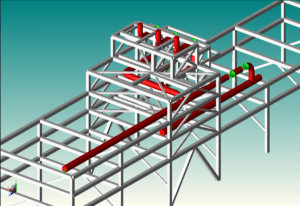
Firing of three relief valves on a steam line operating at 225 °C and 9.5 barg was analysed in CAESAR II, with dynamic loads generated in BOSfluids. The spectrum analysis gave a combined dynamic and static stress of 128% of the occasional allowable stress and the time-history analysis including the
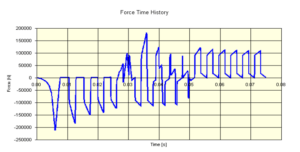
Condensation and Steam Hammer in a Cold Steam Line The analyses assumed steam at 380°C and 40 Barg entering a 36-inch high-pressure steam line with a pipe temperature of +5°C. Potential problems are anticipated at start-up because the steam condenses on entering the cold pipe. Steam remaining in the line
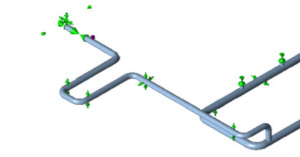
A BOSfluids surge analysis and slug impact calculation of a 12-inch steam start-up line gave maximum unbalanced forces of 1.32 kN, 1.3 kN and 3.2 kN for three surge scenarios, and 16.5 kN and 23 kN for 7 m and 10 m slug impacts on the pressure control valve. CAESAR
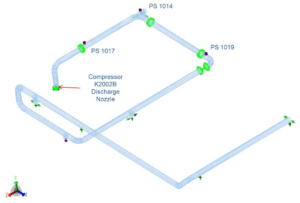
During re-alignment of the suction and discharge piping for sales gas compressors K2002A and K2002B, ready for connection to the compressor nozzles, the discharge line of K2002B could not be correctly aligned. The displacement at constant load hanger 04-SS-1017 (PS 1017) took the hanger out of its operating range. A
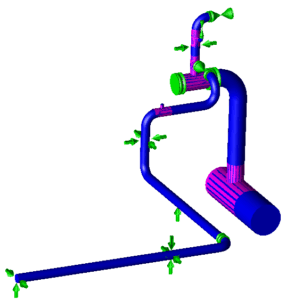
A CAESAR II stress analysis of a revised high-pressure blowdown line operating at 20.6 barg and 160 °C found that the system as proposed did not meet ASME B31.3 because of large thermal displacements of the DN600 header. If guide support S1 is replaced by a restraint in the z-direction
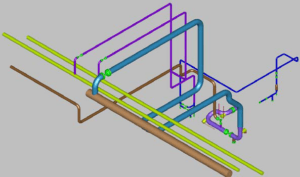
At a refinery, instrument air is supplied by three Atlas Copco compressors. Two are motor driven; the third is driven by a Coppus RHLA-24 steam turbine commissioned in 2008. Two months after start-up, a plain bearing malfunctioned. The turbine was overhauled and reassembled at site in August 2009, after which
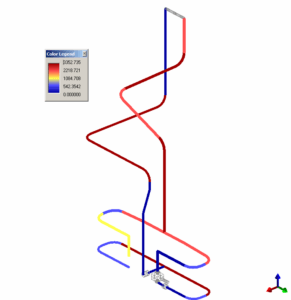
Weld 34 Crack and Dead-End Configuration The circulation system has two pumps, one operating and one spare. The operating pump feeds cooling water back into the Benson vessel at the top of the system. In the situation analysed, one pump had been taken out for revision. A blind valve was
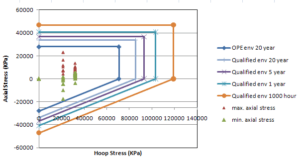
Branch Failures in a Buried GRP Firewater Ring The firewater system is made from glass-reinforced plastic (GRP) pipe and is mainly underground. The main is a ring with large-bore branch connections, and smaller-bore branch connections feed the hydrants and monitors above ground. In early operation the system suffered a number
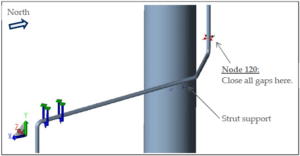
Slug Flow Operation and Two Elbow Fatigue Failures At a gas-to-liquids facility, the water feed line to an HCN/NH3 stripper (1C-1201) regularly operated in the slug flow regime. Slugs can generate large dynamic loads on the piping, which can eventually result in fatigue failures. Two leakage incidents occurred, each caused
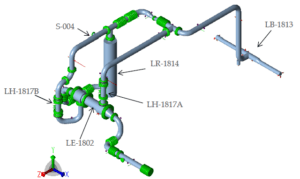
Flange Leakage in 44-Inch Catalytic Oxidiser Piping The 44-inch top and bottom nozzles of a catalytic oxidiser are connected to the shell and tube sides of a recuperative heater by 44-inch piping. The hot design temperature is 527 °C. The required piping flexibility is provided by a number of expansion
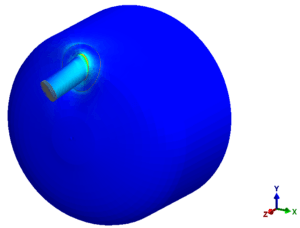
Steam-Out Cycles of the Carbon Bed Vessels In the offgas cleaning system of an EBHP reaction section, vessels V105A to V105D absorb EB from the offgas on active carbon beds, because the EB has to be removed before flaring for environmental reasons. Once a bed is saturated, it is steamed
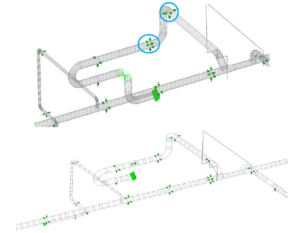
A Branch Failure on a Methanol Plant Steam Header A methanol plant operating on a 3,000 tonnes per day basis suffered a piping failure on 19 May 2012. A ¾ inch branch broke off the medium-pressure (MP) steam header when the turbine driving the synthesis gas compressor tripped. In normal
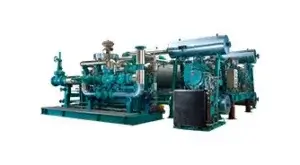
A pulsation analysis to API 618 Design Approach 1 checked the proposed dampener bottles of onshore and offshore reciprocating compressors against a guideline of 70 percent of the allowable pulsation levels. All proposed bottles gave levels within the API 618 allowable. At the line connection nozzle, only the offshore discharge
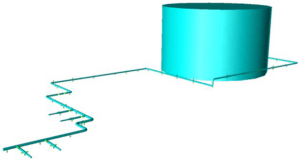
Condensate Forwarding Duty at a Nigerian Gas Plant At a gas plant in Nigeria, four reciprocating pumps on an N+1 philosophy (three running, one spare) forward condensate from a storage and separation tank into a gas pipeline. A 12-inch suction header carries the condensate from the tank to the pumps,
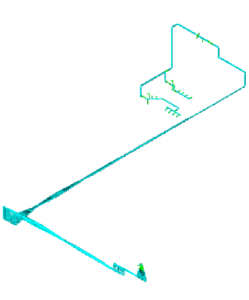
Severe Vibration in Vaporiser Feed Pump Piping The suction and discharge piping connected to the quadruplex methanol vaporiser feed pumps was suffering from severe vibration. A pulsation analysis combined with a mechanical response analysis of the as-built piping was performed to establish the root cause. The analyses determined the stress
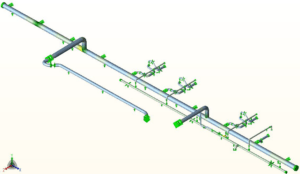
At the Utorogu Flow Station in Nigeria, vibration was observed in the suction header, the discharge header and the pump recirculation line. Dynaflow Research Group performed pulsation, mechanical response and static stress analyses to find the root cause, identify any other possible problems and recommend improvements. The station pumps crude
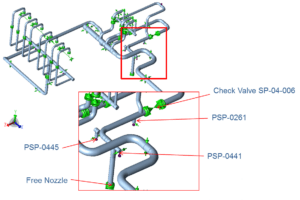
A third-party review of the HP discharge line at a gas compression station found that the designer’s stress report shows the discharge nozzle conforming to the vendor’s allowable values with the springs pinned, as API 686 requires. At the 7th April alignment check the flange separation exceeded the 4.5mm vendor

DYNAFLOW RESEARCH GROUP (“DRG”) Enters into Reseller Agreement with Quality Professional Software (“QPS”) RIJSWIJK, The Netherlands – January 24, 2024 (Dynaflow Research Group BV) –

Dynaflow Research Group and Seawind Ocean Technology announce collaboration focusing on technical readiness of floating offshore wind applications in the Mediterranean Sea. This landmark partnership